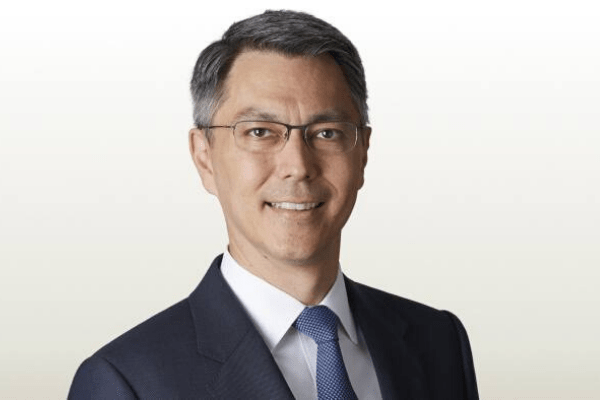
BHP’s appointment of Mike Henry, to succeed Andrew Mackenzie in 2020, would appear to fit this pattern. BHP and its rivals, Rio Tinto and Anglo American, all appointed dealmaking bosses as the commodities supercycle ramped up in 2007. All three groups then turned to cost-cutting chiefs with the cycle past its peak in 2013. And now, as Mr Mackenzie becomes the second of that class of 2013 to step down, after Rio’s Sam Walsh, it seems as if the next transition is to decarbonising leaders.
Twelve years ago, with the fast-rising resources prices appearing super-cyclical, there was little concern about anything going up in smoke — be it coal, iron ore or shareholders’ money. BHP appointed Marius Kloppers as chief in May 2007, who then tried and failed to buy Australia-based Rio and PotashCorp of Saskatchewan, succeeded in paying $17bn for North American shale gas assets, and ended up landing investors with a $2.8bn impairment charge. Rio made Tom Albanese its boss in 2007, and he immediately bought Canada’s Alcan at the top of the aluminium market, before overpaying for Mozambique-focused Riversdale Mining, leading to a $14bn writedown — one of the biggest in Australian corporate history. Anglo’s 2007 choice was Cynthia Carroll, who failed to stem cost overruns at a Brazilian iron ore project, and paid a heady $5.2bn for 40 per cent of De Beers as Anglo’s own share price tumbled.
Six years later, after equity investors had paid the price of these excesses, all three miners focused on the cost of extracting resources — but principally the financial one.
Read also: Jamie Dimon says ‘greedy’ bankers ‘let the American people down’

BHP promoted Mr Mackenzie in May 2013. He streamlined the business, spun off Australian mining unit South32 and cut spending. That same year, Rio promoted Mr Walsh, who restored financial discipline, cut the dividend and, in his last 12 months as chief, reduced capital expenditure by a full $1bn, to $4bn. Anglo followed suit, bringing in Mark Cutifani who turned to new mining technologies to reduce costs.
In 2020, however, the priorities are already very different, as miners face the almost contradictory challenge of processing more resources to enable low-carbon energy production. BHP’s Mr Henry arguably has the hardest job, here. While Rio’s current boss Jean-Sébastien Jacques can point to exiting thermal coal as well as developing “carbon-free” metal projects, and Anglo’s Mr Cutifani can stay on to pursue low power and low water ore processes, BHP’s new boss still has high-carbon footprint oil and gas operations, coking coal mines and big iron ore operations to justify, offset or exit. His 30-year career in health, safety, environment and technology roles will help. So too will a $400m fund to reduce carbon emissions. But a shareholder base that recently rebelled against BHP’s support for fossil fuel lobbyists will hold his feet to the fire — and expect much more progress in the cycle from 2020 onwards.