|
Getting your Trinity Audio player ready...
|
Widening access to diabetes treatment in Nigeria will require deliberate government effort to address the deficit of specialists and technological infrastructure available in hospitals, according to experts.
Olufemi Fasanmade, professor of Medicine at the University of Lagos, said with about 4 million Nigerians stricken with diabetes and less than 100 highly trained specialists in the disease management, there is an overwhelming human capital gap which needs to be fixed to enhance life expectancy.
If the status quo is maintained, it implies one specialist will be responsible for over 300,000 diabetic patients.
Patients will not be able to see doctors more than three times in a year for regular check-up. And when emergency cases arise, some degree or tendency for delay might be inevitable due to the shortfall in manpower and an overwhelming number of patients.

To bridge the untended gap, “we are trying to train more and more people so that even if you are not a diabetes expert, you can have sufficient knowledge to handle patients”, Fasanmade said in a keynote address at the second edition of ‘Diabetes Demystified’ in Lagos.
“We have brought into the fold several other doctors, pharmacists and other healthcare workers,” he said.
Daniella Apkakwu, the convener and founder of Wellness Patron, urged for increased awareness on the illness, considering the growing rate of detection and its role as a catalyst for other health complications to build on.
Apkakwu, who veered into public education on lifestyle diseases in 2017, laid emphasis on inculcating lifestyle habits that prevent the occurrence of diabetes and tackle the disease to a standstill.
“The more diabetes cases increase, the more the need for awareness on lifestyle measures and changes. Nutrition is a cornerstone in tackling diabetes and I think Nigerians don’t really know much about nutrition and lifestyle. That is why we came up with Wellness Patron to help educate people,” she said.

Experts’ analysis shows that the cost of managing diabetes for Nigerians is huge. A civil servant who earns the proposed minimum wage of N30,000, for instance, only needs one complication of diabetes to sink into poverty with a whole family. Some of the complications with diabetes can cost between N500,000 and N1 million. The fear of these costs forces some to resort to charlatans, religious houses or herbalists who exploit the void.
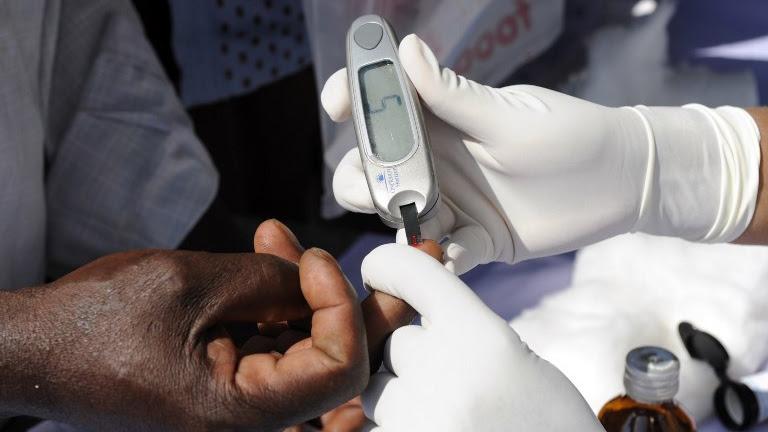
In ideal settings, every patient that suffers diabetes should have access to blood sugar machine for monitoring, which is a simple instrument, but many patients can’t afford it. Hospitals should also be equipped with technological equipment that arrest diabetic conditions in their complexities. But this is still far from being the a Nigerian reality
“If you are in a hospital that doesn’t have x-rays machine or facility for high tech machines, the patient has to be carried out to another facility, especially if the patient has a lot of complications,” Fasanmade said.
“And very few private centres have ultra-sound machines, magnetic resonance imaging (MRI), computed tomography (CT) scan, among other facilities,” he said.
Temitayo Ayetoto