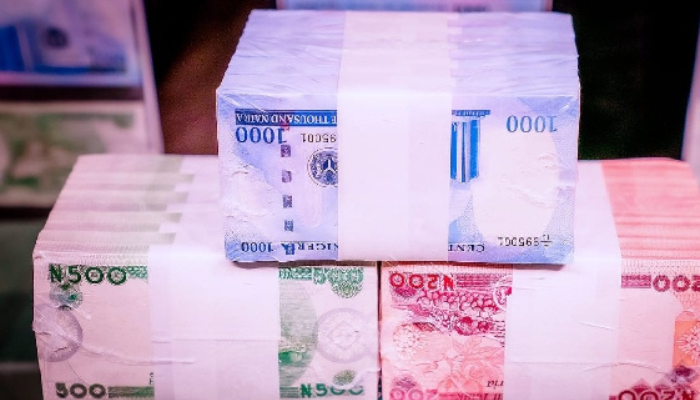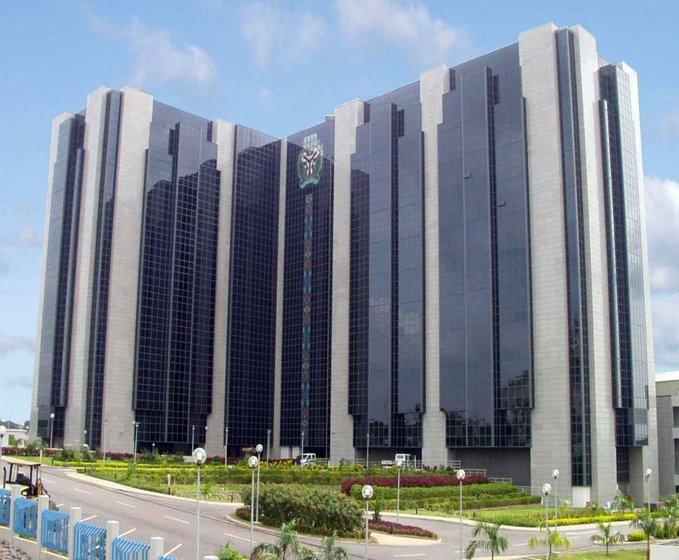
Currency-in-circulation (CIC) in Nigeria dropped by 3.9 percent in 10 months to N2.05 billion in October, from N2.14 billion in January 2019, according to data from the Central Bank of Nigeria (CBN).
Analysts attributed the decline in CIC to increased usage of electronic banking channels by customers in the financial services sector of the economy.
Currency is issued to Deposit Money Banks (DMBs) through the branches of the CBN and unfit notes retrieved through the same channel. Currency deposited in the CBN by the DMBs are processed and sorted into fit and unfit notes in line with the Clean Notes Policy.
Currency-in-Circulation grew by 0.8 percent to N2,329.7 billion at end -December 2018. The growth in CIC reflected the high dominance of cash in the economy and increase in economic activities.

A breakdown of the CIC indicated that, in terms of volume and value, the proportion of higher denomination banknotes (N100, N200, N500 and N1000) in total rose from 41.9 percent to 44.3 percent and 96.9percent to 97.6 percent, respectively.
The lower denomination currency notes continued to be preponderant in terms of volume, constituting 55.7 percent of the total.
In value terms, it constituted 2.4 percent of the total banknotes. The ratio of CIC to nominal GDP, which measures the moneyness of the economy, fell slightly by 0.1 percentage point to 1.8 percent in 2018.
The decline in the CIC/GDP ratio reflected increased usage of e-payment products such as electronic payment cards.
The CBN’s 2018 currency operations annual report revealed that the CIC increased by N17. 25 billion or 0.80 percent to N2.49 trillion in 2018, compared with N2.16 trillion in 2017.

The increase in CIC was due to the 2019 election and increase in economic activities.
On currency disposal, as at the end of December 2018, a total of 1.8 billion pieces or 181,054 boxes valued at N915.bn was disposed, compared with 2.58 bn pieces or 257,501 boxes valued at N977.23bn disposed in 2017.
The boxes of unfit notes disposed in 2018 decreased by 76,447 boxes, while the value decreased by N62.16bn or 6.36 percent compared with 257,501 boxes valued at N977.23bn disposed in 2017.
On the other hand, the money market witnessed an increase in the overnight inter-bank rate after the CBN on Thursday issued N300 billion via Open Market Operation (OMO) in the secondary market.
Consequently, the Overnight rate, which is the rate at which Deposit Money Banks (DMBs) borrow and lend to each other, increased by 0.43 percent to close at 5.57 percent on Friday.
Also, the money market instrument used to raise short term capital, Open Buy Back (OBB) rate increased by 0.29 percent to close at 4.43 percent.
The CBN on Thursday issued N300 billion via OMO but sold a total of N232.45 billion for the three tenor instruments.
The N20 billion offered for 89-day tenor which is expected to mature February 4, 2020, recorded no sales, no subscription, and no stop rate.
Johnson Chukwu, managing director, Cowry Asset Management Limited said investors are locking in on longer tenor instrument anticipating that rates will come down.