For many years, there have been several attacks against commercial buses, suggesting sustained economic hardship is making anyone a target and kidnapping for ransom has long been a problem in many parts of the country and has typically targeted prominent individuals or their families.
Confronted by the deadly farmer-herder conflicts and Boko Haram insurgency conflicts, kidnapping and banditry are gaining a foothold on most Nigeria’s highways.
Most commuters in private and commercial vehicles on Nigerian roads are travelling under fear and feeling of uncertainty by road, with most of the cases happening on the highways following several shocking incidences and stories of victims of kidnappings.
It is no longer news that, most of the dilapidated road networks are no longer motorable due to the failure or the lack of attention from both the federal and states levels to maintain these failed portions of the road. Even the few kilometres of motorable stretch of highways and state roads are increasingly becoming unsafe for the motoring public as aresult of infiltration of kidnappers.

Many years ago, it would be recalled that, when the roads were relatively motorable, journey time from Lagos to Abuja for instance is estimated at a maximum of eight hours at 140 kilometers per hour, but as at the time of filing this report, it takes a commercial bus for instance not less than 14 hours to arrive at its destination.
On Tuesday, October 22, 2019, BusinessDay transport editor boarded a commercial bus that departed the terminal by 7.05 am from Utako, Abuja, after his visit to the country’s federal capital for an official trip.
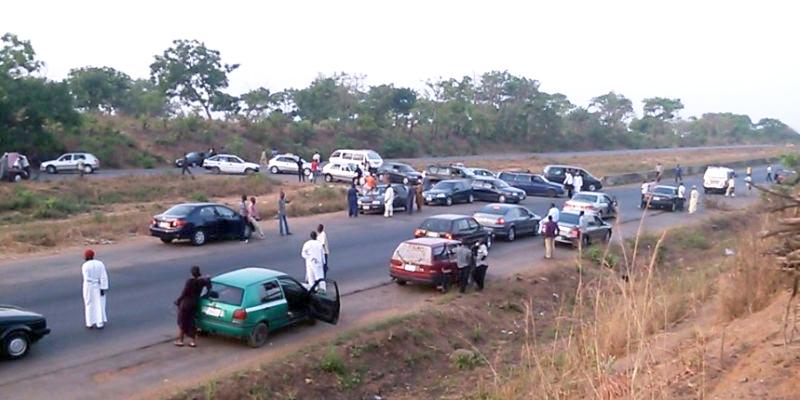
At about four and half hours into the trip, the bus was intercepted by a gang of dare-devil kidnappers along the Lokoja-Okene bypass following a rear end collision involving the commercial passenger bus with 14 passengers and another Toyota Land Cruiser SUV with Abdul Dogo, justice of the Federal High Court returning from Abuja to Akure, Ondo State and his driver.
Seconds after the crashed, both vehicles came under a heavy fire. A fully armed gang of over 10 members shot at the travellers from the front and rear end of the vehicle for several minutes.
At the end of the shooting with reminds one of a movie, the justice and his driver were commandeered into the thick forest. He spent four days in captivity and was only released by 2a.m. at Itakpe last Saturday.

And while no mention was made of any ransome paid or not to the kidnappers before the judicial officer and the occupants of the official SUV were released, no mention was also made of the fate of the passengers that were engulfed in the dastardly act.
In June this year, the Rivers state police command said that three passengers and a driver were kidnapped after gunmen struck at Evekwu and hijacked a bus along Emohua axis of the East-West Road.
Police Public Relations Officer in the state, DSP Nnamdi Omoni, while confirming the incident, said the armed men struck at Evekwu in Emohua. In September 2017, gunmen also kidnapped 19 bus passengers near Nigeria’s southern oil hub, Port Harcourt, the River State capital.
On March 13 this year, Muhammed Usman took a bus from from Gusau, the capital city of Nigeria’s north-west state of Zamfara, to see his family in Dangulbi, a small farming community about 50 kilometres away.
Half an hour into the trip, the bus came under a heavy fire. A fully armed gang of 18 members shot at the travellers from the front and rear end of the vehicle for several minutes. Usman grabbed a child who sat next to him and crouched down beneath the seat, covering him with his body.
Among the latest series of attacks, last September, at least, thirteen persons were reportedly kidnapped in two villages along Abuja-Kaduna highway between Saturday and Monday by gunmen.
Sources said seven persons were abducted on Saturday at Begiwa and six others on Monday at Dutse village, all in the Chikun Local Government Area of Kaduna State. During the attacks, eavily armed men invaded the two communities along the highway, shot and took away their victims to unknown destinations.
MIKE OCHONMA