|
Getting your Trinity Audio player ready...
|
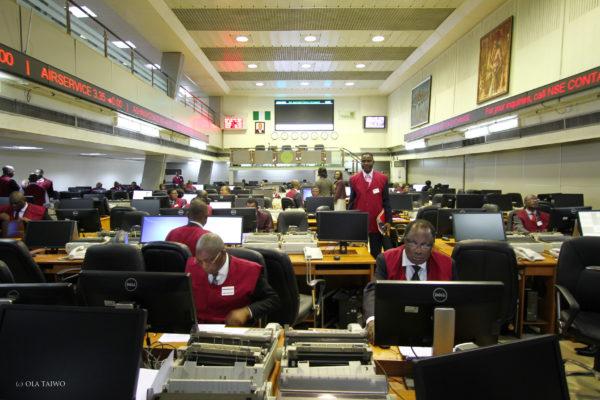
Former Governor of the Central Bank of Nigeria (CBN), Sanusi Lamido Sanusi, once famously called the Nigerian Stock Exchange (NSE) a Casino in the aftermath of the margin/bad loan crises that Banks got caught up with in 2009.
If casinos are places with bright lights where people go to place bets one way or another on a particular game with lax supervision, these days the NSE is far from that as the exchange has made tremendous progress on corporate governance for listed firms since 2009.
However it is also true that these days the stock market is far from a casino in another sense, the mood is dark, stocks are down 16 percent year to date, very few investors are trading on the NSE as volumes collapse, and sentiment is extremely negative.
The movement in the stock market is among the leading economic indicators measured by economic managers in most countries, including by the Central Bank of Nigeria (CBN).

Rising stock prices signal to investors and regulators like the CBN or U.S FED that corporate profits are set to continue rising in the future and an economic expansion likely to continue.
More importantly it is positive for the wealth effect, helping to increase the value of Pension Funds, 401ks and individuals with investments in stocks in a brokerage account, which is ultimately positive for consumer sentiment and spending.
However today in Nigeria, nobody seems to want to buy stocks despite the rock bottom valuations.
Pension Funds Administrators (PFAs) who should be attracted to stocks as a natural hedge against inflation have all but abandoned the asset class.
The most recent data from the regulator National Pensions Commission or PENCOM shows that PFAs exposure to domestic equities stood at 4.93 percent at the end of August 2019.

It used to be more than double those levels and closer to 9 percent less than 2 years ago.
PFAs have some N465 billion invested in domestic stocks, compared to N6.8 trillion in Federal Government securities (see chart).
Emerging Market Research firm EFG Hermes released a note last week that succinctly captures the problem facing Nigeria’s equity markets.
According to EFG Hermes despite Nigeria’s market stock getting cheaper and cheaper – with MSCI Nigeria now trading at 4.8x 12months forwards price to earnings (P/E ) ratio, which is an all-time low, and their internal analysts forecast of 14 percent earnings CAGR for 2019- 2021, and a 2019e Dividend yield of 10 percent (11.2% for banks), policy uncertainty makes it very difficult to become bullish.
These policy uncertainties include latest government moves to enforce closure of land borders to all trade and the CBN’s increase in minimum Loan to Deposit Ratio’s to 65 percent (effective end-2019).
EFG Hermes notes that while the LDR policy may support earnings growth for stronger banks, it is hard to reconcile policies that force private sector lending with those that severely restrict trade.
On the Pension Funds EFG Hermes, observes that PFAs are not allocating fresh funds to stocks, despite strong flows into pension funds which amounted to N681 billion in the 12months period ending June 2019.
They conclude by saying that even given high yields on government paper, it is a surprise that local PFAs with long term naira liabilities are shying away from inexpensive stocks that offer good dividend yields and the potential for long term capital gains.
“We believe this could be because current incentives for pension funds do not reward managers for outperformance,” they note.
Shying away from the vexing issue of a lack of clarity on the relative performance of PFAs compared to each other, vis –a-vis fees they charge contributors, and inability to easily move from one PFA to another, is the fact that not having significant exposure to equities may be short-changing retirees in the future, especially in an economy with a high rate of annual inflation, like Nigeria’s.
A recent survey by Mercer LLC released in June showed that Pension funds in growing economies in Asia, Latin America and the Middle East have a sharply higher percentage of assets parked in stocks, with retirement money managers in 14 geographies now allocating 40 percent of their assets to equities, an 8 percentage-point climb over the past five years.
With PFAs and other major institutional investors shunning stocks, it is not a surprise that equity trading volumes have collapsed to under $6 million from over $100million in 2008.
The current state of affairs is clearly far from ideal. The CBN should be worried, because a the short term chase for high yields by investors is clearly harming the economy and making cost of servicing the Federal Government’s and CBN OMO bills prohibitive.
Pension Fund contributors should be worried because the time tested means of wealth creation globally is through stock market investments, and they could be missing out on a chance for significant capital gains in the future.