Russia will host its firstever Africa summit on Wednesday as the Kremlin seeks to rebuild neglected relations and goes in search of new political allies and trading partners.
A big geopolitical player in Africa during the cold war, Moscow has been vying with China, Europe and the Gulf states for influence and commercial opportunities in the resource-rich continent.
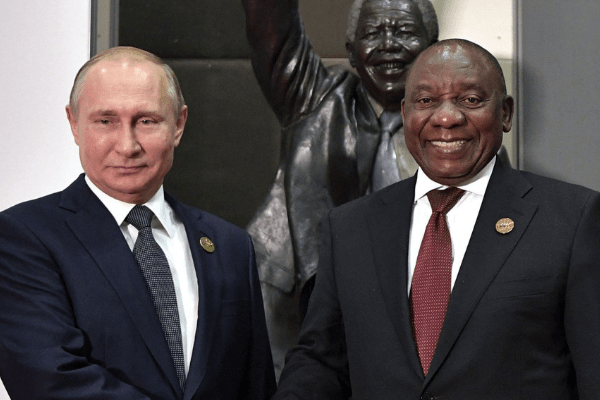
In a charm offensive in the seaside resort of Sochi, President Vladimir Putin will welcome more than 40 African leaders — including those of Kenya, Nigeria, Ghana and South Africa — as he tries to sell Russia as a longstanding and dependable partner, in contrast to the US and the former colonial European powers.
Commenting on Mr Putin’s African strategy, Irina Filatova, a professor of African history at Moscow’s Higher School of Economics, said: “Sure, Russians are foreigners, but they are different . . . There is a shared, common attitude to the west, which is that the global structure as it is today needs to be changed.”

She added: “I don’t know how much Russia can afford to spend, but it definitely comes with less baggage. Smaller sums with fewer conditions are welcomed… but to what extent that is sustainable is a totally different question .”
Russian exports to African countries hit $20bn last year, roughly double the level of 2015 but paltry compared with China’s $205bn, and heavily reliant on arms and grain sales to northern states. During the two-day summit, Moscow will seek trade agreements and partners for its large energy, mining and defence companies
“There is still a lot of scope for more growth. Egypt and Algeria alone account for two-thirds of Russian exports to Africa,” said Charles
Robertson, global chief economist at Renaissance Capital.
“For African states, obviously any diversification of funding sources is good. Having companies compete against each other for investments is also positive. For African governments, the more people coming to mine or explore for oil, the better,” he added.

While Moscow lacks Beijing’s financial firepower, it has built influence from Algeria to Uganda by lending support to strongmen, managing natural resource projects in war-torn countries and building on longstanding defence relationships.
João Lourenço, Angola’s president, trained at a Soviet military academy in Moscow in the 1970s, while the flag of Mozambique bears a Kalashnikov rifle, the USSR’S most famous weapon. These and other cold war-era ties have already helped some Russian corporates tap into African opportunities.
Russian aluminium producer Rusal owns bauxite mines in Guinea, while Kremlin-controlled diamond miner Alrosa has assets in Angola and Botswana. State-owned oil company Rosneft has interests in Egypt and Mozambique, and nuclear energy monopoly Rosatom has 15 projects lined up in Africa, though none have received final approval.
Seeking to increase that footprint and turn political friendship into business partnerships, Russia in 2017 became a shareholder of Afreximbank, a Cairo-based trade finance lender, in a step that the bank said would “take advantage of the numerous opportunities for trade and development between Russia and the African continent”.
Moscow hosted the bank’s annual general meeting in June which was opened by Russian prime minister Dmitry Medvedev. The bank is also co-organising the Sochi summit.