|
Getting your Trinity Audio player ready...
|
A modern approach by Argentina’s renewable energy market in just three years, may well open the door to billions in renewable investment, a development which Nigeria can also learn from.
Just like Nigeria, Argentina has some of Latin America’s most abundant renewable energy resource such as steady winds in southern Patagonia, year-round sunshine in the remote northwest, and hydropower and biomass fed by rivers and expansive farmland.
Yet, despite its potential, the country has fallen behind many of its smaller neighbours in turning these resources into a reliable power source; Argentina’s government is moving swiftly to change that which is why it’s moving to attract about $35 billion in investments in energy in the coming years, about half of that for renewable power.
To make this happen, Argentina launched an innovative program called RenovAr and further reached out to World bank’s International Finance Corporation (IFC) and other development institutions for support in creating a new market for private investment in renewable energy including organizing a renewable-energy auction, and setting up the process to attract international bidders.

The RenovAr program has already secured $730 million in partial projects\ guarantees from the World Bank over two funding rounds a development which protects investors against contract defaults, spurred several other international financial institutions to invest in the market, and made Argentina’s renewable energy market “the most interesting in the world at the moment,” according to IFC Director Lizabeth Bronder.
Read also: Adopting blockchain technology could solve Nigeria’s energy crises; experts
According to IFC, when fully operational, these projects will push renewables to 18percent of Argentina’s total power supply, a breakthrough considering they were at just 1.8 percent before 2016 – and could avoid more than 220 million tons of carbon dioxide (CO2) emissions over the next 20 years.
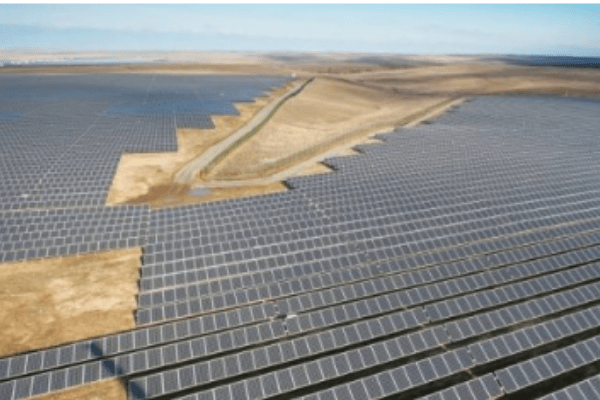
From 2016 through 2019 thanks to RenovAr, Argentina’s government awarded contracts for 6.5 gigawatts (GW) of new renewable energy capacity, helping make wind and solar the country’s cheapest unsubsidized sources of energy with roughly 5 GW of this capacity already in operation or under construction, attracting nearly $7.5 billion in new investment and creating more than 11,000 new jobs.
“For every 1,000 megawatts in renewable energy, the country saves $300 million annually in liquid fuel,”Sebastian Kind, Argentina’s undersecretary for renewable energy told IFC officials in a media parley. “It reduces carbon emissions by 2 million tons.” That’s roughly equivalent to taking 1 million cars off the road.”

The Argentina renewable energy program is already yielding fruits as Argentina rose to ninth globally and first in Latin America during 2019’s Ernst & Young’s Renewable Energy Country Attractiveness Index.
In Nigeria, Energy still remains one of the main constraints factors in for economic growth as the lack of reliable access and irregular power supply is still a persistent problem affecting businesses across the country and further discouraging foreign investors.
Nigeria depends on non-renewable energy despite its vast potential in renewable sources such as solar, wind, biomass and hydro. The total potential of these renewables is estimated at over 68,000MW, which is more than five times the current power output.
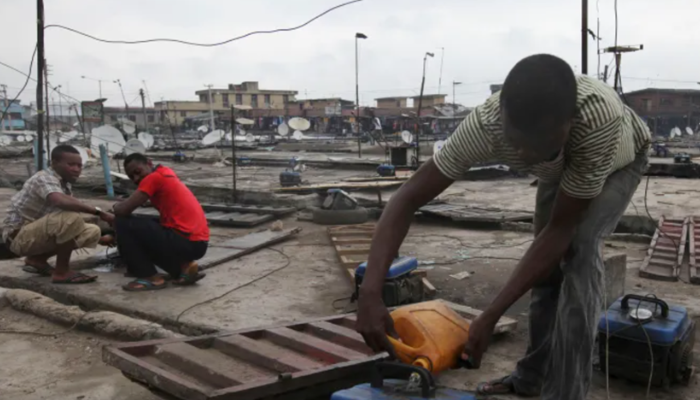
This power deficit has also weighed negatively on business operations in the country. Users must seek alternative energy means, primarily through buying gas and diesel-powered generators. These alternatives are relatively expensive, and most businesses that use them incur high production costs.