Successive administrations in Nigeria have not been fair to the masses in the country. When government revenue grows, it is only the privileged few that enjoy it. But when it is shrinking, the trouble of the poor masses increases as government finds reason to impose all sorts of taxes on them.
Whether in the military or in democracy, the story of the Nigerian poor has not changed. As deprivation and poverty led to the untimely death of many citizens 21 years ago in Jesse, a sleepy village in Delta State, as they scooped fuel from burst oil pipeline, it is worse these days, despite various sources of revenue generation employed by government. Citizens are still dying of treatable diseases. Many school-age children are still out of school, while the wealthy few enjoy the best of education within and outside the country.
The consensus is that the gap is always widening between the haves and the have-nots in the country.
The high level of corruption going on in government, which has over the years been blamed on the fear of the future by public office holders, has so badly infected many citizens that they no longer see anything wrong with stealing other people’s property.

Bemoaning the corruption level in government, Patricia Onah, a legal practitioner, told BDSUNDAY that it has become part and parcel of public office and may not be tackled in the nearest future.
“The Nigerian political class is manifestly corrupt. They earn huge salaries and other perks of office, but they are hardly satisfied. Their greed is out of this world. If possible, a politician would want to own everything in Nigeria. This poverty of the mind and greed have been adopted by many citizens who now believe that the end justifies the means, not the other way round. It is very dangerous for the country and we are seeing the negative fruit,” Onah said.
According to the World Poverty Clock, no fewer than 94,541,014 Nigerians are currently living in extreme poverty. This is 47pecent of the total population of 198,276,041.
Nowadays, it is common to see Nigerians begging for financial assistance on major streets, worship centres and other public places, even online.
The true poverty situation in Nigeria, perhaps, was well captured in the report by the World Poverty Clock in 2018, which showed that the country had overtaken India as the nation with the most extreme poor people in the world.

India has a population seven times larger than Nigeria.
A large chunk of the population cannot afford basic necessities of life, such as healthcare, education and decent accommodation.
Experts believe that as one of the most endowed countries in the world in terms of natural and human resources, the current situation is an indictment on successive governments that mismanaged the country’s vast oil wealth through incompetence and corruption.
The unemployment rate among the youth population, has continued to rise, creating all manner of social problems.
The unemployment rate in Nigeria has risen from 5.10 percent in the fourth quarter of 2010 to 23.10 percent in the third quarter of 2018.
The situation is not better among the working class due to the poor wages being earned by a large percentage of Nigerian workers.
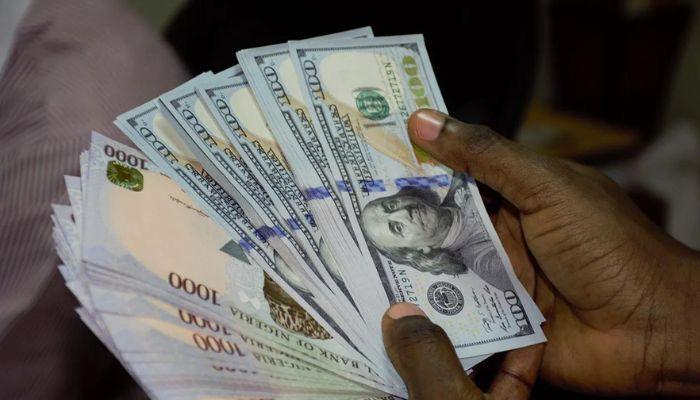
In America, a worker earns $7.25 per hour, which is in contrast with the $0.6, a Nigerian worker earns a month based on the recent signed N30,000 national minimum wage.
The human rights abuses, which characterised the military era in the country, are still rampant in a democracy. Since 1999 when Nigeria returned to civil rule, cases of rights abuses have been on the rise.
Mike Ikpeme, a public affairs analyst, said that Nigerians are not enjoying freedom again. He expressed the opinion that what is in place in Nigeria today is far from democracy.
“You cannot call this democracy when opposition is endangered species, the masses cannot express themselves again and security operatives are behaving as if we are in a military rule,” Ikpeme said.
The angry Ikpeme is worried that if government officials are clamping down on critics, how would they improve on governance and ensure dividends of democracy get to everyone?
Mathew Angwe, a politician from the Middle Belt, fears that the military is still in power, and lacks words to describe the use of military tactics in democratic setting. “In the military regime, the head of state is everything and no challenge from anybody, except through coup. But with the leadership of the National Assembly in its pocket, the presidency is ruling like a military head of state. You don’t want protests, you don’t want criticism, you don’t want people to make money, you don’t want them to express themselves, and then what is the difference with military rule?” he said.
He further said that in a country where thieves are forgiven for supporting a ruling party, corruption will thrive. “If Ayo Fayose, for instance, joins the ruling party like some others did, no court will summon him for any corruption charge. Many of those whose cases are with the Economic and Financial Crimes Commission (EFCC) are in government, operating at the highest level of governance. It is a bad example to our children who are watching the inanities going on. They are destroying the future of Nigeria. So, the intimidation and persecution of people is much and those who cannot endure it are joining the ruling party,” he said.
The worst fear for him is Nigeria running one party system, without opposition, and an anomaly in the 21stCentury for a country of 200 million people across many ethnic lines that need welfare and equitable representation in the scheme of things in the country.
But Musa Ibrahim, a university lecturer, thinks that the country is passing through a phase that would later usher boom. For him, the present administration has the interest of Nigerians at heart, especially with policies that are meant to address the economy, ensure food security, diversification and prosperity.
“Though people are complaining of border closure, it will ensure self-reliance, food security and save foreign exchange. We need to support this government,” he said.
But Angwe countered Ibrahim saying that the government should listen to the people. “You cannot formulate policies that are backward. The poor are suffering because of these policies and you are telling them not to do anything to survive. It is like beating a child and telling the child not to cry. Crime will definitely increase,” he said.
Poverty pushing Nigerians to ‘fetch’ fuel with buckets’
In the 21st Century Nigeria, when the rest of the world has moved on, Nigeria appears not in a haste to join her peers. Today, 59 years after independence from her colonial masters, Nigeria has failed to provide the basic needs for its citizens. People are feeding from dust bins, and taking dangerous risks just to put food on their table.
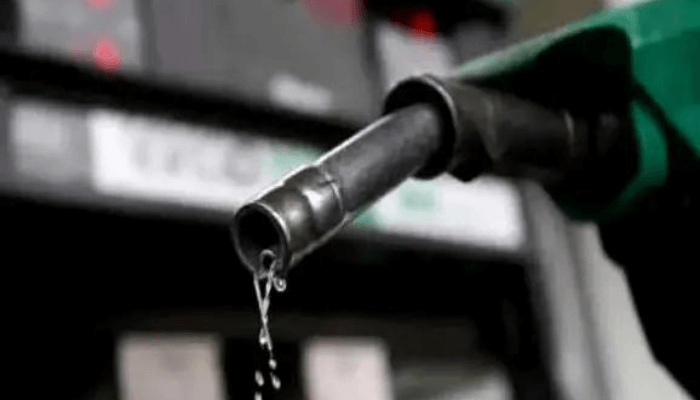
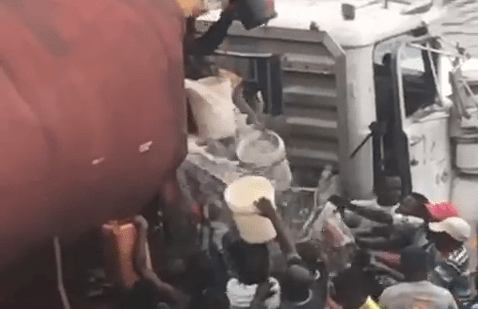
The incident of Tuesday, October 15,2019 at Mile 2 area of Lagos State may have justified the categorization of Nigeria as the world poverty headquarters. A video that went viral captured a scene where Nigerians were seen fetching inflammable petrol with open buckets!
An eyewitness account has it that the tanker driver, who was trying to avoid a mild traffic, had ignored the directives of officials of the Lagos State Traffic Management Authority (LASTMA) and rammed into a container lorry. The tanker was punctured by the side as a result of the crash, causing intense fuel spillage.
In the confusion that ensued, some bystanders saw the accident as an opportunity to make a brisk business at the risk of their own lives.
An eyewitness, Gabriel Adekunle, was quoted as saying that “Because of the hardship in the country, people around the area started using bowls to steal the fuel. But some community members, traders and drivers’ union members at the garage cautioned them against scooping the fuel for fear of an explosion.
Poverty-stricken Nigerians were seen collecting the product with any container in sight. Some used basin, some jerry cans, and some others used buckets and they were drenched in the petrol.
What they forgot was that a spark of fire anywhere around the scene could send them to painful death. They could have been roasted.
The Mile 2 episode did not degenerate to a national calamity because of timely intervention of some security agents that cordoned off the area.
Nigeria has had several cases of infernos that consumed many souls. In 1998, it was said that about 1000 people were roasted to death when they rushed to scoop petrol from a burst oil pipeline. Their charred bodies were given a mass burial. Several others were left with various degrees of burnt. Since that incident, close to dozen other infernos have taken place in various parts of Nigeria with different casualty figures.
It has happened in Rivers, claiming the lives of over 100 people. It has also happened in Abia State, Anambra State with high figures of casualties and also in Odukpani in Cross River State on January 12, 2019 where about 60 people were said to have lost their lives.
The similarity in all the tragedies is that most of those who died went to fetch fuel as the tankers fell on the road spilling its content.
In the Port Harcourt incident, those that were terribly affected were motorbike riders and taxi drivers who were trying to scoop the spilt fuel into their own tanks, which then also exploded when the fire started.
The repeated incidences also illustrate the lack of safety education for poor rural people who do not fully understand the risks and blinded by excruciating poverty in the land. Lagos could be said to have just escaped the tragedy last Tuesday by an act of God.
The push to reap where one did not sow has also become a national identity. People are eager to cart away other people’s property and vandalise shops to satisfy their hunger.
Beyond scooping fuel from a burst tanker without any atom of sympathy for the owners, some Nigerians today loot trucks conveying bags of rice, beans and other edibles. They do so with impunity and without conscience that it is a huge loss to the owner of such business. It is pure greed!
Today, many Nigerians have been so pushed to the wall that they take dangerous decisions. Fetching petrol with open vessel is highly suicidal; trying to emigrate to Europe on open boat in a ravening Mediterranean Sea is also a desperation occasioned by an inclement socio-economic weather in the country.
It is the same desperation occasioned by long years of deprivation and abject poverty in the land that may have driven many other citizens to enlist in dangerous criminal activities.
Speaking with BDSUNDAY recently on part of the reasons for insurgency in the North East, Chidi Amuta, a former University lecturer, now a publicist, said it was unlikely that anyone with a paid job would strap him/herself with explosive as suicide bomber.
According to Amuta, “Anyone that has a fairly reasonable means of livelihood would not easily strap himself with explosive to end his life tragically. It is only those who have been pushed to the wall and believe there is no reason for living that go to that extreme. There is nobody that wants to die for the sake of dying. Life is sweet, you know.”
CHUKA UROKO, OBINNA EMELIKE and INIOBONG IWOK