|
Getting your Trinity Audio player ready...
|
Environmental management has become increasingly essential as a component of business operation, and one that needs to be successfully sustained. The need for constant evaluation and appraisal of the environment, safety and security in Nigeria’s maritime industry has drawn urgent attention because of the increasing environmental regulations and requirements further needed in the maritime sector.
In 1987, the discovery of a major toxic waste dumped by a foreign company at Koko town near Warri in Delta State, Nigeria led to the establishment of the Federal Environmental Protection Agency (FEPA) by Decree No. 58 of 1988.
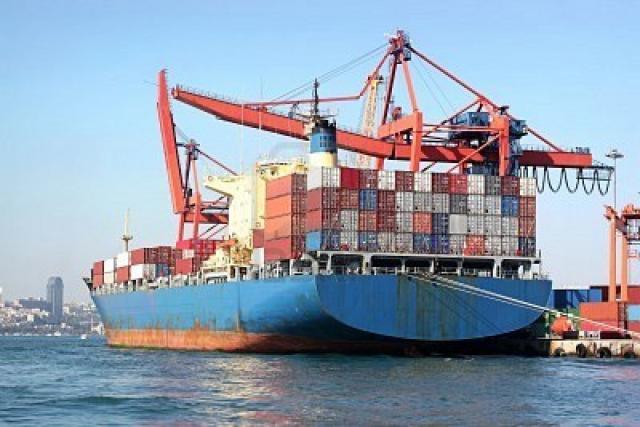
Ports contribute significantly to the economic development of nations and so the awareness about the adverse effects that Ports pose to the air, water, soil and sediments needs to be evaluated. While efficient ports are very important to the economic development of the surrounding environment, the related ship traffic, handling of the goods in the ports and the hinterland distribution can cause a number of negative environmental impacts.
Ship-source marine pollutants which emanates from cargo carried or waste generated on board usually contains oil or oily mixtures and noxious substances. This usually accumulates from machinery operation or from the domestic activities of the crew living on board. This also includes ship borne pollutants which include garbage, solid wastes and antifouling paints on ship hulls.

The incidence of ship generated marine pollution has increasingly engaged the attention of the international maritime community in its effort to promote safe shipping and the protection of the marine environment and the growing concern about pollution centres on the potential for the shipping business to negatively impact the marine environment and the related biodiversity within the maritime field.
It is imperative that stakeholders not only understand the positive effects of green solutions from an ecological point of view but also see the positive synergies regarding operational and economic performance. It therefore requires structures such as processes, technologies and methods that support green strategies that will help fulfil both economic and environmental objectives that will ultimately help contribute to sustainable growth and development.
FEPA regulated the collection, treatment and disposal of solid and hazardous waste from municipal and industrial sources, and the Environmental Impact Assessments (EIA) mandatory for any major development project likely to have adverse impact on the environment. In 1999 FEPA was replaced with the National Environmental Standards and Regulations Enforcement Agency (NESREA).
The ever increasing global concern on environmental health demands that wastes be properly managed and then disposed of in the most friendly and acceptable way. This is to minimise, and were possible, eliminate the potential harm to humans, plants, animals and our natural resources. Solid waste, as an example, has become an important issue in Nigeria: Piles of wastes are often found near roads, in rivers and in areas known to be affected by flooding. This is causing significant health and environmental problems.
Against the backdrop of public concern and the need for mitigating policies, the shipping industry has actively sought to curtail the negative environmental effects arising from the shipping sector. At an international level, under Annexes I, II, III, IV, V and VI of MARPOL, various legal instruments and controls have been provided to encourage regulation and enforcement by flag states, coastal states and port state control.

International Maritime Organization (IMO) identifies these sources and by their provision, port authorities are obligated to provide reception facilities for the handling of a range of waste including oil, chemical and garbage. Ports are also required to produce a Port Waste Management Plan, including information on the type and location of facilities, notification requirements, details of providers and costs. These plans are to be made available to port users, to ensure that vessels needs are met promptly with no undue delay.
Studies have shown that the effects of ship based pollution on the marine environment threaten the fishing industry. Maritime sector industries such as fishing contribute about 3 to 5 percent to the Nigerian agriculture share of the GDP. The introduction of non-indigenous species to our aquatic environment threatens not only a very important protein source in the diet of Nigerians, but also our economic stability.
The measures applied so far by IMO in terms of the conventions and their enforcement by flag state, coastal state and port state control have yielded fruitful results, especially in curtailing pollution from accidental spills arising from collisions. However, pollution from non-accidental sources continues unabated and some port authorities have been found wanting regarding the provision of the requisite port waste reception facilities. The implication is that rising levels of marine pollution from ship based discharges are expected in these ports in the long run.
Lack of adequate waste reception facilities in developing countries’ ports is such that vessels have no choice but to discharge waste at sea. However, some vessel operators prefer to dump waste at sea, where there is a low risk of being caught, rather than use the provided facilities and thus pay the required user fees. In West and Central African ports, facilities are becoming available in varying forms but remain inadequate hence ship waste collection processes in the ports are not only inefficient but also their management remains poor.
Currently the Nigeria Ports Authority (NPA), our custodian of national ports, does not own or operate waste reception facilities, but outsources that responsibility to a private pollution control company which helps provide port reception facilities in all navigational districts.
It is evident that solid waste management in Nigeria is plagued with inefficient collection methods, insufficient coverage of the collection system, improper disposal, lack of institutional arrangement, insufficient financial resources, absence of bylaws and standards, inappropriate technology, etc. While the policies and laws are fragmented and are formulated not on nationally generated baseline data, participation of the people in the policy formulation and implementation is lacking, and enforcement and monitoring of laws and policies is inadequate. It is therefore necessary that the legal (policies and laws), institutional, political, socio-cultural, financial, economic and technical aspects of solid waste management be given optimum attention with all seriousness.
FESTUS OKOTIE