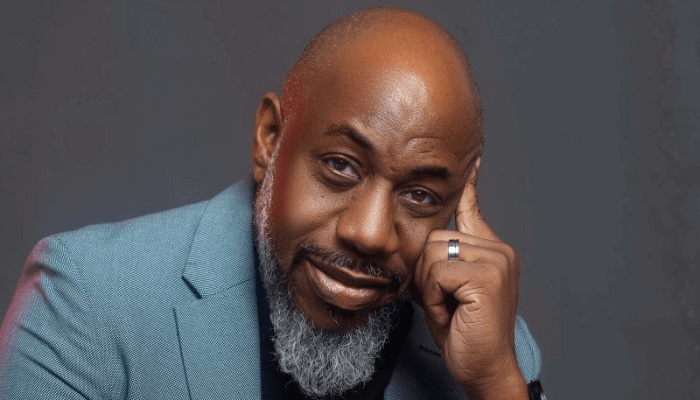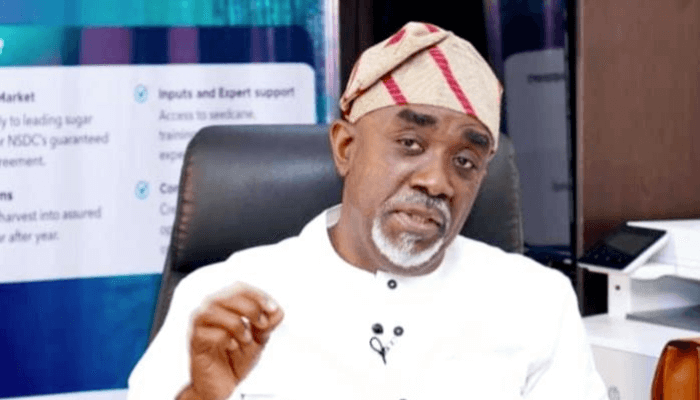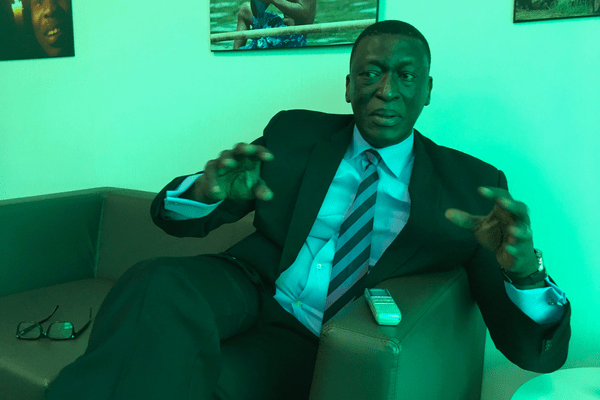
With about $5bn active portfolio in Nigeria – almost $1bn of that in agriculture sector, the African Development Bank (AfDB) hopes to catalyse up to $16bn private sector investments into the Nigerian economy. The Bank is already reaching out to global investors in this regard, and during one of those meetings with Chinese investors, EbrimaFaal, AfDB Director, Nigeria Office said Africa’s $35 billion annual food import bill is no longer acceptable. In an interview, with Onyinye Nwachukwu, BusinessDay’s Abuja Bureau Chief, Ebrima Faal explained why Nigeria is at the centre of the bank’s agriculture strategy, among other issues.
Why is this meeting with the investors so important?
Just by way of background I guess you are familiar with the high 5 priority of the bank, a central aspect of that is the feed Africa strategy. Africa is the biggest importer of food, basically, most of the foods that we consume are imported and it is costing us almost $35 billion annually. So part of the Feed Africa strategy is to say that we have everything it takes to produce food domestically in Nigeria and the rest of Africa to feed ourselves and to actually export some of these foods. But of course to do that we need to have an integrated value chain system and we have been working in the bank and some countries have made advances, like Ethiopia, Kenya, South Africa but Nigeria is biggest agricultural country in the continent.
So we needed to make sure that we formulate our strategy properly and the idea is that when we take the high 5s as a whole instead of in silo, how can we use that to transform rural areas by transforming agriculture, with all of the good things that come with it in terms of productivity, incomes, and rural/urban migration.

We engaged with the business community, government, and promoters at the beginning of the year to tell them our ideas on how to transform agriculture and the rural areas. We had several meetings with some anchor investors, big companies that are interested in agriculture, flour mills, Dangote and smaller ones down the scale. All the states are interested because clearly agriculture is a big part of what they do in the states, so we have been meeting with state governors as well.
Now with regard to the Chinese, they are part of our drive to attract global investors in the agriculture space in Nigeria, we are reaching out across the board to all global investors, the Chinese have been extremely responsive in terms of wanting to come and do agriculture. Basically, the reason why we have this special reach is because once we got the buy-in of the government both at the federal and the state levels, we now have to start thinking of how to develop the programs which is going to require a lot of funding and expertise and the Chinese already have these.
As far back as 50 years ago, their agriculture was just as backward as ours is now, but they have gotten out of that through innovating both in terms of crop, mechanical equipment and of course they had adequate financing to support that. So we think we can leverage that South-South cooperation for a win-win situation as far as we are not asking for grants or charity cases, we are asking them to come and invest with us and I think that is a different approach. So they have been quite responsive, I think it was a little over two months ago that we expressed our interest to welcome Chinese investors to come and look at the opportunities in Nigeria and across Nigeria, in the South West, North East, so I think we very happy that they took us upon that opportunity.
Apart from China, are there other partners?
Locally, what we call anchor investors are all the people doing things in different aspects of agriculture, for example, Dangote is one of them, flour mills is also there, and we are looking to leverage others like Unilever in terms of equipment etc.

So we are looking at people that are already investing in Nigeria and those that want to invest in Nigeria. We have received from the private sector in Nigeria, from almost every state in the federation, so it is not just the Chinese, but locally we have received a lot of private sector investors, and we also have the states themselves that want to invest in agriculture. On top of that, we also see a lot of interests coming from Europe especially in terms of wanting to invest in the processing side of things. So I think people realize that they can get good returns to their investments in Nigeria while helping us to develop that space as well.
All the engagement is all about agriculture and industrialization. What we do not want to do, for example, is if you take the case of cashew, sometime before the cashew mature, we have Indians coming in to buy all of the cashews even before they are harvested. They buy and take it to India or Vietnam, process it and then sell it back globally to us, sometimes at three/four times the price, but we are saying that, no, we need to process that cashew in Nigeria to consume it locally and then to export it, thereby getting all of the benefits, the same for cassava and same for rice.
In terms of numbers, what do you think Nigeria can leverage through these partnerships, discussions?
A large part of why agriculture across the value chain is not developed is the lack of infrastructure associated with it, like the roads, power especially, water irrigation, and so on. The bank can help both the public sector, the states, the federal government to develop the infrastructure around agriculture, that’s one. Two, we are also able to help the private investors if they wish to get financing from us, to then conduct the operations once those infrastructure are available.
So this special agro-processing zone is going to be not only about growing the food and processing but how to develop the whole infrastructure around a particular set of crops or a crop to be able to create, for example, what many people don’t see is, if you are growing cassava and you want to produce flour from it, that whole value chain is not only the grower and those doing the grinding, there is transportation, suppliers, so we try to develop the whole value chain around it, and that is how really china was able to develop the rural areas and I think Korea was also able to do the same. So we hope to replicate those kind of models that have worked in other places.
So you are not looking at financials yet?
Of course, we have three ways of financing things, one is debt and the other is equity, and the third one is if you are already in operations may be retained earnings. For companies that are already in a particular crop, let’s say Dangote tomatoes for example, before setting up, they might need to borrow from banks meanwhile they are with their money as well.
For companies that come to the bank with good bankable projects, as part of our SAPC, we will see how we can finance them, we will do the same thing for the government if the government say we have this 10,000 hectares that we want to develop for cassava but it’s all forest right now so how can the bank help us turn this into an agro-industrial zone where you have farming, manufacturing, sets of roads, schools around it, hospitals and other things, so it’s a whole ecosystem that we are trying to develop. So some of it will be financed by debt, some of it will be financed by equity and of course for companies that have retained earnings they can use their own funds to be able to do it.
Which key sub-sectors or crops are you targeting?
If you look at the regions of Nigeria, they all have comparative advantages, in the North, you are looking at sorghum, tomatoes, some animal husbandry, in the South you have cocoa, palm oil, so all of those crops are things I think depending on the investor interest we will have to support. One that comes to mind is cassava in the South West, for example, there is a lot of production there, even in the South East region, we are seeing some anchor investors that are keen to be able to not only produce but buy the cassava and then transform it into finished products for industrial use.
Talk through the bank’s Feed Africa project and how Nigeria keys into it?
The strategy is feed Africa and what we are trying to do is, it started four/five years when Adesina came in, is to say all of the remaining arable land in the world about 60 percent of that is in Africa, so if you wish to do anything in agriculture, the opportunity is here. Now in the meantime while that opportunity is here we also have the youngest population globally, other regions are ageing but we have young people. So when you bring these undeniable resources together, the market, the lands, endowment, it’s a very compelling proposition that we cannot miss, because we cannot keep importing rice when we can grow it, consume and still have some to export, the same thing for cassava and others. So what we are saying as part of the Feed Africa strategy is that Africa now must feed itself and feed the rest of the world by exporting and bringing in foreign exchange instead of spending foreign exchange.
If you take most of the crops that we are talking about, Nigeria is either ranked 1st, 2nd or 3rd in terms of global production, so the revolution that we are seeking in agriculture has to happen in Nigeria for the rest of Africa to benefit from it. We are looking to really, yes we already have some of these kind of SAPCs already in one or two places, as I mentioned, Ethiopia and Kenya is moving fast ahead and South Africa but I think in terms of skill, Nigeria is the place where we think, because it is already happening. If you look at sorghum, Nigeria is the second-largest producer in the world, the third for cassava of so in the world, but you look at tomatoes, not only can you grow, process, consume and export, Nigeria is the second highest importer of tomato paste. So it just makes sense that we grow the tomato here, process it and get the tomato paste, consume and sell the rest of it.
There are fantastic investment opportunities, and to go with that is the job creation and opportunities for the young people and as I mentioned earlier I believe that when you provide opportunities for young people. I am a firm believer that there is need to provide opportunities for young people, government cannot employ all, it is very small, but the private sector has to do that and what we are saying is that young people now are extremely entrepreneurial. So if we provide them those opportunities where they can create jobs for themselves and hire others, I believe that it has a high potential to reduce security risks across the continent which we see in other places.
Despite the testimonies of the huge potential in agriculture, we are not yet able to make substantial progress, what do you think is holding us back?
Many things, the easiest one that people say is financing. I think financing is a problem but it can easily be surmounted if you bring in projects that are extremely viable because then they sell themselves. However, we do have a lot of governance problems, we do have very significant structural problems especially around infrastructure like I mentioned earlier. We also have problems around skills and all of these, in a nutshell, translate into low productivity. So it’s a very vicious cycle that you have to break and in our thinking, if you bring all of those components together through the high 5s, then I think that’s a better approach.
Apart from financing, is there any way the AfDB is helping government shape some of these?
I think we are always in constant dialogue with the government, but we have to be mindful that as an international agency, our mandate is to discuss, dialogue and help policy formulation. At the end of the day, those that are elected are really the ones that will have to decide which way things go. But I must say that our dialogue in Nigeria has been written fruitful, I think the focus on infrastructure and human capital development in the ERGP is the same focus that we have in the high 5s. So in terms of alignment of purpose, I think it is very similar and I think we will continue to engage the government in difficult conversations to say well, you need to improve the infrastructure, you need to improve the governance and I’m optimistic.
What is the bank’s portfolio for Nigeria?
The bank’s current active portfolio is about $5 billion when we start active of course, we have been financing projects in Nigeria since 1972, so projects close, some of them finish and then close up, but those that are still ongoing are about $5 billion. Then we have a pipeline for the next four to five years, and that pipeline, we estimate we are investing about $1 billion to $1.5 billion a year over the next five years, so it’s a significant amount. What we also find is that for each dollar that we spend in Nigeria, we are leveraging another 5 dollars, so if we are spending 5 billion for example over a certain period which will be between 15 to 20 billion of investments in total.
When you look at all of the sectors, the dominant investment right now is in the energy sector which is critical for agriculture to realize the productivity gains that we want. Agriculture has been around 8 percent of our total portfolio, over the next five years we want to push it to about 20 percent.
So basically over the next five years when we put all the projects together it may reach $16 billion, now we cannot finance all of that so what we trying to do is to finance maybe a quarter of that, let’s say 4,5,6billion dollars and then the private sector comes in to finance some of them and the Chinese are here for that, then others will come and also our partners in development like the World Bank, DFID, and our track record for Nigeria shows that for every dollar we spend we get $45 partnership, and that is quite significant.