Vacancies in US shopping malls have hit an eight year high but new data show that some areas are coping with the retail upheaval far better than others and the gap is widening.
The proportion of units lying empty in some cities, including Indianapolis and Birmingham, Alabama, is about four times higher than the economic hotspot of San Francisco, according to new data from Reis, part of Moody’s Analytics.
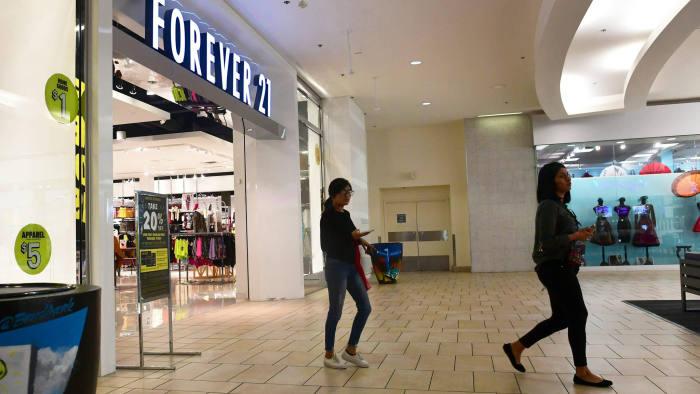
The signs of difficulty in local retail property markets come as landlords brace for a wave of store closures following the bankruptcy of Forever 21 this week. The fast-fashion retailer, which has 32,800 employees globally, has earmarked 178 locations for closure across the US.
Jonathan Goulding, the company’s chief restructuring officer, said in court documents that Forever 21 was “saddled with excessive floor space” in several unprofitable markets.

The company’s stores occupy 12.2m sq ft worldwide and tend to be especially large, prompting worries that mall operators will struggle to find replacement tenants.
Read also: US tariffs impact uneven across Europe’s food and drinks industry
“It’s definitely a concern because there’s not that many retailers that will want that amount of space,” said Neil Saunders, retail managing director at consultancy Globaldata. “In some locations there’s just a real glut of space.”
The Reis data published on Thursday, which track 77 metro areas, show 9.4 per cent of units were empty in the third quarter — equalling a post-financial crisis high reached in 2011.
The retail vacancy rate was less than 7 per cent in 17 cities, led by San Francisco with a 4.1 per cent rate. By contrast, 24 cities saw vacancy rates above 12 per cent, including Memphis, Buffalo and Albuquerque.