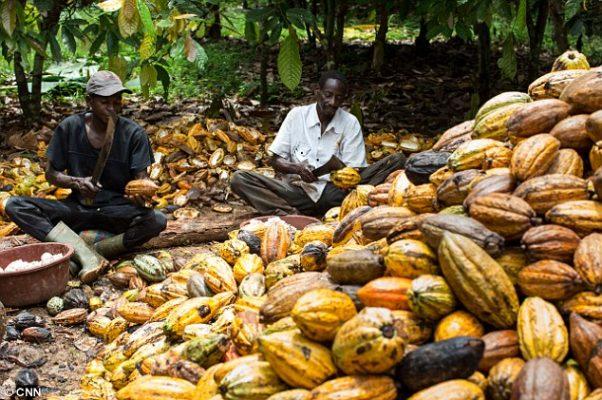
In spite of flash flooding incidents recorded in some key cocoa-producing states in Nigeria, farmers are optimistic that the 2018/2019 main crop output will still rise marginally.
The farmers link the marginal increase to a more favourable weather condition in 2018/2019 crop season when compared to that of 2017/2018 season.
“The flowering on the cocoa trees has been appreciable even though they are slow in starting and the weather pattern has been good despite records of flash floods in some states,” Sayina Rima, national president, Cocoa Association of Nigeria (CAN), said by phone from his Ikom farm in the South-South region.
“If the weather continues like this in the next two months, there is going to be a marginal increase of between 3.5 to 5 percent in our 2018/2019 cocoa main crop output compared to 2017/2018 season,” Rima said.
The International Cocoa Association (ICCO) had earlier in the year predicted that Nigeria’s 2018/2019 cocoa production will dip by 10,000MT from 255,000MT in 2017/2018 season to 245,000MT. ICCO had attributed the predicted decline to extreme weather conditions.

In recent months, Nigeria has been experiencing torrential rainfalls that have caused flash floods in Oyo, Ekiti, Adamawa, Gombe, Bayelsa and Osun States with many more to witness floods following the rise of water levels of Nigeria’s two major rivers – Benue and Niger.
The Nigeria Hydrological Services Agency recently said that states in the southern parts of the country will be more affected and this region currently accounts for 95 percent of cocoa crop in Nigeria.
However, the recent heavy rainfall in the country does not pose any threat to the country’s cocoa production, says the Cocoa Association of Nigeria.
“The pods are doing well and the rains have been falling and if this continues till October we will have a slight increase in 2018/2019 main crop production,” Robo Adhuze, chief operating officer, Centre for Cocoa Development Initiative, said.
Adhuze said that the country would have recorded a tremendous increase in the 2018/2019 season if the government had put in measures to boost productivity of farmers.

He noted that country’s overall production at the end of the year might even be lower than last year on the recent border closure policy of the Federal Government.
He said some cocoa plantations belonging to Nigerians are located at the border between Nigeria and Cameroun and this might affect volumes of cocoa beans coming from the state.
Nigeria has two cocoa harvest seasons – the smaller midcrop from April to June, and the main crop from October to December.
The main crop accounts for about 70 percent of Nigeria’s cocoa output while the midcrop accounts for the remaining percentage.
Africa’s most populous nation now ranks fourth with 255,000 metric tonnes production in the 2017/2018 cocoa season, recent data from ICCO show.
“The cocoa trees on my farm are currently doing well and the pods are coming out well. My farm has not been affected by the black pod disease as I have been applying the chemicals and fertilisers well,” Lawrence Afere, a cocoa farmer in Idanre, Ondo State, said.
“At the farm gate we sell a metric tonne for N660,000 and a kilo for N660 but at the market it is sold for N720,000 per tonne and kilo for N720,” Afere said.