Nigeria’s Federal Government could be blowing 100 percent of its revenue to repay creditors in another five years, but economists have figured a way out.
As a percentage of revenue, the government has spent close to 60 percent on average in the past three years to service debt, according to official data.
Debt has been the preferred option to bridging a shortfall in public revenues despite opportunities to raise equity through privatisation. In four years, the government’s debt stock has increased by N10 trillion to N24 trillion as at March 2019.
Since peaking at an eight-year high of 69 percent in 2017, the government actually spent less on repaying creditors in 2018, with 55 percent of each naira earned going to debt service.

That’s after N2.15 trillion went to debt service in the course of the year, while the government raked in revenues of N3.9 trillion.
The decline in the debt service cost may have come from a change of tack by the government in 2018 to swap expensive local debt for cheaper foreign debt.
That decline, however, hasn’t masked the government’s ugly balance sheet and the long-term concerns it elicits, particularly regarding the cost of public debt.
Since 2014, debt service costs have jumped 165 percent to N2.2 trillion in 2018. Going by that trend, debt service could more than double to over N4 trillion in another five years. That’s more than the amount spent on infrastructure in the last two years combined and is about the total size of the 2014 budget.
In 2019 alone, the government has spent N1.1 trillion in debt service costs, 18 percent higher than the budget estimate and 55 percent of the N2 trillion government revenue for the half-year period.

This implies that the government spent N183 billion every month and N6 billion daily in the first half of the year to service debt.
At 55 percent of revenue, Nigeria spends the highest percentage of its earnings on debt service among 24 African countries surveyed by BusinessDay.
South Africa spent 11.4 percent of its revenue servicing its debt in 2017, according to the latest data provided by the World Bank, while Egypt and Kenya spent 33 percent in 2015 and 13.2 percent in 2017, respectively.
While the percentage may have increased since then, Nigeria still outspent Kenya at the time as some 69 percent of revenues went to debt service in 2017.
For some economists, the debt trend is unsustainable and creates a big mess for the future as it inhibits the cash that can be channelled into badly-needed physical and social infrastructure as well as human capital development.
“Going by the rule of 72, if interest rates on short-term paper are averaging 14 percent per annum, it means the sum of total debt owed plus interest will double in five years even if we don’t take additional debt between then and now,” an economist, who’s unauthorised to speak publicly, said.
“It’s clearly unsustainable and I feel any government coming in by 2023 is being set up to fail,” the economist, who keenly follows political events in Nigeria, said.
Despite admitting that it is facing “significant mid-term fiscal challenges” owing to weak revenue mobilisation and rising costs, the government’s math is quite different from a doubling in debt service costs within five years.
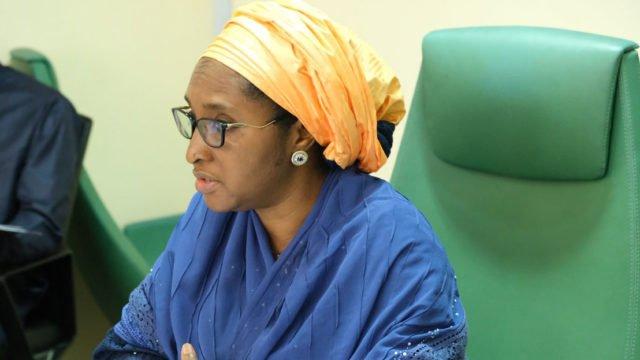
Zainab Ahmed, minister of finance, expects the government will spend N2.9 trillion to service its debt by 2022, up from N2.2 trillion in 2018.
From the numbers, Ahmed’s overambitious revenue projections are expected to keep debt service-to-revenue ratio at around 34 percent.
Some economists are holding that estimate with a pinch of salt and for good reason.
The government has failed consistently to accurately forecast most of its line items other than recurrent expenditure for more than three years.
From exaggerated revenues to underestimated borrowing costs, the government is fast developing a penchant for missing set targets in its budget. Rather than the 34 percent debt service-to-revenue ratio estimated for 2022, economists say the actual figure could be closer to 100 percent on the back of lower-than-planned revenues.
On average, the Federal Government has only been able to meet 52 percent of its revenue target in the last three years through 2018.
Assuming the trend of raising only 52 percent of its revenue projections continues into 2022, then the government may raise only N4.16 trillion, at which point debt service could equal total revenues.
That could spell disaster for Nigeria, which would be left with zero cash to fund capital projects and pay its bills from worker salaries to overhead costs.
A possible way out of this impending debt implosion, which is now also dawning on the government, is to roll out a debt restructuring programme, according to Wale Okunrinboye, head of investment research at pension fund manager, Sigma Pensions Ltd.
“The government needs to embark on a sovereign-type rights issues to manage its debt,” Okunrinboye said by phone. “We need to sell down some government assets to raise equity and settle some of our debt so that we free up cash for better purposes,” he said.
The government has often talked up the need to raise equity through asset sales but not much action has followed that.
In 2017, the government announced that it planned to raise some N710 billion from the restructuring of some of its Joint Venture stakes with International Oil Companies.
Two years later, not a dime has been raised, neither has the paltry N10 billion which has been budgeted for as privatisation proceeds since 2016.
The government’s revenue mobilisation efforts have yielded little results, yet private capital has hardly been tapped.
Ayo Teriba, a leading economist and CEO of advisory firm, Economic Associates, said there’s no reason the government should be facing a fiscal crisis with the assets at its disposal.
The global liquidity glut provides a good time for the country to raise some equity, according to Teriba.
“We have $60bn in dollar-denominated equity sitting idle in JV assets that can be securitised and investors will jump at it, automatically cancelling the need to rack up so much debt at such high cost,” Teriba said.
“We had this option before the oil price collapse in 2016 and long before the naira meltdown, yet we managed to ignore it,” he said.
Andrew S. Nevin, chief economist at PwC, is also convinced Nigeria should be looking to raise equity at this time.
“Nigeria has some N180 trillion in dead capital trapped in real estate and unlocking it would be a game changer for government revenue and the economy,” Nevin said.
“We need to act with some more urgency to boost economic growth given that Nigerians are growing poorer at an alarming rate as population growth continues to outpace GDP growth,” he said.
But critics say the current government’s ideology largely does not see the merits of private capital.
“Time is running out on Nigeria and we are getting to that point where it’s embrace private capital or perish,” a senior banking source said on condition of anonymity.
LOLADE AKINMURELE