The European Central Bank, ECB has announced an ambitious new stimulus package in a bid to tackle sluggish growth and persistently low inflation in the eurozone, triggering a furious response from US president Donald Trump.
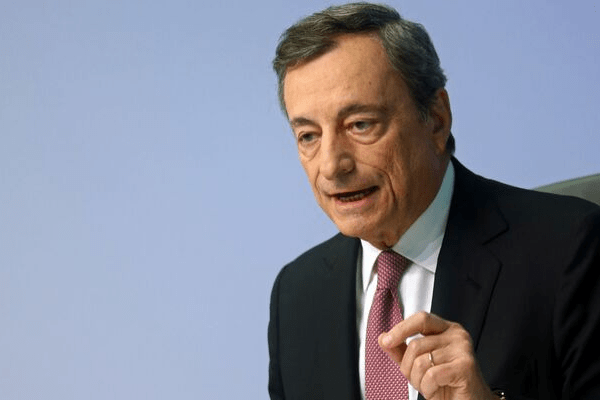
Although he unveiled a broad range of easing policies, ECB president Mario Draghi warned eurozone governments that the central bank could not remedy the bloc’s darkening economic outlook on its own. He urged them to loosen the purse strings, saying: “Now is the time for fiscal policy to take charge.”
At a meeting of its governing council in Frankfurt on Thursday, the ECB cut its deposit rate from minus 0.4 per cent to a new record low of minus 0.5 per cent. The bank will also restart its quantitative easing (QE) programme, buying €20bn of bonds every month from November. It eased lending terms for eurozone banks and offered them tiered interest rates in a bid to ease the pressure on their lending margins.
It is the first time the ECB has cut rates since March 2016; the resumption of QE revives a bond- buying programme that the ECB paused last December after buying €2.6tn of bonds.

Mr Trump responded by reiterating his complaint that the ECB was attempting to devalue the euro.
“European Central Bank acting quickly,” Mr Trump tweeted. “They are trying, and succeeding, in depreciating the euro against the VERY strong dollar, hurting US exports . . . And the Fed sits, and sits, and sits. They get paid to borrow money, while we are paying interest!”.
Mr Draghi, who will finish his eight- year term as ECB president and hand over to Christine Lagarde at the end of October, responded by saying: “We have a mandate. We pursue price stability. And we don’t target exchange rates. Period.”
The eurozone faced “more protracted weakness” than previously thought, resulting mainly from the global trade slowdown, he said. The ECB cut its forecast for growth in the 19- member single currency zone this year by 10 basis points to 1.1 per cent, and by 20 bps to 1.2 per cent for 2020.
It also lowered its forecast for inflation by 10 bps to 1.2 per cent this year, and by 40 bps 1.0 per cent next year. In response, the ECB signalled that interest rates would stay lower for longer than it previously expected, changing its forward guidance. It had previously said that interest rates would not rise before mid-2020.

The decision by the ECB initially pushed the euro lower, but that was shortlived. Within hours, the currency was sitting 0.3 per cent higher on the day against the dollar, at $1.104.