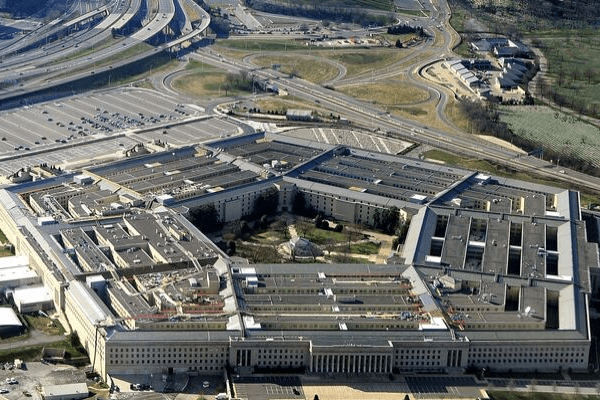
The Pentagon is compiling a list of companies with ties to the Chinese military as part of a stepped-up Trump administration effort to stop Beijing from obtaining sensitive technologies and protect US defence supply chains.
The US defence department is trying to identify Chinese companies and organisations with direct and indirect relationships with the People’s Liberation Army to help reduce the chances of US weapons supply chains being compromised, according to seven people familiar with the effort, which has strong support from the White House.
The Pentagon has become increasingly concerned about supply chains, seeking ways to tackle critical gaps in the US industrial base and prevent infiltration by adversaries. The focus has intensified under the Trump administration, which in 2017 named China a “revisionist” power in its first national security strategy.
The review aims to detect supplychain vulnerabilities to help ensure US companies do not help the Chinese military through sales or procurement. In much the same way the US has clamped down on Huawei, the Chinese telecoms company, the list will help the government to reduce potential threats from China by utilising export-control rules and federal acquisition regulations that can be used to bar government agencies from buying technology from designated companies.

“The Pentagon is going whole hog,” said one person familiar with the project. “When it comes to changing trade and supply chain patterns, the federal acquisition regulations are the most powerful weapon in the Pentagon arsenal, even more potent than our nuclear weapons, and are a formidable wedge for forcing decoupling.”
General Paul Selva, the recently departed vice-chairman of the joint chiefs, focused the review on semiconductors and integrated circuits since both are critical for weapons, according to the person.
The Pentagon declined to comment on any aspect of the supply chain review, saying it was unable to do so “for classification reasons”. The commerce department, which is also involved in the project, also declined to comment.
Paul Triolo, head of the geotechnology practice at Eurasia Group, said the Pentagon had become increasingly concerned about critical areas such as semiconductors because of the potential for Beijing to insert sophisticated implants that could be used to compromise weapons during a time of conflict between the US and China.
“These types of supply chain operations are extremely difficult to detect, and the Pentagon’s preferred approach seems to be evolving around attempting to identify trusted suppliers, much like in the case of next generation 5G [mobile] systems, and blacklisting those suppliers that are deemed potentially subject to Chinese intelligence services influence,” Mr Triolo said.

The effort to secure supply chains for weapons ranging from cruise missiles to fighter jets comes as China pushes ahead with a “militarycivilian fusion” programme that experts say further underscores the need for the US government and private sector to be vigilant about companies that may have hard-todetect connections to the PLA.
Christopher Ford, a top state department official, has urged the US to “wake up” to the implications of the programme for areas such as artificial intelligence, cloud computing and semiconductors. “This is not a call for anything like a complete high-technology ‘boycott’ of China, but there is a need for serious risk mitigation,” he said in July.
The push to be more vigilant about PLA connections comes 20 years after Congress passed a law requiring the Pentagon to publish a list of Chinese military companies and groups operating in the US. The Clinton administration did not act on the law, which has remained dormant until it was resurrected by the Trump administration.
The issue is receiving more attention from Congress as lawmakers become increasingly concerned about China.