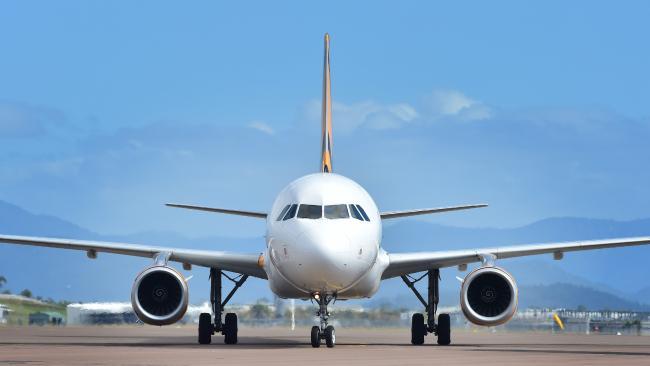
Domestic airlines in Nigeria are currently finding it difficult to lease aircraft from Europe, America and other continents as a result of an alleged unofficial ‘blacklist’ over funding issues, low capital and infrastructure challenges, BusinessDay’s findings show.
While lessors from other countries have not officially announced the blacklist of Nigerian carriers, findings show that stringent requirements and conditions imposed on the Nigerian carriers before they obtain aircraft make it difficult for an average domestic carrier to obtain an aircraft through lease.
This challenge is in addition to carriers’ numerous challenges ranging from inability to access adequate foreign exchange to run their operations efficiently to high cost of aviation fuel, absence of Maintenance Repair Overhaul (MRO) and poor infrastructure across the nation’s airports.
BusinessDay’s checks show that Nigeria’s largest carrier, Air Peace, was recently unable to acquire 10 aircraft through lease as a result of the unofficial ‘blacklist’.

“There is an unofficial blacklist of Nigerian airlines. I can tell you for sure, it exists. We lost about 10 aircraft we wanted to acquire through leasing,” Allen Onyema, chairman/CEO of Air Peace, said.
“You cannot survive in this business without leasing; even all these big airlines we know in the world, majority of their planes are leased or financed,” he said.
Onyema said Nigerian airlines need aircraft leasing to survive and it was imperative for the government to start polishing its acts and laundering the country’s image so other countries can build confidence in Nigeria.
“Any government official tomorrow that goes out to say our airlines in Nigeria are bad, talking about us in the negative, will not help our image. It will affect not only the airlines but other sectors of the economy,” he said.
Onyema explained that in countries like China, for instance, before an airline is granted permit to operate, it must show the registration of three aircraft, either by way of dry lease or outright purchase. In the case of outright purchase, it is preferred the airline owns the aircraft before it can get such permit, he said.

A source close to the airlines, who craved anonymity, told BusinessDay that apart from Air Peace, other domestic carriers had not been able to buy or lease aircraft in the last two years because of stringent conditions given to them. These conditions are totally absent when carriers from other continents want to lease aircraft.
The source said a Nigerian carrier had to ‘borrow’ an aircraft from another domestic carrier to meet its hajj demand because it could not afford to lease an aircraft.
“Nigerian carriers are the ones suffering the consequences of the country’s porous airports. No aircraft lessor will read reports in the newspapers of how porous our airports are and still lease out their airplanes since they know the airplanes are not safe in the country’s airports,” the source said.
Few weeks ago, one Usman Adamu from neighbouring Republic of Niger accessed the Murtala Muhammed International Airport and climbed an aircraft belonging to Azman Air.
Experts have severally expressed concerns over the airport security, saying this could cause the country and the domestic airlines huge investment opportunities.
However, Alexander Nwuba, managing director, Smile Air Ghana and former MD, Associated Airlines and WestAir Benin, thinks three major factors that motivate lessors to lease aircraft to airlines are money, ability to pay back and ability to recover their asset.
Sadly, Nwabu said, Nigerian airlines had either failed in the past to keep to the contract agreement in either paying consistently or giving back the asset to the lessors as and when due.
“Lessors have complained of the challenge of recovering their aircraft in an event of non-payment. Money, payment and recovery process are the primary motivators for lessors and once they find a country lagging in these areas, they may withdraw their partnerships,” he said.
Last year, two Bombardier Dash 8 Q300 aircraft formerly used by Topbrass Aviation Services Limited, a local operator, were allegedly stolen in Lagos. The airplanes (registration numbers 5N-TBB and 5N-TBC) had been the focus of a legal tussle between the lessor, Seagold Investment Limited, and Topbrass Aviation Services.
Some interested parties from the Presidency, however, acquired the aircraft contrary to the orders of the Federal High Court in Lagos.
However, experts in aviation sector have also blamed the absence of Maintenance Report Overhaul (MRO) as part of the factors discouraging lessors from leasing out planes, as they expect operators to carry out regular aircraft repairs, checks and maintenance.
IFEOMA OKEKE