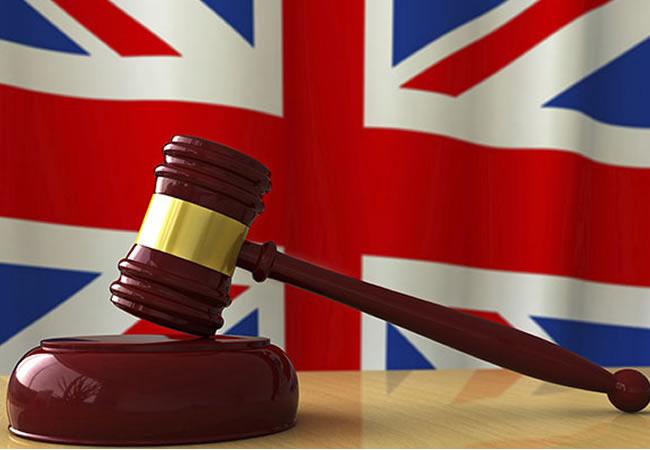
On Friday 16 August, Justice Butcher of the London Admiralty Court awarded a record-breaking $9.8 billion against the federal government of Nigeria for breach of contract involving a shadowy off-the-shelf company, Process and Industrial Development Limited (P&ID).
Christopher Butcher QC is reputed to be among the most formidable judges in England today. A first class graduate of Magdalene College Cambridge; he is also a Vinerian Scholar and Prize Fellow of All Souls College Oxford, with a doctorate from King’s College University of London, to boot. But his judgement is flawed.
The award grants the claimants leave to seize of Nigeria’s commercial assets at sea and on land; including ships and oil tankers, gold deposits, shares, bonds, securities, real estate and central bank reserves owned by our government.
This may well go down as one of our worst debacles ever, comparable only to the 2009 loss of the strategic Bakassi Peninsula at the World Court. The latter was presided over by a French jurist, Gilbert Guillaume, whose country had strategic neo-colonial interests in the oil-rich Bakassi Peninsula. We stood no chance whatsoever.

The late Judge Taslim Olawale Elias, a former President of the International Court of Justice (ICJ) and by far our greatest jurist ever, warned us to avoid taking the matter to The Hague. But our greedy lawyers only saw dollars and gave the wrong advice to the then military government. As a consequence, we lost forever the most strategic naval outpost on the south eastern corridor of our great country.
Today, the dogs are returning to their own vomit. Philosophers of history tell us that history repeats itself, first as tragedy and second as farce.
In 2010 P&ID signed a Gas Supply and Processing Agreement (GSPA) with the Ministry of Petroleum Resources in respect of the accelerated gas development project in Nigeria’s OMLs 67 and 123. The objective was to build a facility to process raw gas into lean gas to generate electricity. The company was to build a gas facility wholly at its own expense but was to export the by-products – methane, propane, hydrogen sulphides and nitrogen – for a profit. The government on its part would lay gas pipelines and other infrastructure while delivering gas to the processing plant.
After two years of no-show, in 2012 P&ID took the matter to a London arbitration tribunal, claiming damages for breach of contract. They argued that, in failing to build the required pipelines, the government failed to fulfil its part of the bargain. Meanwhile they had not begun building the plant. They claimed to have made several futile attempts to engage with the government in finding a practical way out of the impasse; it coincided with one the most difficult periods in our country.
President Umaru Yar’Adua was afflicted with life-threatening illness throughout his presidency from May 2007; dying in a Saudi hospital in March 2010, precisely around the time the contract was supposedly signed on his behalf by his petroleum Minister, Rilwan Lukman, who was himself a sick man.

In May 3, 2015, at the tail end of the Goodluck Jonathan administration the company wrote expressing willingness to accept a settlement of $850 million. Note again the timing. According to a spokesman for the erstwhile administration, Reno Omokri, President Jonathan did not feel comfortable making such a payment in the eve of his departure for fear that it might grossly be misunderstood. I imagine that he would have asterisked the issue in his hand-over notes to President Muhammadu Buhari when he took over on 29 May 2015.
Buhari is not a statesman who could master his own brief; being more of a latter-day Caliph who prefers to leave the tiresome business of governing to his grateful subalterns. And like his fellow kinsman from Katsina, he was and remains a sick man. It took him a good six months to form a cabinet, in November 2015. As a consequence there was no Attorney-General and Minister of Justice in place when, in July 2015, the tribunal awarded P&ID US$1.9 billion in damages. The three members of the tribunal were: Leonard Hubert Baron Hoffmann, Anthony Evans and Bayo Ojo, a former Attorney-General.
Hoffman, a QC, is a retired judge and a recognised London arbitrator. A former Rhodes Scholar from South Africa, Hoffman was one of the most influential Law Lords on the British legal firmament. But he is also known to be controversial; occasionally prone to delivering judgements that raise eyebrows.
Would it also be fair to speculate that Lord Hoffmann might have been desirous of making a punitive award against Nigeria commensurate with the $5.2 billion (negotiated down to $3.2billion) that our NCC lumbered on South African telecoms giant MTN? Evans is a former Lord Justice of Appeal and also Chief Justice of the Dubai International Financial Centre Court. They are hardly the type to be sympathetic to Nigeria.
Bayo Ojo, a SAN, was said to have delivered a dissenting opinion, arguing that the award should never have exceeded $250 million. Being a former Attorney-General of Nigeria, he should have recused himself. They might have placed him there merely to give a semblance of fairness. I would have preferred someone like Fidelis Odita, a QC and SAN, and arguably the greatest financial and capital markets legal luminary in Britain.
On 31 January 2017, the tribunal rendered a final award of $6.597 billion against Nigeria. The figure was revised upwards based on calculation of 7 percent interest effective from 20 March 2013, leading to a total figure of $9.8 billion.
From the word go, the Buhari administration smelt a rat. The erstwhile PDP administration, if truth be told, was deeply mired in grand larceny such as we had never seen before in the oil sector. According to London’s Royal Institute of International Affairs, our treasury was losing something like $1 billion per month from oil theft. The excesses of people like Diezani Allison-Madueke stank to the high heavens. Try as we may, we cannot deodorise the stench of those years. This explains why the current administration thought to distance itself from the case.
But it was a big mistake. Ignored problems don’t go away automatically. Under international law, governments may change, but the state continues. For better or worse, a government inherits the assets and liabilities of its predecessors.
The government rightly argues that the scale of the award is odious; ruinously extortionate. They are counter-suing in the US; arguing that London is not the right jurisdiction on a case of this nature. The EFCC describes it as “daylight robbery” and is launching a forensic investigation. Attorney-General Abubakar Malami predictably blamed the PDP administration for “conniving with local and international contractors in a bid to inflict grave economic adversity on the Federal Republic of Nigeria and the good people of Nigeria”. (To concluded next week)