With more choice, power and information at their fingertips than ever before, today’s consumers are making quicker, more connected decisions about everything from how to spend their money to which media they consume.
This has placed an onus on brands and media companies to use technology to not only make things faster, easier and more productive, but to ensure audiences feel part of something meaningful. It is vital to make experiences personal to audiences and to deliver them at the moments when they are going to resonate the most.
When and where content will be the most receptive to viewers is continually changing, as evidenced by a dramatic shift in the last five years of where consumers are spending their time. On average globally, people spend over 11 hours a day consuming media in some form across platforms, marking a 10 percent increase in consumption compared to data from 2012.
Television continues to remain an important part of this mix, but unsurprisingly we are seeing a shift in people spending more time online, especially in non English speaking countries. Time spent on mobiles is now at over three hours 15 minutes per day on average according to Global Web Index’s Q1 2019 research data.

Looking specifically at Nigeria, mobile becomes an even more important of the media mix as, Global Web Index’s 2017- 2018 data shows mobile usage far outpaces other digital devices, with 97 percent of the population having a smartphone compared to 35 percent having a Pc/laptop and 13 percent a tablet. Consequently, Nigerians are spending significantly more time than the global average consuming content on mobile, with an average of four hours 33 minutes per day (according to 2017 data), and a large proportion of this time is on social media – three hours 17 minutes.
These changes in consumer behaviour are affecting where and how often people find their news, with smartphones becoming the primary device and start point for news consumption.
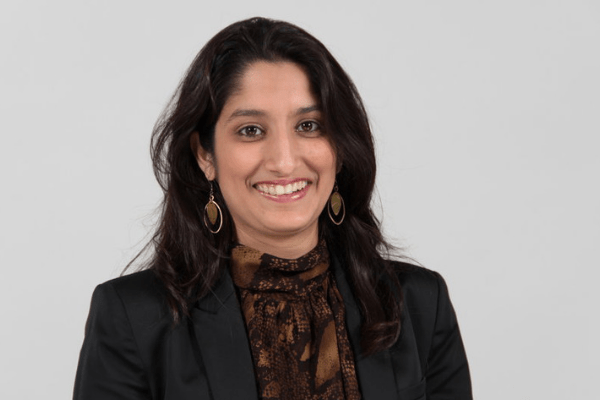
Tini Sevak is the Vice President, Audiences & Data, CNN International Commercial said in a bespoke research study CNN conducted earlier this year found that 67 percent of audiences generally use websites and apps for their news consumption, with social (58 percent) and search (42 percent), National TV (61 percent) and dedicated TV news channels (55 percent) still playing a critical role in following the story.
According to Sevak, all this insight speaks to the rapid change of the news cycle, but also the need for brands and publishers to focus on providing audiences with content that matters to them.
She explained that there are also indications that, driven by concerns of misinformation, in 2019 attitudes (especially amongst younger audiences) are changing towards news on social media.

For instance, according to the Reuters Institute Digital News Report 2019, while 68 percent of international news audiences have used Facebook for news, less than a quarter of the audience trust news from the platform. There can be an exception here though when news is clearly provided on social media by a trusted news brand that the audience is already familiar with.
According to her, audiences today have higher expectations and lower attention spans when it comes to content. “Moreover, in the “Amazon era” of easy access and fast delivery, audiences demand that media and news brands meet their expectations for what they want, when they want it and where they need it. This is driven by three points:
“Building credibility and favourability through accuracy and trust—being responsible not just with audience’s data but in the calibre of the content delivered to them; having a deep and enriched knowledge of audiences—
“Understanding and treating them as people with real life interests and behaviours, not proxies defined by general demographics; and providing audiences with relevant and meaningful content— Identifying the key moments when content is going to resonate the most,” she said.
Every news organisation must embrace these points because trust translates into loyalty, and vice versa. As part of our research study earlier this year, CNN rated 4.6 times higher on average than other news brands when it came to trustworthy and reliability.
The importance of trust also permeated throughout the Reuters Institute Digital News Report, which found that consumers are relying more on “reputable brands” as trust in news more generally continues to fall with rising concerns of negativity, fake news and overload of information. In the global study, nearly a quarter of people (24 percent) said that they would stop using sources that had a “less accurate reputation”.
Linked directly to this need for trust is an appetite for enterprising and informed journalism. “Our research study found that audiences placed most value on journalists who display a depth of knowledge and passion, ability and drive for the truth and a willingness to go to wherever the heart of the story is to report the facts first-hand.
“Specifically regarding its own network, participants in the study said they come to CNN to find something unique that they can’t get elsewhere; for relevant content; to better understand what is going on in the world today; and for news that is important to them personally.
“It is paramount for news brands to live up these expectations if CNN is to retain and grow audiences. Advertisers and audiences have just as much to gain from creating deeper experiences because consumers expect a two way relationship with brands and furthermore expect experiences to be consistent across all touch points of their journey,” Sevak said.
She noted that listening to consumers, understanding their behaviour, interacting with them and responding to their wants and needs (all in a data responsible and safe environment of course) is the only way this is achieved.
As VP, Audiences & Data, Tini Sevak leads and develops CNNIC’S international and geographically distributed team of specialists focused on using Warnermedia and out-of-house data capabilities to create new data solutions via analytics and visualisation, as well as accelerating the modernisation of our existing audience research tools.
Tini joined CNN from Yougov, a data & analytics provider, where she was Global Director of Data Applications. Prior to joining Yougov, Tini spent over 14 years in the media agency industry. Whilst working at Mindshare & Starcom Mediavest, Tini worked with digital, data, analytics and technology to lead clients on a journey of transformation turning insights into actions to drive business outcomes.