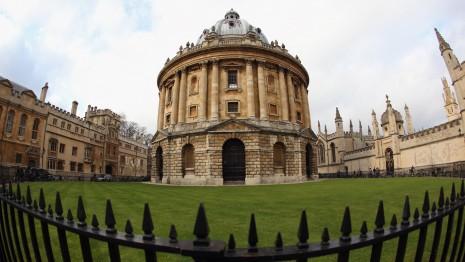
History walks on all fours at the University of Oxford, more often described as Oxford University. It is one of the oldest higher education institutions in the world and has many accomplishments to showcase. In recent times, the halls of the University of Oxford and its colleges have acquired a contemporary appeal as well thanks to one of the most successful film series in the world, Harry Potter.
A trip to Oxford University is a journey into the delights and wonders of education and man’s search for meaning over the centuries. The excursion to Oxford was one of the highlights of leisure time for the team from the School of Media and Communication, Pan Atlantic University. We first detoured to the purpose-built £160m shopping mall at Bicester Village.
Bicester Village is devoted to the exclusive display and sales of the world’s top fashion brands. Whatever the brand name, so long as it is on the global A-List, you will find it at Bicester. The Brits are so organised that everything makes for tourism. So, we joined the hordes from all over the UK to tour Bicester. The prices? The less said the better. Suffice to say it is not for those who shop for bargains!
Then to Oxford. The University of Oxford draws more visitors than Shakespeare’s birthplace of Stratford-upon-Avon. The university is the central point of the town of Oxford. Everything revolves around it.

The University of Oxford is a vast place teeming with people and suffused in history as the architecture of the buildings proclaim. Oxford is a collegiate research university. Records say teaching commenced therein as early as 1096. It is deemed the oldest university in the English-speaking world and the oldest university in continuous operation in the world after the University of Bologna. Historians say its growth hastened when King Henry 11 banned English students from attending the University of Paris.
The University of Oxford sprawls over a vast landscape. There are 38 constituent colleges, each of which operates in semi-autonomy. Visitors find themselves engaging in long treks. Dr Mike Okolo loved this aspect of the trip as it offered an opportunity for walking. His tracker showed we covered 10 500 steps.
There are too many things to see in Oxford. Once I knew we would visit, I wrote to our Nigerian flagbearer at the institution, Prof Wale Adebanwi, who heads the African Studies Centre. Wale Adebanwi is the Rhodes Professor of Race Relations and the Director of the African Studies Centre, School of Interdisciplinary Area Studies, and Fellow of St Antony’s College. Unfortunately, it was August, and he was heading to Accra a day before our visit. It was also the summer break, so there was not enough time to arrange for other people to conduct us round.
Each visitor to Oxford University invariably chooses the places of the most interest. There are the ancient libraries, the theatres and the various colleges, each of which is akin to a university of its own. Most people love to tour Christchurch, one of the most famous.
Our team’s destination was New College. Do not allow the name to mislead you. “New College, founded in 1379, is one of the thirty-eight constituent colleges of the University of Oxford. The College consists of the Warden and 60 Fellows, as well as 600 junior members (undergraduates and graduates) most of whom live in the College Buildings or College houses nearby. The courses of study cover a range of subjects.”

William of Wykeham, Bishop of Winchester and Chancellor of England, founded it. They dedicated New College to the Virgin Mary and her statue stands beside the Founder above the Front Gate. “New College, or “the College of St Mary of Winchester in Oxford”, is the second Oxford College named after St Mary Winton, the reason they named it New College. New College was initially established for the education of priests and as a choral foundation. It was the first college for undergraduates and the first in which senior members of the College had tutorial responsibility for undergraduates.
New College, Oxford, OX1 3BN says the structure today is like that in 1379 and stays true to its original foundation. It remains an intellectual community first with academic excellence as the only criterion for admission. Students nowadays have private rooms, the majority of which are en-suite, in stark contrast to the provision even fifty years ago. The College began to admit women in 1979.
The Bodleian Libraries were another point of interest, naturally. A visit to an academic institution that excludes the library did not happen. The Bodleian Libraries holds some of the world’s greatest literary and cultural treasures”. It houses the Divinity School, the University’s earliest teaching rooms. A large proportion of its holdings are in under-ground tunnels. The Bodleian network consists of 28 libraries. It holds over 13million printed items and over 80 000 e-journals. It was the location for many scenes in the Harry Potter films and thus a significant draw for young people.
Most appealing is how the Library runs a series of exhibitions and tutorials on several aspects of world history and knowledge. The “Talking Maps” exhibition was on as we visited and stays open until the end of September. It tells the story of maps and what they reveal about the places they depict and those who made or commissioned them and drew on the Bodleian’s collection of 1.5million maps.
The “Sacred scripts of Ethiopia and Eritrea Activity Day” commenced on Saturday, July 27 until October 13. “Ge’ez is one of the world’s ancient languages and is still used in the churches of Ethiopia and Eritrea. Members of Ethiopian and Eritrean communities living in the UK worked together to curate a selection of vibrant and beautiful books produced by this scholarly and devout African culture.” I could relate and feel at home!
Chido Nwakanma