In the heat of foreign exchange crisis in Nigeria in 2016, Beloxxi Industries, a biscuit maker, shocked market watchers by closing an $80 million deal with a consortium of 8 Miles (London), African Capital Alliance (Nigeria) and KFW DEG Bank (Germany).
The investment was targeted at raising the company’s capacity from 40,000 metric tonnes (MT) to 80,000MT, and increasing the staff strength to 3,700.
“It is important for us to localise the value chain in manufacturing. This has become very difficult for us as we have 71 local suppliers of raw materials,” Obi Ezeude, CEO of Beloxxi’s Industries, said in 2018 at a factory commissioning.
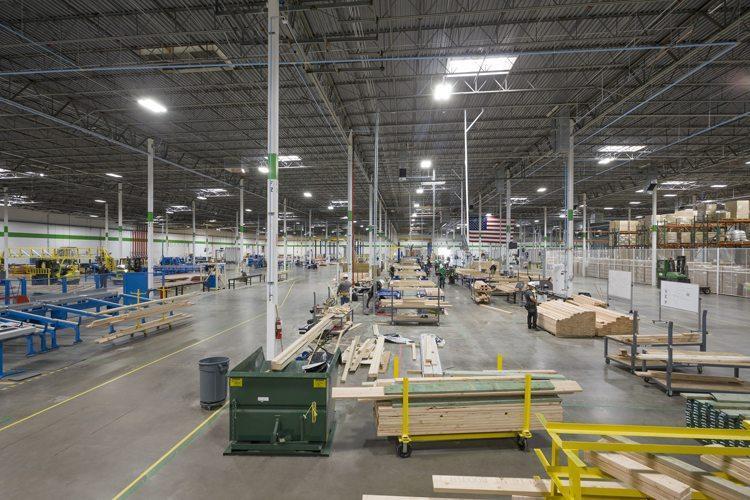
Beloxxi has finished the second and third production lines and is investing in the fourth line at Agbara, Ogun State, with a target of raising staff numbers to 6,000.

Some private sector firms are overlooking policy flip-flops by the Federal Government and endogenous challenges in the economy and taking long-term positions in the economy, with a view to making money from a demography of 200 million people (and rising), half of who are below 18 years.
Many of the firms are hard hit by multiple exchange rates, high import tariffs, multiple taxation and poor infrastructure, but they are undaunted by these challenges.
A string of policies has hurt investors in Africa’s biggest market, with the restriction of 43 items since 2015 topping the chart. President Muhammadu Buhari has directed an FX restriction on food imports, which is perceived to worsen investors’ plight. The economy is sluggishly growing at below 2 percent (on average), putting 98 million in multidimensional poverty and 23.1 percent in the job market. Consumers’ wallets are shrinking, but some investors see into the future.
BUA Group has an ongoing sugar project at Lafiaji, Kwara State, targeting at producing raw sugar.
Less than six months after commissioning its 1.5 million metric tonnes per annum (mtpa) Kalambaina Cement Plant in Sokoto State, BUA Cement completed its newest Obu plant in Edo State, which has a capacity to churn out 3 million mtpa of cement annually. This brought the total capacity of BUA Obu cement operations to 6 million tonnes and moved the entire group’s installed capacity to 8 million mtpa.

Abdul Samad Rabiu, founder and executive chairman of BUA Group, said his ultra-modern plants would enable him to export cement to Chad and consolidate its presence on southern parts of the country.
Nisto, a ceramics maker at Agbara, Ogun State, is expanding its ceramics plant to capture the African market. BusinessDay found that the company is exporting to Gabon and plans to capture the Central African Republic.
“The company is expanding because it cannot even meet ceramics demands again,” someone familiar with the company said.
The Norwegian Investment Fund for Developing Countries (Norfund) has just made an investment in the Nigerian company Sundry Foods Limited. Sundry, an integrated food services company operating in the Quick Service Restaurant (QSR), bakery and catering services sectors, currently has almost 50 outlets consisting of restaurants, bakeries and catering units spread across 11 states in Nigeria.
Okomu Oil is planting 5,000 hectares of oil palm in Edo State. In 2018, the company disclosed that it was planting 11,400 hectares at a new Extension 2 Plantation in Ovia North East Local Government Area in Edo State. This was after acquiring two additional machines that produce 30 metric tonnes per hour mills, valued at $50 million.
With approximately $150 million, PZ Wilmar, a subsidiary of PZ Cussons, has bought 26,500 hectares of palm oil plantations in Cross River State. About 5,549 hectares (ha) of oil palm plantation are located in Calaro Estate, while 2,369 ha are in an area known as Calaro Extension. The firm also acquired Ibiae plantations with 5,595 ha; Ibad plantations in Akamkpa with 7,805 ha; Kwa Falls in Akamkpa Akpabuyo with 2,014 ha, and Oban plantations, also in Akamkpa, with 2,986 ha.
PZ Wilmar has acquired palm oil mill (POM) and kernel crushing plant (KCP), investing around N20 billion in an oil palm refinery in Lagos.
“We are determined to continue with these investments and looking for opportunities to expand our plantations in the state. We have also invested around N20 billion in an oil palm refinery in Lagos,” Santosh Pillai, managing director of PZ Wilmar, told BusinessDay. Investors are betting on the opportunities in the economy, expanding operations in the face of tough business environment.
Ninety-four percent of chief executives of manufacturing companies across the country said congestion at the ports significantly affects productivity negatively, a 2019 second quarter CEOs Confidence Index conducted by the Manufacturers Association of Nigeria (MAN) shows. Ninety-five percent of them said multiple taxation was their biggest impediment.
FrieslandCampina WAMCO, producer of Peak Milk and Crown Milk, currently has four locations in Oyo State where it houses and supports local herdsmen who provide milk from local cows.
Symbol Mining, an Australian publicly listed company, has two local Joint Venture projects – Tawny in Nasarawa State and Imperial in Bauchi State, with total tenements spanning over 500km2.
“We have acquired a number of licences the majority of which are in Niger State and are currently carrying out a detailed exploration programme,” said Martin O’Boyle, director of PW Nigeria Limited, at the 2018 Mining Week.
ODINAKA ANUDU