|
Getting your Trinity Audio player ready...
|
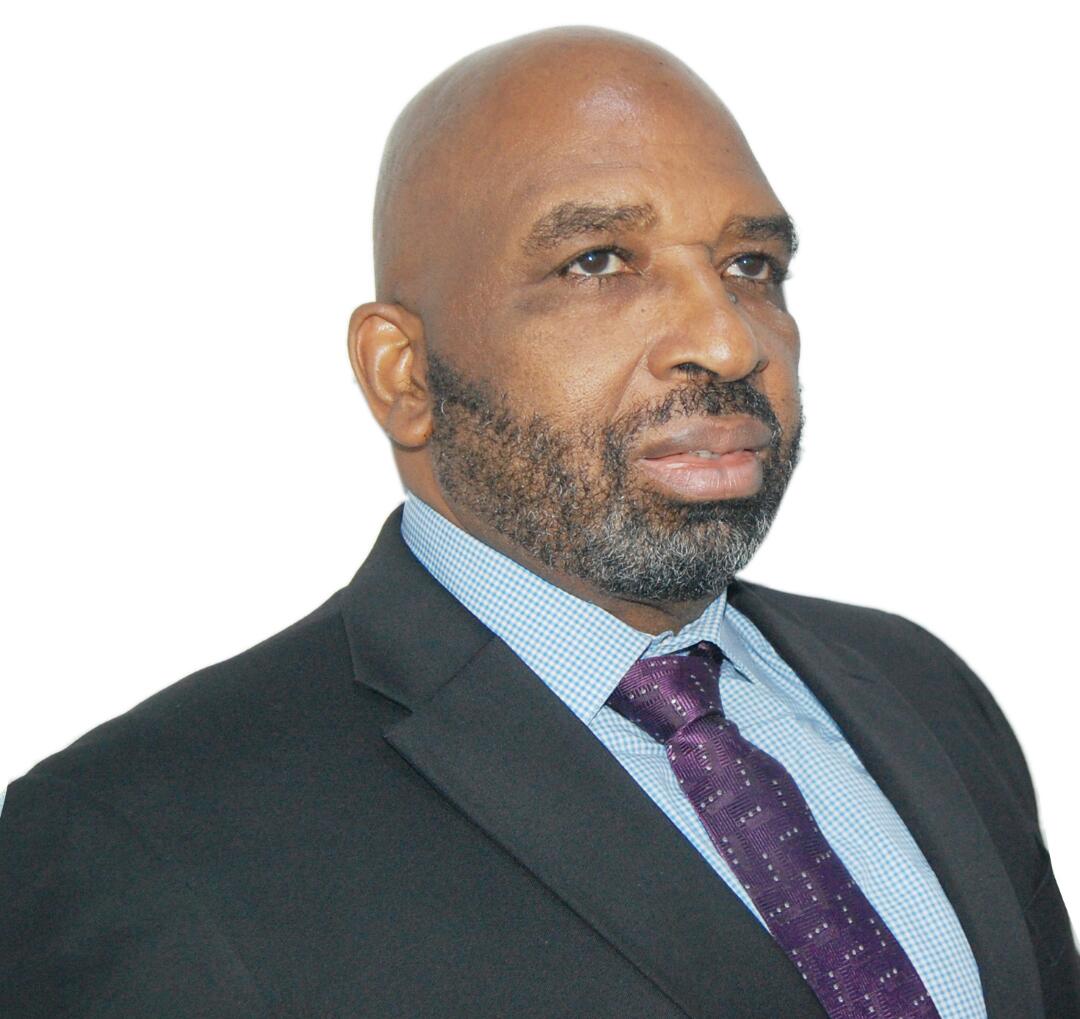
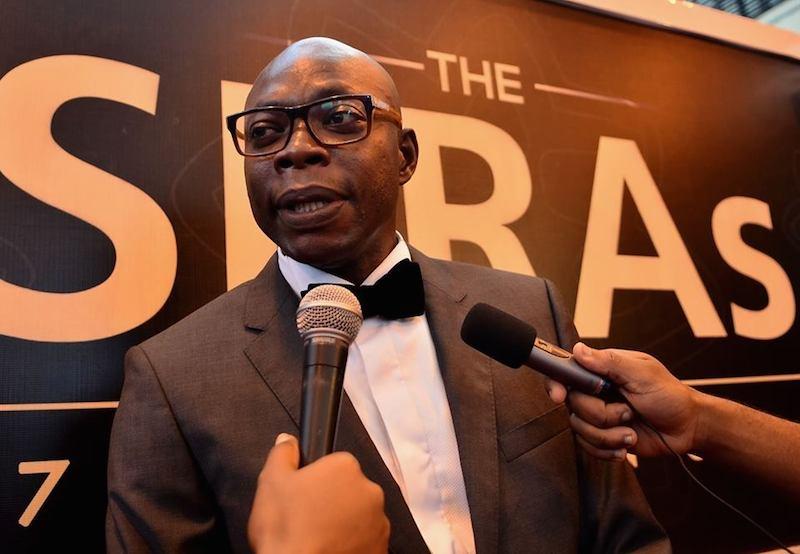
Ken Egbas is one of those seemingly perpetually optimistic folks with the much coveted sunny disposition, something he’s learnt to deploy to good effect in life and business. In 2006, when CSR was not exactly an item on the Nigerian corporate map, it occurred to him that an award regime was necessary to fast-track its adoption as the way to do business in Nigeria. 13 years on, The SERAs, short for Sustainability Enterprise Responsibility Awards has waxed stronger with more and more companies embracing CSR and Sustainability as the way to go
Every year, companies doing business from out of Nigeria, (and now incorporating Africa),having done their bit for their communities and for the ongoing survival of humanity, come to the SERAs to, as it were, get a report card on how well they fared, how well their impact resonated for that year. It has become a fixture on many a corporate calendar and serious efforts are made by participating organisations to ensure their impact is strong enough to secure the iconic SERA statuette for the mantelpiece.
Corporate Social Impact (CSI) had a sit down with Ken recently in view of the countdown to the 13th edition slated for November 13th in Lagos Nigeria. We here serve you the first part of the two course delight.
The history and thinking behind the SERAs

My team and I conceptualized The SERAS in 2006. It was actually designed to be the biggest behavioral change movement focused on getting the corporate world in Nigeria and Africa who control as much as 60 percent of resources available to channel a fair percentage of these resources to drive development in Nigeria and other parts of Africa.
Back then in 2006, as a consulting business, we looked ourselves in the mirror and asked ourselves the question that every start-up business must ask itself, “When it’s all said and done, what do we want people to remember us for? Where on this planet can we leave an indelible dent that our grandchildren could come and see that we made an impact or even created a difference?” As a consulting firm in the area of public relations, we had to look at the future, what it would be like to shape the future of the perception management business? The differentiation battles of brands, products, and organization was getting weary of ‘my colours are brighter than yours’ or ‘I am market leader and control the largest market share’, or ‘we employ the very best’, or ‘we make the highest quality products’ etc. The coming trend for differentiation was going to be fought along the lines of the human elements of love, care, support, affinity, empathy and other human emotions that the consumers were now beginning to place on brands and organization unconsciously. This we saw as the next battle ground. The more we interrogated the future, the more we realized that Nigerian brands and organizations were not prepared for this future. Therefore, our charge or mission became – getting Nigerian business environment out of the mindset of here-is-the-product-pay-me-the-money, to enabling a relationship of deeper meaning between brands, organizations and their target publics, and helping brands to grow larger than life, where they meant something more than their brand value propositions, but also meant something more to the customers, and are a part of the community. Being a socially responsible business gives you all that.
CSR in Nigeria before the SERAs
For many years, community development goals were seen as separate from business objectives, not fundamental to them; doing well and doing good were seen as separate pursuits. Any organization still harboring such mentality is living in the past.
Why the SERAs?

Organizations that are futuristic in approach know that cutting-edge innovation and competitive advantage result from weaving social and environmental considerations into business strategy from the onset, and that this process can result in developing the next generation of ideas, markets, and even employees. This is why we founded The SERAS- which is an acronym for Sustainability, Enterprise, and Responsibility Awards with the vision to be the gold-standard recognition for corporate social responsibility and sustainability in Africa.
The Objectives of the SERAs
Essentially, it is to increase the knowledge, adoption, and practice of CSR and sustainability; to provide the support for organizations that are willing to imbibe the ethos of CSR and sustainability, and encourage others yet to do so to join the train; to help aggregate the pool of resources from the private and public sectors to deal with issues highlighted in the development goals; to help raise, through careful and thoughtful documentation, the best practices and case studies to be shared around the world and used as a tool for encouraging others to aspire to join the movement; and lastly to create a huge awards event that draws and sustains credibility, glamour, and attention on CSR and sustainability and its players and participants.
In these regards, I would say to a large extent, our objectives have been met. Our biggest achievement is the fact that today we have gotten corporate Nigeria and Africa to that threshold where when they have competitive conversations around differentiation it is the difference they contribute to society, other than products and services. This realization has been an elixir moment for us at TruCSR.
On being described as a key leader in the CSR and Sustainability sector, and what effort goes into maintaining the leadership
Yes, I hear people say that all the time, but in marketing terms, I would possibly say we were first movers into the CSR and sustainability opportunity in Nigeria. Like I said previously, we were able to look into the future, understand coming trends and position accurately for its advent. The SERAs is a means to an end, not necessarily the end in itself. Out of our activities have come The SERAs CSR Awards Africa, The Social Enterprise Report- which is meant to document best practices in CSR, Sustainability, Sustainable development, Innovation and Organizational Leadership.
In October 2019 we will launch The Top 50 (Organizations Making a Difference in Nigeria), which is Nigeria’s very first concise ratings of leading players in the CSR and sustainability space. The list would be made up of large, medium, and small scale, as well as notable non-governmental or not-for-profits. This rating is a culmination of 13 years of field verification visits to over 3,780 locations and communities across Nigeria from entries for The SERAs submitted by participating organizations. As a matter of fact, you cannot find the extent of visual and numerical data in our possession in any other entity regarding the industry in Nigeria. So, we decided to further create a valuable positioning for all players.
Being first movers in any industry saddles one with enormous responsibilities. When we began talking about CSR in 2005, there were only three organizations in Nigeria with relevant policies in Nigeria, and all three were multinationals. Today, the story is different as nearly all the top 100 companies listed on the Nigerian stock exchange are on the various levels of their CSR and sustainability journeys. In 2005, there was virtually no skilled and knowledgeable man-power. Most organization just moved people from marketing to head the CSR desks.
How the Global Leading Lights of CSR are helping to Light up the Domestic Space
Between 2008 and 2011, we organized the very foundational professional trainings that certified practitioners and provided them with the knowledge to first understand the trend, then perform. We brought in notable global thought leaders like Maria Sillanpaa, who was a founding member of The Body Shop. We also brought in Wayne Visser, one of the world’s most notable authors on the subject matter, and also Deborah Leipziger who authored The United Nations Codebook on corporate social responsibility. It does fill me with a sense of joy when I look round and see nearly all of these individuals being the leaders in their various organizations and helping to drive the conversations even further up the ladders of their organizations. Out of all of these, an industry has evolved. I am talking of an industry, just emerging that was able to attract investments of over 30 billion naira between 2008 and 2014, with the leading spenders being the oil and gas sector, followed by the banking and telecom sectors in that order. Today, I run into many individuals who can today brandish credentials as CSR and sustainability consultants. This development gives me the most profound satisfaction for all the toils of the past years. There is definitely more to come. Our target is that in the next five years, when the world looks for best practices from Africa, they would turn to Nigeria.
Are The SERAs encouraging more organizations to tow the ‘responsible business’ path?
Definitely, The SERAS has enabled more organizations across board to adopt corporate social responsibility and sustainability practice. In fact, it goes without saying that The SERAS has become the key performance indicator for any organization that brandishes any credentials in the industry and space. For this we remain grateful to everyone that has been part of helping us grow such a credible platform. By 2018, the awards had recorded its highest number in terms of consistent participation- 267 top organizations, 114 medium and small scale enterprises, and 72 NGOs. From 2007 when the first edition held, up until 2015, it used to be a Nigeria only affair. But since 2016, it has been open to the rest of Africa, and we have seen participation from Angola, Uganda, South Africa, Kenya, Botswana, Ghana amongst others.
Rating the growth of CSR and Sustainability in Nigeria and Africa
I would say that CSR and Sustainability in Nigeria and Africa is still a growing trend. It is still evolving, and would definitely become much bigger than it currently is. Marketing has gone through several stages such as corporate greed, philanthropy, marketing, and management.
We are now in the age of responsibility, which I can authoritatively state that is not a transient age. The realities that threw up this age or phenomenon such as social inequality, environmental degradation, poverty, exclusion, consumerism and unfathomable powers suddenly in the hands of the consumers to kill or give life to brands etc. would go to ensure that for the next century, CSR and sustainability maintain the center stage. So you can understand why the United Nations General Assembly would sit down and carve out the 17 sustainable development goals (SDG’s) to be met by 2030.
On the other hand, I would also draw your attention to the fact that when it comes to the leadership and sustainable development party, or any technical sounding, but yet simple movement to reduce inequity and promote growth, Africa always seems to arrive late to the party (laughs). But when we arrive, the giant in us awakens. So many organizations are at various stages of the journey, which to me is a good thing that they have embarked on the journey in the first place. We are not exactly where we should be, but we have since left where we used to be, which is suggestive of progress, no matter how slow.
In Africa, South Africa appears the most developed industry in terms of CSR and sustainability when you talk about investments, knowledge, and impacts. Nigeria used to rate even behind countries like Kenya, Egypt, Tunisia and a few others. But today, in terms of investments and activities, Nigeria currently rates second only behind South Africa. I believe when impacts begin to match activities, then Nigeria may be ready to challenge.
•To be continued Next Week