In a breakthrough, two newly discovered treatments have proved highly effective in combating Ebola, raising hopes that the epidemic can be cured and ended. The therapies saved roughly 90 percent of the patients that received them early in the course of infection. Scientists on Monday announced that the treatments work so well that they will now be administered to all patients in the Democratic Republic of Congo, a New York Times affirmed.
Many families in the epidemic zone, Congo specifically, have been hiding their sick or bringing them in near death, too late to save. The epidemic has infected about 2,800 known patients and has killed more than 1,800 of them, according to the World Health Organisation.
Cases of the Ebola virus disease in Nigeria broke out in 2014, representing the first outbreak of the disease in a West African country. It originated from Guinea.
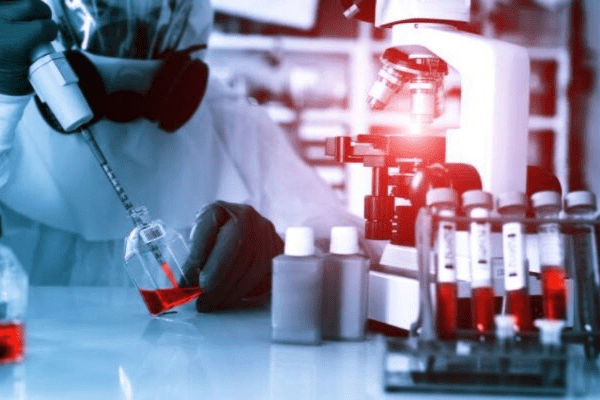
The treatments, known as REGN-EB3 and mAb-114, are both monoclonal antibodies that are infused intravenously into the blood and attach themselves to the outside of the virus, preventing it from invading the patient’s cells.
The two treatments were part of a four-treatment trial that has been run with about 700 patients since November. They worked so well that a data-monitoring committee that met last Friday immediately recommended that the other two treatments, ZMapp and remdesivir, be stopped and that all patients be offered REGN-EB3 and mAb-114.
Among patients who were brought into treatment centres with low viral loads – which suggested that they had been infected only days before – only 6 percent of those who got REGN-EB3 died, and only 11 percent of those who got mAb-114 died, according to Dr. Anthony Fauci, director of the National Institute of Allergy and Infectious Diseases.
By contrast, 33 percent of those who received remdesivir, an antiviral drug, and 24 percent of those who got ZMapp, an older cocktail of monoclonal antibodies, died.
The difference in mortality rates between REGN-EB3 and mAb-114 was considered too small to be statistically significant, Fauci said.