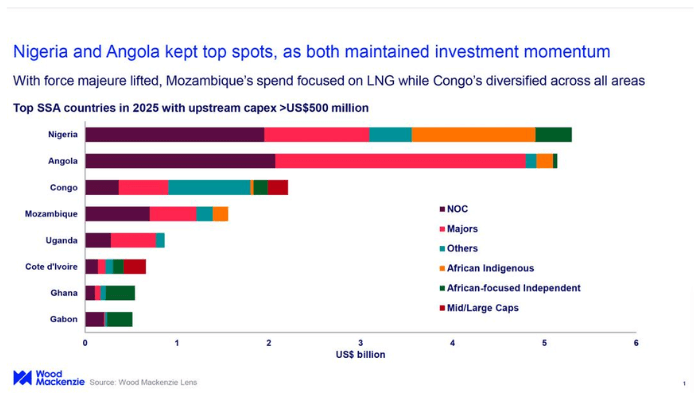
With over 1.8million barrels per day oil production, Nigeria is Africa’s biggest oil producer but this status may be up for contention in as little as six months as the Republic of Congo could ramp production to over 1.3million bpd from new discoveries.
Mohamed Rahmani, a marketing director of SARPD-OIL in la Cuvette region told Reuters that the field is estimated to hold 1 billion cubic metres of hydrocarbons, including 359 million barrels of oil, with a potential for daily output of 983,000 barrels,

The Delta de la Cuvette deposit, covers an area of 9,392 square metres, has four wells, the first of which has been drilled since March, according to the African Society for Petroleum Research and Distribution (SARPD-oil) and the PEPA company which are in charge of the operation.
Both firms are owned by Congolese businessman, Claude Wilfrid Etoka, a close business associate to the Congolese government. Exploration studies indicate that the deposit could produce over one billion cubic metres of hydrocarbons, including 359 million barrels of oil, being 983,000 barrels per day.
Production from all the discovered wells could add the Republic of Congo to the list of contestants for top oil producer spot in Africa which includes Nigeria and Angola. Nigeria’s 1.855million bpd production in June is the highest in the past four years according to data from the Organisation of Petroleum Exporting Countries (OPEC). Nigeria’s output averaged 1.6million bpd in 2017. Angola currently produces 1.4million bpd.

This development casts an uncomfortable light on Nigeria’s inability to guide new projects, which would raise production and grow reserves, to Final Investment Decision (FID) many years after oil discoveries were announced.
Shell’s plan to expand 225,000 bpd Bonga South West/Aparo, has been unable to reach FID based on disagreement over fiscal terms. The project has been suspended every year since 2016.
Other projects that have stalled include 120,000bpd Zabazaba-Etan project; 140,000bpd Bosi project; 110,000bpd Uge project and 100,000bpd Nsiko deepwater project. The 1billion barrel Owowo field development is also waiting on the right fiscal terms among other conditions.
Yet these oil majors vacillating on completing these projects are investing in newer producers from Africa and other regions. Analysts say Nigeria is making its oil sector uncompetitive due to lack of committed action to improve the fiscal and regulatory environment and inadequate security of oil and gas assets in the Niger Delta.
“In Nigeria, security is a big issue, there is also regulatory uncertainty and contracting issues which raises cost of production for oil companies,” says Chuks Nwani an energy lawyer based in Lagos.
These challenges are helping to cede investment dollars to new producers on the African continent. Though struggling with an economy clobbered civil unrest, corruption and debt, Congo’s energy industry has boosted by major recent finds from Italy’s ENI and France’s Total.
Though the Federal Government has repaid $2 billion or 40 percent of the $5.1 billion cash call arrears it negotiated with International Oil Companies (IOCs) which had hitherto discouraged new investments, investments are still few and far between because fiscal and regulatory reforms are lacking investors say.
Oil majors are holding back on taking investment decisions to develop Nigerian oil fields because of uncertainty about fiscal terms to use and the difficult operating environment in Nigeria, analysts say.
“Investors are uncertain about what regulatory and fiscal terms to apply since the PIGB was not passed,” Bank Anthony Okoroafor, chairman of Petroleum Technology Association of Nigeria (PETAN) an association of leading local producers told BusinessDay.
President Buhari withheld assent to the Petroleum Industry Governance Bill (PIGB) over concern the regulatory agency it sought to create, the Petroleum Regulatory Commission would retain 10 per cent of generated revenue which could lower the revenue of other tiers of government.
The bill was sent back to the 8th National Assembly which completed sitting in June. According to law-making rules, the new assembly would begin work afresh on the bill.
Lawmakers in the previous assembly could not agree on fiscal terms and even though the Ministry of Petroleum Resources began work on the bill, it remains stuck in the national assembly.