|
Getting your Trinity Audio player ready...
|
The Nigerian capital market, which since inception has responded closely to economy cycles, monetary and fiscal policies, is believed to open more opportunities now than ever on some defined provisions, both on the part of private sector players and government at different forms.
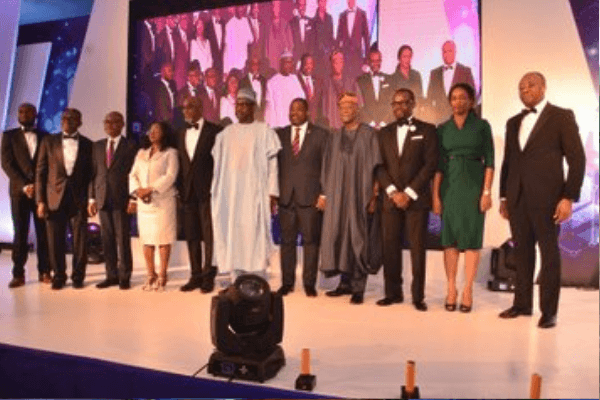
Addressing issues and prospects inherent in the Nigerian capital market at the second edition of the Association of Issuing Houses of Nigeria (AIHN) annual dinner and award night Thursday last week, capital market experts and stakeholders explained the critical roles of the private sector in harnessing potential infrastructure development via the capital market.
“There is need for the private sector and the capital market to play driving roles in achieving economic prosperity and development while partnering with the government at all levels,” Chuka Eseka, president, AIHN, said.
He reiterated that the capital market needed to invest intellectual capital, which will translate into develop solutions for funding key national priority sectors to achieve transformational and catalytic economic benefits.

“For the capital market to however deliver on its role as a catalyst of economic growth, market operators role in the financial system value chain must be strengthened,” Eseka stressed.
While in recent times the Nigeria capital market has seen increased capital inflows into some asset classes such as money market instruments, reduced inflow into the bonds market and massive sell offs in the equity space, Eseka pointed out major issues needed to be addressed for a vibrant and attractive capital market.
Importantly is the consistent high interest rate, especially on short-term risk free instrument, which is perceived as a disincentive to long-term investors and unfavourable to our capital market as a source of risk capital formation in any economy.
“We are not unaware of the economic challenges which forces the tight monetary policy regime but the need for fiscal and monetary policy balance to prevent the crowding out of the capital market cannot be over emphasised,” Eseka explained further.
Hence the need for favourable capital structure to the capital market, as listed companies are more transparent in their financial reporting and pay much more in taxes compared with unlisted companies.

Also, he raised the need for tax incentives such as reduced company income tax remitted period and reserving government privileges for private companies with a committed refined period for listing.
“We encourage government to sustain the ease of doing business’ reforms in the regulatory environment. In this regard, we urge the Federal Government to inaugurate the PENCOM board just as the LCC board. This will strengthen governing structure of the pension industry and empower the regulator to make policy decisions for the benefit of the market and the economy,” Eseka said.
Vice President Yemi Osinbajo in his address commended the association for its efforts in contributing to economic development.
Osinbajo, who was represented by the acting DG of the Securities and Exchange Commission (SEC), Mary Uduk, said the AIHN as a self-regulatory agency was an important player in the Nigerian capital market.
“Members of this association have directly contributed to the economy by aggregating the much needed funding for institutes in the private and public sector, the capital market is essential and key to achieving the economic growth of our nation,” the Vice President said.
As defined in the Economic Recovery and Growth Plan (ERGP) we have worked hard to ensure a suitable economic environment, which is necessary to attract and sustain investment that we need to move forward.
The Vice President urged the association for more collaborative efforts in developing the economy,
“The ERGP recognises critical sectors for financing to include agriculture, infrastructure, power, and SMEs. The government cannot do this alone and must, therefore, involve some active providers of citizens’ needs into a force for eliminating the blockages that restrict innovation and market-based solutions,” he said.
Governor of Lagos State Babajide Sanwo-Olu, who was represented by Gboyega Soyannwo, Lagos State deputy chief of staff, in his address, stated that the contributions of the association had been very significant to the growth of the economy through the active role they play as financial advisors.
“As a result of the professional services and advocacy of stakeholders in the capital market, Nigeria’s public sector has been able to take advantage of the opportunities to raise the funds needed to carry on capital projects,” Sanwo-Olu said.
He advised that the industry should uphold its services and standards to conforming to global best practices in order to maintain the confidence and trust of investors and other stakeholders.
“Furthermore, ensure to support and influence initiatives aimed at reforming the capital market and improving its capacity as a platform for the mobilization of capital to both private and public sector as there is a lot to benefit from fully unlocking the potentials of the market.”
Commending efforts of investment banks and issuing houses, awards were presented under various categories.
FBNQuest won awards on bond deal of the year and the best bond house of the year 2018 on the back of the most transaction in the bond space, while the best equity house and equity deal award of the year 2018 was won by Chapel Hill Denham.
Also, Stanbic IBTC Capital won the best investment bank for the year 2018 coupled with Mergers and Acquisition deal of the year, which saw the fusion of CCNN and Kalabaina Cement. Stanbic IBTC was also crowned as the best M&A house of the year 2018.