|
Getting your Trinity Audio player ready...
|
On a drizzly day in Manhattan last spring, Rodrigo Maia’s mood was as gloomy as the weather.
The speaker of Brazil’s lower house of congress was carrying a presentation showing that his country’s pension spending would balloon to 17 per cent of gross domestic product in the next four decades. Without reform of the country’s pension system this year “we’ll enter a social collapse”, he told the Financial Times on his way to a lunch with investors.
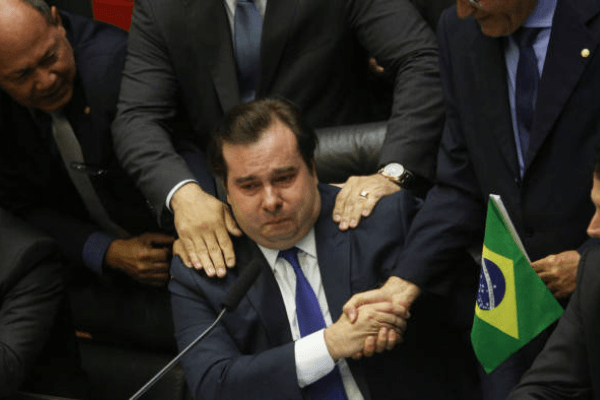
Luckily for Latin America’s largest economy, the lawmaker from Rio has emerged as the man of the hour and a reluctant ally of rightwing president Jair Bolsonaro by whipping a majority of votes for a pensions reform bill to pass a crucial hurdle this month. On July 10, the lower house of Brazil’s fragmented parliament approved it in a first-round vote by a large margin — 379 to 131.
Over 20 years in the planning, the pensions overhaul, which is key to shoring up public finances and restoring confidence in Brazil’s sluggish economy, is now closer than ever before to being approved.

Mr Maia has been propelled into the spotlight since Mr Bolsonaro, a former backbench lawmaker, reached the presidency in January. The six-term congressman does not share the president’s ultra-conservative beliefs but he does agree with the need for economic reform, helping rally support for government legislation.
Now, Mr Maia must make sure the pensions bill sails through the lower house again in its second and final vote next week, otherwise, “what has already matured could rot”, before heading to two votes in the Senate for its final approval.
“Imagine, if the reform does not pass, we’ll walk to a recession,” Mr Maia said.
Mr Maia, 49, is a member of the centre-right Democratas party and hails from one of the best-known political families of Brazil. He was born in Santiago, Chile, where his father, César, a former militant of the communist party, was in exile during Brazil’s military dictatorship. Returning from exile, his father served as a three-term mayor of Rio.
In 1998, after unfinished studies in economics and a stint as banker, he was elected to congress aged 28. An uncharismatic figure, he failed to succeed his father as Rio mayor seven years ago, winning less than 3 per cent of the votes.

Mr Maia was elected house speaker after the congressional impeachment of former leftist president Dilma Rousseff in 2016. Under Mr Bolsonaro, the congressman rose in prominence, pushing through economic reforms and acting as a parapet against the president’s culture-wars agenda and shoot-from-the-hip approach to policymaking by haranguing foes.
For once in Brazil’s three-decade-long democratic history, “parliament will be the fireman and not the arsonist” of the Brazilian political scene, Mr Maia said.
However, the congressman has not shied away from criticising the scandal-prone government, calling it a “crisis factory” where Mr Bolsonaro’s fixation on identity politics “hampers” economic reforms.
For this, he has been targeted on social media by Mr Bolsonaro’s supporters, who have called for “a shutdown” of Congress. He comes under “constant, violent pressure from the ‘Bolsominions’”, a congressional staffer close to Mr Maia said. One of them is Mr Bolsonaro’s second son and de facto spokesman, Carlos.
“Bolsonaro’s sons learned to use social networks before other politicians did,” Mr Maia said, noting that such style is “contesting liberal democracy”.
On Tuesday, Mr Maia defended media rights in a video after Mr Bolsonaro suggested jail time for the Rio-based US journalist Glenn Greenwald, whose news website revealed messages questioning the credibility of Brazil’s justice minister. “This is not in favour of Glenn, this is in favour of our freedom of expression,” Mr Maia said.
The soft-spoken house speaker has reined in one of the world’s most unwieldy parliaments, with its almost 30 parties and constantly shifting loyalties. “He’s a backroom operator who is respected by the lawmakers, the grand majority of the parties look at him and they see leadership in him,” said Thiago de Aragão, a political consultant with the Brasília-based Arko Advice.
Some members of the Bolsonaro administration have championed the pension reform, including finance minister Paulo Guedes and Rogério Marinho, the social security secretary. But Mr Maia has proven a critical conduit to lawmakers to help build support for crucial economic reforms in congress through a mixture of skill, arm-twisting and pork-barrelling, said analysts.
Former president Fernando Henrique Cardoso praised him for being “balanced”, and someone who does not “confuse public with electoral interests”. One political opponent on the left described him as “the right man for the dirty job” of pushing through the bill.
“This may be victory of the Bolsonaro government, but Maia has a relationship with lawmakers that the government doesn’t have, which is key,” said Aline Souza, an analyst with political consultancy Prospectiva.
He has even won over members of Mr Bolsonaro’s power base. Alexandre Frota, an adult film actor-turned-congressman with the president’s conservative Social Liberal party, praised Mr Maia’s “willingness, availability, commitment in the way he works with us”.
“Be it with the moderates, the right or the left, Rodrigo has been working in a way that is extremely cohesive,” Mr Frota said.
Asked if he was becoming Brazil’s most powerful person, Mr Maia chuckled: “I am just doing my job — and it is not an easy one.”