|
Getting your Trinity Audio player ready...
|
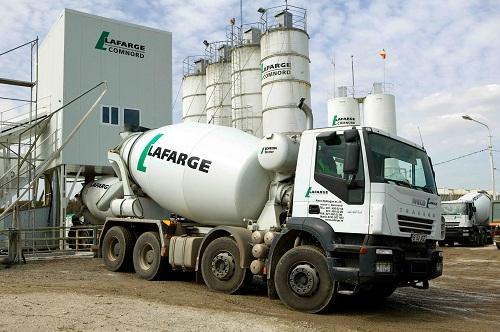
Lafarge, Nigeria’s second-largest cement maker, remained profitable in the first half (H1) of 2019, thanks to a 40.7 percent decline in the cost of borrowed funds that helped in boosting the firms bottom line despite a decline in revenue.
The cement maker recorded a Profit after Tax (PAT) of N9 billion in the period from a loss of N3.9 billion—the same period last year—buoyed by the firm’s efforts in deleveraging its balance sheet.
Its interest in borrowing fell to N13.4 billion in H1 2019 from N16 billion the previous year while bank overdraft for the firm dropped to N964.7 million from as much as N1.5 billion the same period last year.
Revenue for the firm fell slightly by 1.2 percent from N162.3 billion in 2018 to N160 billion in H1 2019 was due to the slow growth in its Nigeria operations amidst sustained weakness in its South Africa Operations (Net sales declined 2.1 percent in Q2 2019 despite price increase).

Lafarge implemented a price cut in Q2 following an increase in Q1 2019 and the helped in supporting volume growth in its Nigerian operation as sales volume- up 3.3 percent in Q2 2019 when compared to Q1 2019.
However, sales volume according to the firm was affected by delays in the new cabinet nomination post-February general elections.
The share price of Lafarge gained 9.92 percent to N14.40 at the close of trading, Tuesday, as investors bid higher for the firm following the half-year performance.
“The process of transformation of this company, which we undertook some three years ago, is now moving very swiftly toward solid foundation. Over the last three years, we have succeeded in reducing the company’s debts by over 1.1 billion dollars through the support of shareholders,” Mobolaji Balogun, Chairman of the firm said.
Like every other firm, Lafarge Africa has had its own fair share of the ups and downs in business, after it recorded a loss for about five consecutive quarters, as a result, a poor performance from the South African arm of the Business.

The firm sale has put on sale its South African subsidiary with consideration being that all of its outstanding inter-group debts amounting to $316.289 million to Caricement B.V, a subsidiary of LafargeHolcim.
In a statement to the Nigerian Stock Exchange, Lafarge noted that its parent company, LafargeHolcim, agreed to purchase the shares for the consideration being a set-off of all the outstanding amounts due by the company to Caricement under the Inter-Group Loan Agreements at the closing date, which is July 31, 2019.
In the explanatory note, the company listed the benefits of the transaction, which is its only existing foreign currency loan, to include an enhancement of the value of its shareholders’ investments in the company, which is of utmost importance to the Board.
The deal, it continued, will free it of any foreign currency debt obligation, while protecting and preserving its net income and cash flows considering the resulting decrease sums to be applied towards debt service as on the overall, the Company’s debt will be reduced by about N115 billion and an additional approximately N47 billion by the eventual deconsolidation of Lafarge South Africa Holdings.
Lafarge Africa continued to deleverage its balance sheet (its highly geared position has been the major drag on its earnings in recent years) as the debt to equity ratio of the firm improved to 1.0x in H1 2019 from 1.98x as of FY 2018.
This supported the moderation in Finance Cost to N14.1bn in H1 2019 (H1 2018; N23.7bn). The net debt of the firm stood at N206.6bn in H1 2019 compared to N255.8bn in H1 2018, on the back of repayments made on Loans and Borrowings and Proceeds from rights issues which increased the company’s cash position.
Following the conclusion of the transaction, the company stressed that the only debt on its books will be the second tranche of the Corporate Bond (N33.8 billion) with maturity in June 2021, and the CBN Power Intervention funds through Bank of Industry (N19.9 billion).
The improvement in cash flow and net income, resulting from the reduction in debt service outflows, it continued, will enable Lafarge Africa to consider additional investments in cement production capacity to improve its market share in Nigeria.
Lafarge said that the sale is equally expected to boost the company’s profitability, through positive cash flow generation.
MICHAEL ANI