|
Getting your Trinity Audio player ready...
|
Fulani expansionists. Bandits. Miyetti Allah. Boko Haram. The strange formation of vigilantes by Fulani in other people’s homesteads. Inflation. Economic uncertainty. The confrontation between the Shiites or the Islamic Movement of Nigeria and the Federal Government.
Citizens are worried. You should worry. However, you should do more than worry. You should develop a healthy paranoia about our country. The oxymoron of “healthy paranoia” draws on the lessons from Andy Grove’s book, Only the paranoid survive: how to exploit the crisis points that challenge every company.
Andrew S. Grove, an immigrant from Hungary, arrived in the United States in 1956. A co-founder of Intel, he was president in 1979 and CEO in 1987. TimeMagazine named him Man of the Year in 1997. He stepped down as CEO of Intel and retired as board chairman in 2004. He taught at the Stanford University Graduate School of Business for 24 years. He died in 2016. The world remembers him for leading Intel through significant changes and evolution in the computer industry, changing from making memory chips that could not compete against the Japanese, to a microprocessor firm.
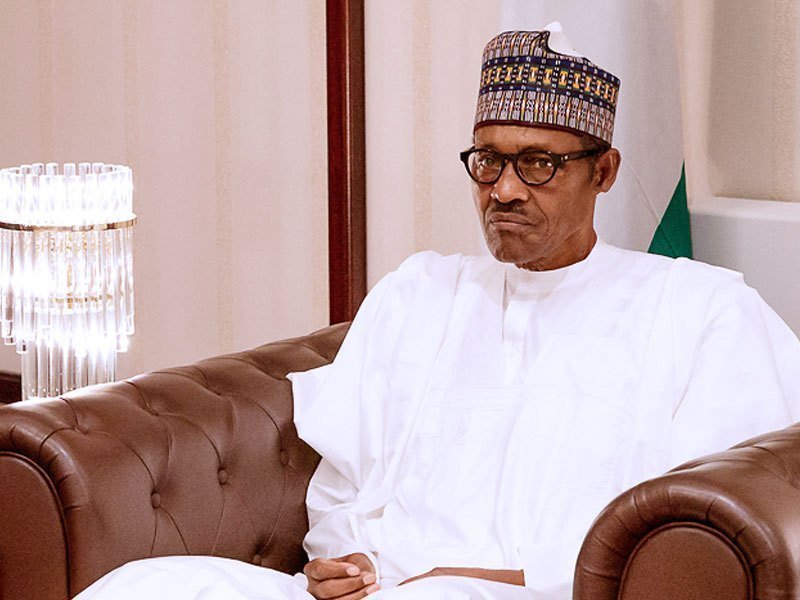
A significant coinage and lesson from Grove is the idea of strategic inflection points (SIP) and managing them. A SIP is a decisive moment in the course of an entity that signals a significant change. The return of Buhari is a strategic inflection point for Nigeria and Nigerians. It brought the first recession in 25 years. As it was in 1984, so, too, in 2015 and 2019. Buhari means hardship, lack of vision and vacuity. RUGA and the fulanisation threat are additional inflection points as is the deteriorating economy.

Lesson one is to adopt emotional detachment about your state, your finances and the state of the country. It is difficult, but removing emotions would allow clear-headed analyses and plans, for individuals, groups and geopolitical regions. Fear, worry, doubt would not cut it now.
Actively seek information and knowledge. Open communication is critical. Sift carefully the information you consume in this social media age. Nevertheless, you need information and communication with relevant stakeholders.
Note the threats. Acquire new skills, pay attention to your personal and organisational economy lest the ground shifts underneath you with new practices and skills. Note that opportunities crop up even in dire situations such as confronts Nigeria today. Cowbell Milk entered and thrived by responding creatively to the challenge of energy and the reduced purchasing power of citizens.
Do not be in a hurry to intellectualise and rationalise, dismissing threats as “impossible” or it cannot happen in Nigeria. Many things we thought unlikely in Nigeria are happening as the days unfold. Even so, resist the ethnicization trap. Nigeria’s problems are more profound and require building on our diversity, rather than widening it as is currently happening.
Notice your environment and circumstances more than ever before. Eternal vigilance is the price of liberty. Who are these people vending knickknacks and emerging from the shadows? Why are they so many now? Is it merely economic, or are they foot soldiers for an evil purpose?

SIPS confuse businesses, individuals and groups. We must remain focused. We want a Nigeria that works, either as one unit or a different configuration that enables constituents to achieve their vision. Southern Nigeria must pay attention and remove the tinted glasses with which it views Nigeria. The “next level” certainly means different things to various parts of Nigeria. Be paranoid about Nigeria today.
These are exciting times in Nigeria. It fits, therefore, to remember the quotation by Albert Camus, the French writer, absurdist, winner of the Nobel Prize. Camus wrote the famous work, The Plague, among others. He stated, “An oriental wise man always used to ask the divinity in his prayers to be so kind as to spare him from living in an interesting era. As we are not wise, the divinity has not spared us, and we are living in an interesting era. In any case, our era forces us to take an interest in it. The writers of today know this. If they speak up, they are criticised and attacked. If they become modest and keep silent, they are vociferously blamed for their silence.”
The “oriental wise man” in Camus’s statement refers to the now apocryphal statement credited as a Chinese curse saying, “May you live in interesting times.” It refers to periods of uncertainty, turmoil, eruptions and social disorder, war and rumours of war.
Since INEC affirmed the re-election of PMB, happenings in Nigeria have been saddening. There is the talk of Fulanisation and Islamisation. Then, as if to confirm former President Olusegun Obasanjo’s allegations, an unelected high official announced and the Presidency tried to justify a land grab scheme to favour the Fulani. Before then, the former minister of education took up the portfolio of his Information counterpart to announce that government had licensed a radio station exclusively for the Fulani.
Insecurity reigns. PMB showed the character of his government on the matter of insecurity in two recent statements. In his Easter message on April 19, the president lamented the acute insecurity in our land.
PMB stated: “Our nation is currently gripped with gloom over unfortunate killings, kidnappings and violence, as seen in the recent tragic incidents in some states of the federation.” He then pledged that the Federal Government would not kowtow to the nihilists.
On July 16, responding to the loud outrage over the killing of Mrs Funke Olakunrin, daughter of Afenifere leader Chief Reuben Fasoranti, PMB now claimed that the insecurity concerned “isolated incidents.”
Be paranoid about Nigeria.
Chido Nwakanma