A Group under the aegis of the National Association of Government Approved Freight Forwarders (NAGAFF), has expressed fear that the recent signing of the African Continental Free Trade Area (AfCFTA) by the federal government will likely open the nation’s economy to further danger of becoming a dump ground for substandard, fake and life endangering products.
The group, which says, Nigeria signed the agreement without due consideration to metrology, added that the government failed to ensure that made-in-Nigerian products can compete effectively with imported goods.
Metrology is the science of measurement, and it is the component of the National Quality Infrastructure (NQI) to ensure accuracy of measurements to the international system of units.
The National Metrology Institution (NMI), which is domiciled in Standards Organization of Nigeria (SON), is the custodian of the national primary measurement standards for all fields of measurements namely: – mass, volume, length, pressure, temperature, force.

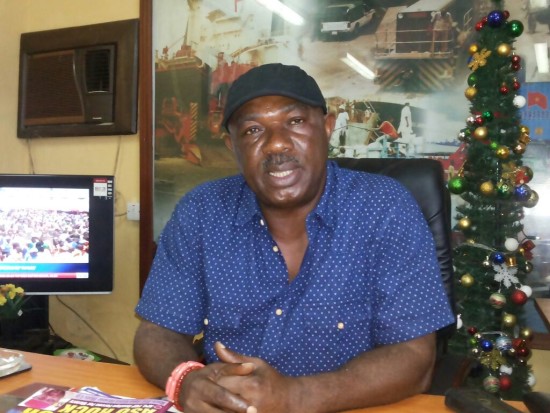
Boniface Aniebonam, founder of NAGAFF, said Nigeria needs to build adequate infrastructure for metrology in order to provide the required confidence in made-in-Nigeria products and services, and will be highly competitive amongst the foreign products.
According to him, for Nigeria to benefit from AfCFTA, it must ensure NMI is adequately functional and proactive to quality assurance and standards.
“NAGAFF will continue to advise the government on the need for government to pay greater attention to the informal sector than continuing with uncommon support for the organised private sector with their ‘bogus and unverifiable economic inputs,” he said.
While stating that Nigeria Customs are not familiar with matters on quality assurance and standards, Aniebonam said NMI and SON efficiency are of utmost importance to Nigeria gaining from the free trade agreement.
He also said Nigeria needs critical infrastructure like steady power supply and human resource development to ensure that AfCFTA does not become an economic suicide for Nigeria.

He cited ETLs as example of programme that eventually left Nigeria to serve as a dumping ground for products from other African countries.
Aniebonam however recommended to President Muhammadu Buhari to delay the implementation of the agreement for the next one year, adding that government needs to engage with NAGAFF, CRFFN and other associations to make inputs on how best free trade agreement can be implemented operationally at the entry points.
“NAGAFF advocated that the Nigerian Ports must take proactive measures by developing truck terminals outside the ports on a call-up system. We also advocated for the establishment of deep seaports that can take more cargoes and reduce freight rates to Nigeria,” he added.
AMAKA ANAGOR-EWUZIE