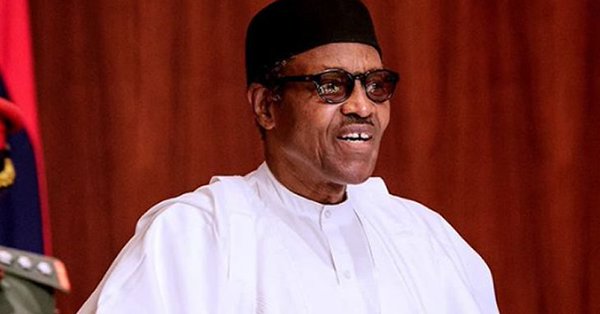
President Muhammadu Buhari and German electricity giant, Siemens ,on Monday, signed power roadmaps that will see Nigeria achieve power generation of 25,000 megawatts and distribution of 11,000 megawatts in 2023.
The President said he had directed Siemens to fix the power distribution and transmission aspect of the electricity challenge.
The roadmaps brokered by German Chancellor Merkel in 2018, is committed to enhance future cooperation to support economic growth and development in Nigeria.
President Buhari, speaking while signing the roadmap, said his government was clear that fixing the power sector was a key priority for this administration.

Buhari lamented that while Nigeria is blessed to have significant natural gas, hydro and solar resources for power generation, the country was still on a journey to achieving reliable, affordable and quality electricity supply necessary for economic growth, industrialization and poverty alleviation.
“Several previous attempts at solving the electricity problem have seen State- funded solutions through the ill-prepared National Independent Power Projects. They also explored the installation of large emergency power projects. There was also the partial privatization of the power generation and distribution sectors,” he noted.
“These various interventions to solving the electricity problem have yielded an imbalance between the amount of power generated and the amount available for consumers. Despite over 13,000 megawatts of power generation capacity, only an average of 4,000 megawatts reliably reaches consumers,” he said.
He described the new roadmap as an “excellent opportunity to address this challenge.

“This Government’s priority was to stabilise the power generation and gas supply sector through the Payment Assurance Facility, which led to a peak power supply of 5,222 MW. Nonetheless, the constraints remained at the transmission and distribution systems.
“This is why I directed my team to ask Siemens and our Nigerian stakeholders to first focus on fixing the transmission and distribution infrastructure – especially around economic centres where jobs are created.
“Whilst it was evident that more needed to be done to upgrade the sub-transmission and distribution system, our Government was initially reluctant to intervene as the distribution sector is already privatised.
“I am therefore very pleased with the positive feedback from private sector owners of the distribution companies, who have all endorsed Government’s intervention to engage Siemens on this end-to-end plan to modernise the electricity grid,” Buhari said.
He disclosed that government aim was to deliver electricity to Nigerian businesses and homes.
“My challenge to Siemens, our partner investors in the Distribution Companies, the Transmission Company of Nigeria and the Electricity Regulator , is to work hard to achieve 7,000 megawatts of reliable power supply by 2021 and 11,000 megawatts by 2023 – in phases 1 and 2 respectively.
“After these transmission and distribution system bottlenecks have been fixed, we will seek – in the third and final phase – to drive generation capacity and overall grid capacity to 25,000 megawatts,” he assured.
He said the strong commitment to the development of Mambilla Hydroelectric and the various solar projects under development across the country, the long-term power generation capacity will ensure adequate energy mix and sustainability in the appropriate balance between urban and rural electrification.
“Our intention is to ensure that our cooperation is structured under a Government-to-Government framework. No middlemen will be involved, so that we can achieve value for money for Nigerians. We also insist that all products be manufactured to high quality German and European standards and competitively priced.
“This project will not be the solution to ALL our problems in the power sector. However, I am confident that it has the potential to address a significant amount of the challenges we have faced for decades,” he declared.