|
Getting your Trinity Audio player ready...
|
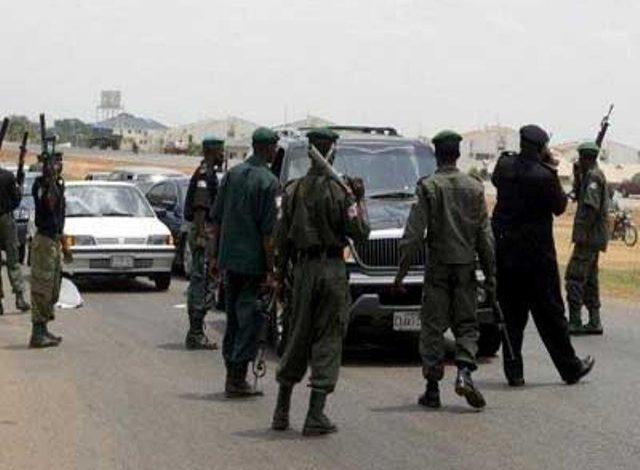
Expectedly, the unpleasant state of public security in the country has once again reverberated call for the creation of State police. Though, for some time, there have been several opposing arguments concerning the subject, it has become reasonably necessary for appropriate authorities to take a deeper look at the need for state police, especially with regards to current wave of security concern in the state. Without a doubt, the central policing system has not really been effective and it is only logical that we consider other probable alternatives.
State police is an important component of true federalism and emblem of authority of governance, since sovereignty is divided between the federal authority and federating components. Though the 1999 Constitution provides for a single federal police, this precludes states from taking charge of the protection of lives and properties of their people as chief security officer and denied them the emblem of authority. If Nigeria is really a federation, this is a constitutional lacuna that must be addressed through constitution amendment to pave way for State Police.
Aside the well accepted philosophy that that policing is essentially a local matter, every crime is local in nature. Hence, it is only rational to localize the police force. No matter its form, crime detection needs a local knowledge that state police can better provide.
Similarly, police officers who serve in their indigenous communities are stakeholders with vested interests in such places. Considering the reality that they will always be part of their respective communities, even after retirement, it is doubtful if they will perpetrate anti- socio activities in such communities. A recent Human Right Watch survey reveals that most of the accidental and other extra judicial killings that have taken place in the country were perpetrated by officers posted outside their states of origin.

Also, knowledge of the local environment is needed for effective policing. It is only logical that to fight crime in the same locality; you need law enforcement personnel familiar with the terrain. Using police officers from Jalingo, for instance, to burst a crime in Onitsha could at best be counter- productive. The local criminals with good knowledge of the area will always outwit such ‘foreign’ police officers.
Intelligence gathering is an indispensable necessity in crime fighting. But this seems to be currently lacking in the system. It is difficult to access high-quality intelligence, unless you know the people very well, and they in turn trust you. The present arrangement certainly negates credible intelligence gathering. We live in a society where people treat perceived strangers with lots of reservation.
This, no doubt, is quite understandable. It is difficult to trust somebody whose language, culture and tradition you are unfamiliar with. The truth is that people will always be afraid of passing on information to those they don’t trust, and this is for obvious reasons.
Perhaps more importantly, it is important that a state governor who ought to be the chief security officer of his state has the control of the police command in same state. The current trend where the police commissioner in a state takes orders from Abuja concerning security issues in a state is not too tidy.
Ironically, almost all state governments in the country invest significantly in the diverse security agencies in their respective states. Now, will it not amount to double standard for a Governor that bears such a massive financial burden not to be denied of un-hindered control of same institution at crucial moments?

It has been argued severally that state police is nothing but a recipe for anarchy as it could be abused. But then, this argument is neither here nor there because the present policing structure has equally been severally abused either covertly or overtly. In-spite of all the arguments against state police, the incontrovertible truth is that Nigeria is too huge and complex to be policed centrally.
A feasible and vibrant security structure is essential to maintain noteworthy development and guarantee the protection of life and property. The police as we currently have in the country might not be able to ensure effective security across the nation. Currently, the police does not have up to 400, 000 personnel in a nation whose estimated population stands above 180 million. This is the clear picture of an institution that is in dire need of restructuring.
Given the necessary political resolve, we can effectively operate State Police in the country. All we need to do is to give the subject the desired attention. If we are actually concerned about overcoming present security challenges in the country, we need to reconsider the issue of state police more sincerely and dispassionately. If Nigeria is truly in search of peace, this is a burning issue that must be tackled without further delay.
Tayo Ogunbiyi
Ogunbiyi is of the Ministry of Information & Strategy, Alausa, Ikeja, Lagos