International Monetary Fund (IMF) on Monday said closing gender gaps in education across all income groups could boost GDP by 5 percent in one generation.
It would lower income inequality by 2¼ points as measured by the Gini coefficient—a reduction that many countries strive to achieve over the decades.
Godwin Emefilee, governor of Central Bank of Nigeria (CBN), said on Monday that the CBN in the next five years would strive towards a single digit inflation rate as well as help government attain the 5 percent growth target.
Nigeria’s GDP grew by 2.01 percent in real terms in the first quarter, compared with 2.38 percent in the fourth quarter of 2018, according to the National Bureau of Statistics (NBS).

In a report titled “Growing Through Education in Nigeria,” published on Monday, IMF drew its chart of the week from the IMF’s 2019 economic health check for Nigeria, which highlights substantial inequality in access to education between girls and boys, and between rich and poor.
“It is widely accepted that addressing educational gaps results in rapid and large benefits for children, their families, communities, and the country more broadly,” the Fund said.
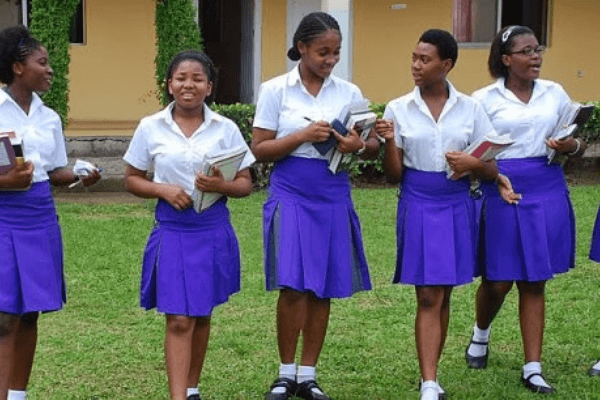
According to a survey conducted by the Nigeria Bureau of Statistics, a girl born into a Nigerian family in the poorest fifth of society spends about 1 year in school—approximately a third of the already limited schooling enjoyed by, say, her brother.
Access to education improves as a family gets richer, but gender inequality in education is entrenched and barely disappears for the richest 20 percent of households.
The government and development partners all recognize that more resources and structural changes are needed to improve access to education and make it more equitable.
According to the IMF adequate funding for teachers and schools can help raise the quality of education. But spending beyond the classroom can also yield educational benefits. For example, investments in safe access to water and sanitation facilities will improve health and therefore learning opportunities for all kids, while giving an extra boost to school attendance. Mobilizing revenue through, for instance, comprehensive VAT reform and improved tax administration will be critical to fund these efforts.

Other reforms require few additional resources and are important in shaping priorities. Passing into law the Gender and Equal Opportunities Bill and implementing a Children’s Rights Act are examples of legal changes that would put equality of opportunity on the statute books—a move which would have a positive impact for generations to come, the IMF said.