Cersei Lannister, Queen of the seven Kingdoms in G.R.R Matins award-winning novel- A Song of Ice and Fire- told Lord Eddard Stark, head of House Stark and hand of the King that “when you play the Game of Thrones You Win or Die”
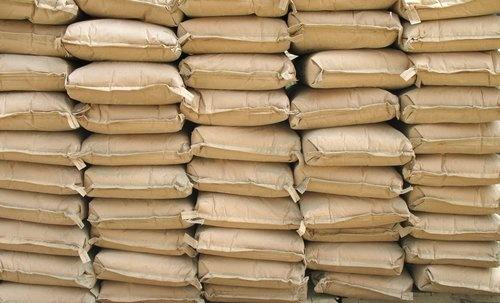
Just as power families in Martins book locked horns in a battle over who sat the Iron Throne, cement makers in Nigeria are aggressively intensifying strategies with a view to increasing their share of the market and taking advantage of sub-Saharan African infrastructure, spending and housing demand.
Lafarge Africa threw the first blood when it divested from its South Africa operations, a strategic decision that will help extinguish debt, bolster working capital, and underpin profitability. The company said proceeds of the proposed sale (US$317m) will be used in paying off Lafarge Africa’s shareholder loan of $293 million. It also expects the sale to culminate in a reduction in annual interest expense by N9.9 billion.
The development will enable Lafarge Africa to consider additional investments in cement production capacity while also enabling the company to redirect its efforts towards improving its market share in Nigeria.

Lafarge Africa’s Cement volumes were up +5 percent in the first quarter, while March sales were the highest in three years.
After 3 years of operating underperformance, the company has finally surmounted the tempest of turbulence as it posted profit after tax of N3.14 billion in March 2019 from a loss of N2 billion it recorded in the corresponding period of 2018 despite a 2.64 percent reduction in sales.
Operating profit otherwise known as EBITDA, increased by 34.72 percent to N8.24 billion in March 2019 from N6.25 billion the previous year.
Cost of sales reduced by 3.73 percent to N60.34 billion in the period under review as against N62.64 billion the previous year while total operating expenses reduced by 12.88 percent to N9.80 billion in the period under review.
Dangote, controlled by Africa’s richest man, Aliko Dangote, said it is looking to raise $500million (R6.29bn) from a Eurobond sale and will also issue N300bn in local-currency bonds to refinance debt and boost expansion. That’s before a proposed London initial public offering in the next two years, which people familiar with the matter have said could raise about $1 billion.

The company has extensive operations in 10 other African countries with a total capacity of 15 million metric tonnes annually. In Nigeria, the country is the market leader with an estimated 61.30 percent of the share of the installed total capacity of 71.56 percent of total sale of the first quarter 2018 of companies under our coverage.
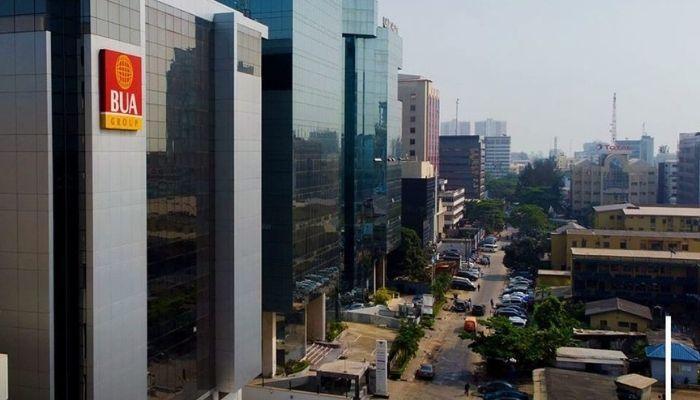
Cement Company of Norhern Nigeria (CCNN), the only cement manufacturer in the north-west region, had entered a merger with Kalambaina Cement with a capacity of 1.50 million metric tonnes annually– owned by BUA, the majority shareholders in CCNN. That brought the total capacity of the company to 2.0m/ta.
Nigerian cement industry has been at a prang of a sluggish economy as delay in the passage of the budget, weak government revenue brought on by a sudden drop in crude oil price, continues to undermine growth.
Nigeria’s economic growth slowed in the first quarter after the oil sector, the country’s biggest foreign-exchange earner, contracted.
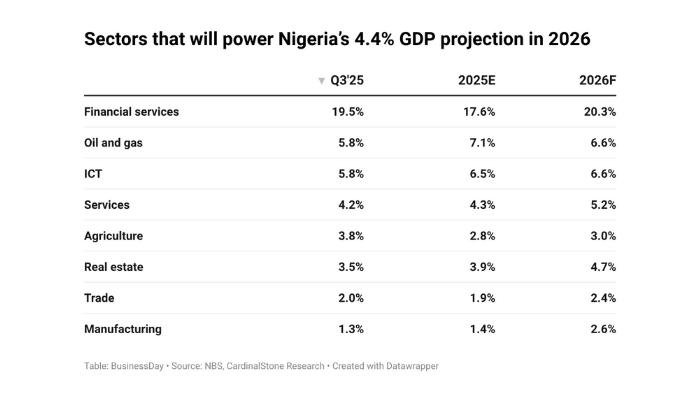
Gross domestic product expanded by 2.01 percent in the three months through March from a year earlier, according to the National Bureau of Statistics (NBS). That compares with 2.4 percent expansion in the fourth quarter.
BALA AUGIE