Stakeholders in the banking and finance as well as other sectors of the economy on Thursday called for a systemic and holistic approach in solving the infrastructure problem in the country.
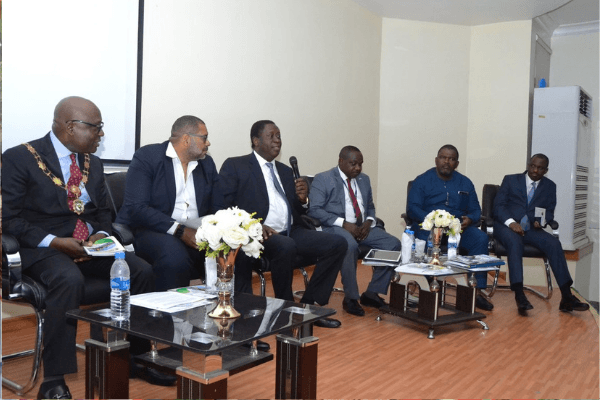
They made this call in Lagos at the 2019 annual lecture on the theme: ‘Infrastructure Development and Growth in Nigeria: Prospects and Challenges,’ organised by the Chartered Institute of Nigeria (CIBN).
They opined that if the government failed to deal with infrastructure problem proactively, businesses will collapse.
The stakeholders included Melvin Ayogu, Fellow, Mapungubwe Institute of Strategic reflection, South Africa, Andrew Alli, group CEO/partner, South Bridge group, Wale Babalakin, chairman, Bi-Courtney group/Pro-Chancellor, UNILAG, Aisha Dahir-Umar, acting director general, National Pension Commission, who sent a representative, Bola Onadele Koko, managing director/CEO, FMDQ OTC, Securities Exchange, who also sent a representative, Humphrey Gelseb, high commissioner of the Republic of Namibia to Nigeria, and Uche Olowu, president/chairman of council, CIBN, among others.

In his presentation, Ayogu, who was the guest speaker, said infrastructure deficit translates into service delivery challenges. However, they also present opportunities for investors to revisit the traditionally public-sector niche market in basic infrastructure and rethink, based on emerging possibilities unleashed by the forces of technological advancement, demographic changes and culture, the set of feasible modes of engagement, he said.
He said the way government has acted in the electricity sector did not augur well for shared participation in the infrastructure sphere although there was probably enough blame to go around as should be the case in any regime of crony capitalism.
“If we want a solution to our problems which are rooted in socio-political economy, then we must become engaged – be the man in the mirror,” Ayogu said.
Olowu said the discussion around the infrastructure was very important because this is one of the institute’s public policy advocacy programmes where it intervenes in critical issues that affect the national economy.
Infrastructure, he said, was the very backbone for which to drive the economic growth. “We realise that the deficit is huge and needs to be addressed if we have to achieve the growth”, Olowu said.

Babalakin was of the view that delivering infrastructure is a system’s problem and addressing such has to start from improving on education.
Gelseb said Namibia is in the country because Nigeria has always been with them. He said Namibia generates 40 percent of its own electricity demand from renewable sources, which contribute a total of 189 Megawatts to national supply.
“Namibian government remains committed to the principles of solidarity, freedom and justice,” the Namibian Ambassador said.