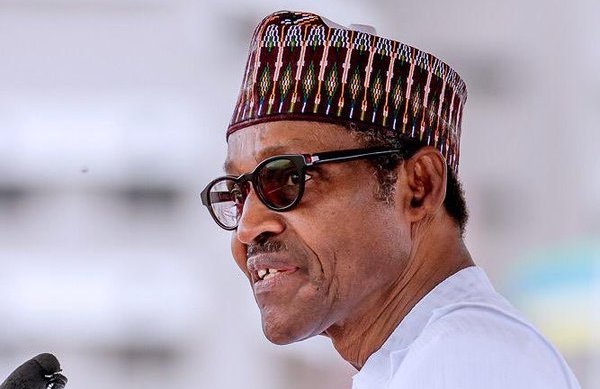
President Muhammadu Buhari Thursday, set agenda for state Governors, mandating them to focus on delivering on education, agriculture, security and basic health services, especially to achieve 65 percent coverage of the National Primary Health care, nationwide, as against the current 12 percent.
Speaking at the inauguration of the National Economic Council NEC, a body chaired by Vice President Yemi Osinbajo and made up of Governors of the 36 states of the Federation, Central Bank of Nigeria CBN Governor, Secretary to the Government of the Federation SGF, Ministers of Finance, National Planning and Minister of State Petroleum Resources, Buhari also charged the Governors to focus seriously on education.
“Federal Government is now implementing the Basic Healthcare Provision Fund. By this, we hope to achieve at least 65 percent increase in the share of the population covered by primary healthcare by 2023, up from the 12.6 percent we cover at the moment.
“I have no doubt that if these four areas – security, education, health and agriculture – are actively implemented and closely monitored by NEC and the Governors’ Forum, we shall in the near future see a more peaceful and prosperous Nigeria.”

He also charged the states to find ways to increase internally generated revenues, improve VAT collection and increase agricultural output without disrupting business activities.
“I also want you to work with the Federal Agencies and the service providers in ensuring that broadband infrastructure is made available all over the country. Information and Communication Technology is the future of work and we must not allow ourselves to be left behind.”
With over 13 million Nigerian children of school age currently out of school, Buhari stressed the need to take education “very seriously and enforce very rigorously the statutory provisions on free and compulsory basic education.”
Section 18(3) of the 1999 Constitution as amended placed an obligation on governments at all levels the need to eradicate illiteracy and provide free and compulsory education.
Section 2 of the Compulsory, Free Universal Basic Education Act also provides that every Government in Nigeria shall provide free, compulsory and universal basic education for every child of primary and junior secondary school age.

According to the President “It is indeed a crime for any parent to keep his child out of school for this period. In my view, when a government fails to provide the schools, teachers and teaching materials necessary for basic education, it is actually aiding and abetting that crime. I would like to see every Governor rise from this meeting and rally his local Government Chairmen towards ensuring that our schools offer the right opportunities and provide the needed materials and teachers for basic education, at the minimum. If we are able to do this, the benefits will surely manifest themselves.”
“Ensuring proper education during the first nine years of schooling means that our children start off their lives with some discipline and education. They will be safeguarded from roaming the streets, and protected from all the evil influences that assail idle hands and idle minds.”
“Whatever they choose to do thereafter, children with basic education will be better prepared to learn and to appreciate their own role in society. This will also go a long way in solving our security and other anti-social problems, which are often the manifestations of early delinquency.”
He assured that Federal Government will strive to extend the school feeding program, adding that “We will also assist States as much as possible to access the counterpart funding provided by UBEC for the development of basic education.
Faced with several economic and security challenges, including the new Minimum Wage, the Governors are pushing for fresh bailout, which they say will help them, especially the newly elected to address challenges and create confidence in their electorates.
NEC is established by the Constitution of the Federal Republic of Nigeria (1999), as amended.
Section 153 and paragraph 18 of the 3rd Schedule to the Constitution, gives NEC the mandate to advise the President on economic policy of the country and in particular, co-ordination of the economic planning efforts, and programmes of the three- tiers of Government.
Vice President Yemi Osinbajo in his welcome address congratulated the 12 newly elected Governors who were recently sworn in, among them, 7 belonging to the All Progressive Congress Party, APC, while the People’s Democratic Party PDP, has 5.
They include Ahmadu Fintiri (PDP) – Adamawa, Bala Muhammed (PDP) – Bauchi,
Emeka Ihedioha (PDP) – Imo, Seyi Makinde (PDP) – Oyo and Bello Matawalle (PDP) – Zamfara.
Others include Babagana Zulum (APC) – Borno, Inuwa Yahaya (APC) – Gombe, Abudlraham Abdulrazaq (APC) – Kwara, Babajide Sanwo-Olu (APC) – Lagos, Abdullahi Sule (APC) – Nasarawa, Dapo Abiodun (APC) Ogun and Mai-Mala Buni (APC) – Yobe.
He disclosed that the inaugural meeting is the 95th with the average age of the current Governors put at 57 years. The last Council had held an unprecedented total of 38 meetings, setting up 10 Ad-Hoc Committees to address various issues of national concern. In the course of its deliberations, it came up with a total of 173 resolutions, cutting across several areas.