President Muhammadu Buhari has just commenced another four-year term of office after taking the oath of office on Wednesday, May 29, 2019, in what many believe heralds a new beginning especially for the Nigerian workers.
Since President Muhammadu Buhari signed into law the New Minimum Wage Bill of N30, 000 in April, the Nigerian workers have shown great excitement and joy at the development. The average worker who hitherto was condemned to the meagerly N18, 000 per month could at least ameliorate his condition with the new wage.
The new law now makes it compulsory for all employers of labour in Nigeria to pay to their workers the sum of N30, 000. It also gives workers the right, if they are compelled by any circumstance to accept salary that is less than N30, 000, to sue their employer to recover the balance.
The law also authorizes the Minister of Labour and any person nominated by the Minister or any person designated by the Minister of Labour in any ministry, department or agency to on behalf of the worker, take action in his name against such employer to recover the balance of their wages.

The law however, excludes persons who are employing less than 25 workers, persons who work in a ship which sails out of jurisdiction and other persons who are in other kinds of regulated employment which are accepted by the Act.
These also include; an establishment in which workers are employed on part-time basis; an establishment at which workers are paid on commission or on piece-rate basis; workers in seasonal employment such as agriculture; any person employed in a vessel or aircraft to which the laws regulating merchant shipping or civil aviation apply.
The outgone minister of Labour and Employment, Chris Ngige in an interview with reporters on Friday, May 24, assured that the Federal Government would commence immediate payment of the new salary regime from April 18, when the bill was signed into law.
However, while the law made it mandatory for workers to be paid the new minimum wage, the workers may yet suffer a reality over the inability of the employers to pay the new wage as well as how the workers can have easy access to the relevant laws to seek redress in case of defaulting employers.
There are apprehension that some employers of labour may be forced to retrench workers especially the state governments, which struggled to pay the former N18, 000 Minimum Wage. Over 20 state governments failed to pay the former Minimum Wage and owed accumulated salary arrears of, in some cases, between 10 and 15 months despite Federal Government’s intervention with the bailout funds. Many of the governors who participated in the negotiation for the new Minimum Wage perhaps were compelled to do so because since it became law, no state government has initiated modalities to pay the new Minimum Wage from the date it was signed into law on April 18.

A source in one of the states affected by backlog of salaries, told BDSUNDAY that “there is no way the state government can pay the new Minimum Wage because its staff strength is so huge that the only option the state has to meet the requirements of the new wage is to downsize and retrench the number of workers.”
But while insisting on the need for the governors to pay the new Minimum Wage, Ngige said: “It is a national law and no governor can say he will not pay. Issue of the National Minimum wage is item 34 on the Exclusive Legislative List of the Third Schedule of the Nigerian Constitution. Every state government is now owing workers if they have not started paying N30, 000. We are now in a committee working out a new template with which we will adjust upward.”
Some private sector concerns have also indicated interest to reduce their workforce to a “manageable proportion”. A manager in one of the private corporate outfits in the communications industry told BDSUNDAY on condition of anonymity that his entity may consider what he called “minor adjustments to meet the requirements of the new law so that we can pay our workers.”
This development jolted Ngige, who during a valedictory session organised for him in Abuja on Monday, May 27, pleaded with the Organised Private Sector not to retrench its workers following the consequential adjustment and implementation of the new National Minimum Wage of N30, 000.
He noted that the new minimum wage is for “the lowest of low, that is grade level one and because of that the government is now carrying out the consequential adjustments.
“So, I am appealing to the organised labour unions of workers to assist government, as the load is going to be too big “I want them to cooperate in order to get something good for those in the consequential adjustments level.
“I also want to plead with the Manufactures Association of Nigeria (MAN) and the Nigeria Employers Consultative Association (NECA) to get the private sector not to retrench as that is what President Muhammadu Buhari is afraid of – retrenchment.
“This government has never retrenched workers since we came and instead we have employed more. “So we are pleading with the organised private sector not to retrench workers in a bid to adjust to the consequential adjustment of the new minimum wage,” he said.
Eze Onyekpere, Lead Director Centre for Social Justice, who spoke with our reporter, noted that there is no excuse for any sector not to pay the new Minimum Wage as Nigeria has the capacity, if only the leaders shun corruption and mismanagement.
“Definitely, Nigeria can afford to pay the Minimum Wage if the government is serious. It is not beyond the government. It calls for better husbandry and management of resources and of course expanding the revenue base to make more money for the treasury or else we can continue groping in the dark. It is up to Nigerians,” he said.
While reacting to the dreaded inability of state governments to pay, Onyekere noted that the state governments did not get their priorities right. “They were stealing the money including local government money and lacking the clue to create more revenue. More money could come in if they manage resources in a transparent manner, people will be more convinced to pay taxes and levies. The potentials of the private sector have not been exploited because of government poor policy implementation and policy summersault. We need people who have ideas to double our revenue,” he said.
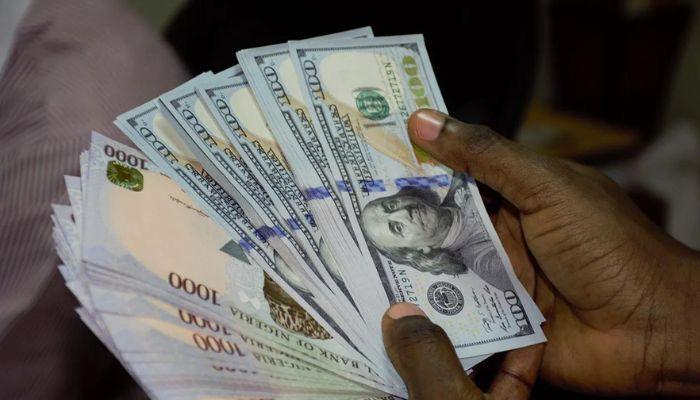
There appears another serious challenge on the workers as inflation has already started eating deep into the new Minimum Wage. For instance between 2010 and 2015, N18, 000 had some value. But since the depreciation of the currency between 2015 and now, the new Minimum Wage of N30,000 appears only an increase in figures but a drastic reduction in the value of the naira, which is today N360 to a dollar.
Contributing, a columnist and public affairs analyst, Majeed Dahiru, noted that despite the increase in new Minimum Wage empirically it has been proven that there has been a gradual decline in the Minimum Wage since 1980 in dollar terms.
“The N30, 000 is simply inadequate, yet even with the inadequate wage it appears to be a challenge for government at various levels to implement. It was supposed to take effect immediately and that has not happened and there has not been an explanation for that from any quarters. No state government has started paying Minimum Wage even the former wage was very difficult for a lot of states, which are still owing backlog of salaries. So I do not know how they are going to manage to pay the new minimum wage,” he said.
He also expressed dismay about the attitude of government, which he noted has not indicated that Nigeria is going to witness a paradigm shift in economic transformation to such an extent that there will be an increase in the wealth of the nation in order to meet up such basic obligation as paying a Minimum Wage of N30, 000, which he insist is still far from a living wage.
Reacting on the possibility of the enforcement of the law, Majeed said the law is “not justiceable,” which poses a problem for the Minimum wage implementation.
“I think it should be criminalized for any government state or federal to fail to pay Minimum Wage. There should be penalty for that. You are talking about workers welfare. It should be a crime for any employer of labour be it government or private to fail to pay Minimum Wage as at when due. It should amount to economic crime to divert the people’s salaries into other area,” he said.
The Executive Chairman of the National Salaries, Incomes and Wages Commission, Richard Onwuka Egbule, attributed the constant review of the Salaries and wages to the inflationary trend in the country. He noted that the country has low economic productivity coupled with the fact that most of the things Nigerians consume are imported.
“But I can tell you that if you keep adjusting salaries and wages in response to the depreciation of the value of the currency or the rate of inflation you are likely to have a lot of challenges and in an economy like ours where unemployment is high,” he said.
The future appears indeed gloomy for the worker, who is wavering between a new Minimum Wage which value has been reduced by inflation, and the threat of job loss as some state governments and private concerns may not pay until they retrench some workers.
Innocent Odoh, Abuja