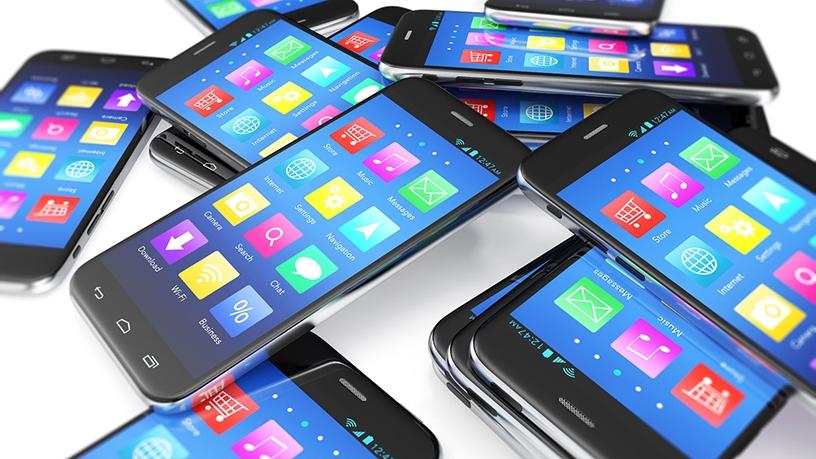
The availability of lower price points phones and the proliferations of the internet have continued to underpin smartphone penetration as consumers, whose wallets are squeezed, are forced to patronize Asian phones, In a report by e-commerce giant, Jumia, titled Nigeria Mobile Report 2019.
According to report, there were over 5 billion unique mobile subscribers across the globe in 2018. Out of this figure, 60percent of the connection was through smartphones, while the number of mobile internet users peaked at 3.6 billion. In Nigeria, there were over 172 million mobile subscribers, accounting for the penetration rate of 87% of the population, representing 6.4percent growth increase, compared to 162 million subscribers in 2017.
Over 112 million Nigerians had access to the internet in 2018, representing 56% of the population. This accounted for an increase of 14.32% year-on-year from 2017. At the end of 2018, there were over 36 million smartphone users, representing a penetration of 18.37%. While the number of smartphone users has increased year-on-year, its penetration is still very insignificant.
The report also noted that growing internet connectivity and the availability of affordable smartphones continue to drive an increasing uptake of social media networks. The number of active social media users rose from 17 million in 2017 to 24 million at the end of 2018. This represents a 12% penetration of the country’s population.

Currently, 44 percent of mobile subscribers in Nigeria are using 3G technology and 4 percent are using 4G technology as compared to over 18 percent 4G penetration in South Africa and 16 percent in Angola.
The Jumia report predicted that the country will contribute 4percent of the estimated 700 million new global mobile subscribers, making it the only country in Africa marked with a significant contribution to increasing mobile penetration in the world.
By this quota, it is expected that 28 million new mobile subscribers will emerge from Nigeria between 2019 and 2025, that is, an average of 7 million new mobile subscribers annually, if the country is to meet its quota.
The Nigerian phone market has seen Asian brands enjoy massive patronage because of their Africa-specific strategy of introducing a lower price point smartphones into the Nigerian market.
In 2018, Fero, Samsung, Nokia, Infinix, and Tecno remained the customers’ favourites and the top-selling mobile brands on the e-commerce platform.

The telecommunications and information services a sub-sector of the Information Communications Technology (ICT), contributed 77 percent of the entire sector’s contribution to the GDP, while the mobile telecommunications sub-sector contributed 7.4 percent to the country’s total GDP in 2018, compared to 5.5 percent in 2017.
The report further added that Nigeria’s GDP growth leapfrogged from 0.8 percent in 2017 to 1.9 percent at the end of 2018, even though the growth was below the projected 2.3 percent, majorly due to variations in prices of crude oil and its output.
The country’s economic growth, for the first time, was hinged on non-oil sectors such as Agriculture, Information and Communications Technology, Manufacturing, and Transport Storage, the report added.
OLUFIKAYO OWOEYE