|
Getting your Trinity Audio player ready...
|
Members of the Galvanised Iron and Steel Manufacturers Association (GISMA) have faulted the Destination Inspection (DI) system of inspection of imported goods introduced a few years back by the Nigerian Customs Service (NCS) as causing not just their businesses but the economy huge losses.
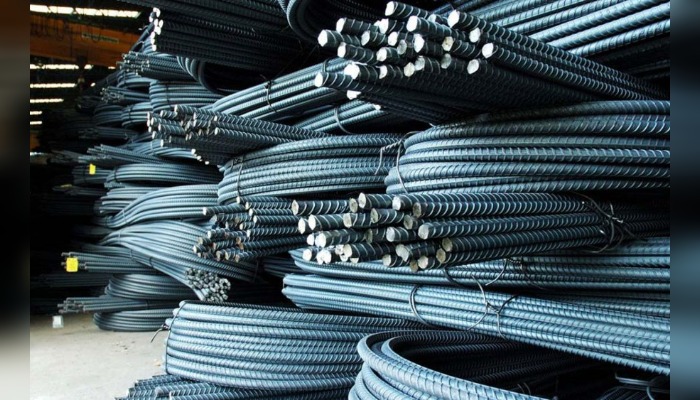
According to them, smugglers are taking advantage of the weaknesses in the DI system to smuggle in substandard iron and steel materials to the country to the detriment of the local industries with many of them already shutting down.
The faulty system, they said, is costing the nation as much as N52 billion in revenue annually arising from smuggled iron and steel products alone.
Destination Inspection is a system where goods are inspected from their origins to confirm that what is claimed in the bill of lading is what is actually in the containers where undeclared goods can be spotted and removed.

READ ALSO: FG inaugurates implementation committee for Ajaokuta steel resuscitation
At a press conference in Abuja by Obiora Ifoh, Consultant for the GISMA, who spoke on behalf of Mohammed, also called on the Federal Government to investigate their allegation and take necessary action to stop the revenue leakage for the country particularly at this time Nigeria needs every kobo to address infrastructural challenges at home.
He said the Onne and Calabar Ports were the outlets where the smuggling activities were very steep.
According to him, “There is a cartel of economic saboteurs who import huge volume of containers every week valued at about $5 million which were never captured under the current HS code 7210.30.00.00 – 7210.50.00.00 of Nigerian Customs Service portal, making the Federal Government of Nigeria lose an estimated revenue of about N1 billion on weekly basis (N52bn annually) on these smuggled items due to the neglect of pre-inspection of any container coming into the country which was hither-to the practice in Nigeria.
“Abandonment of pre-inspection of goods at the point of entry has created leeway for smugglers to flood the Nigerian markets with substandard products, including steel products.It has also made the nation’s borders and seaports porous, leading to an influx of illegal arms and explosives into the country. Such a development is inimical to national economic development and national security.

“It appeared that government security and revenue-generating agencies have been either overwhelmed or ignorant of the nefarious activities of the smugglers. The World Trade Organization is of the view that pre-shipment inspection is very important because it will help to safeguard national financial interest as it will prevent Customs duty evasion, capital flight, and commercial fraud.
READ ALSO: ALSCON set to reopen as NA places Ajaokuta concession on hold
The pre-shipment inspection was formerly observed in Nigeria but was suspended in 2006 to give way to destination inspection,” he noted.
The association further raised the concerns that the increasing smuggling of steel products into the country is inhibiting the efforts of the federal government under President Muhammadu Buhari to grow Nigeria’s economy.
“Smuggling is also worsening increasing insecurity such as banditry, kidnapping and some other violent crimes as many Nigerians are jobless while some of them become instruments for destructive tendencies as the saying; “an idle hand Is the devil’s workshop.”
He said this is due to the fact that smuggling has made many companies liquidate and millions of jobs lost, thereby increasing the vulnerability of the jobless to take to crime as a means of survival, though condemnable.
“Smuggling of steel products has led to over three million direct job losses and about seven million indirect job losses,” the Association further lamented.
Reacting to GISMA concerns, Dahiru Ado-Kurawa, Chairman, Presidential Committee on Trade Malpractices, assured that his Committee will immediately investigate the alleged trade malpractice.
READ ALSO: Boosting local manufacturing through improved patronage
He said, “In a short while ago, our committee put up an advert commencing an investigation into the importation of galvanised roofing sheets. We have quite a few companies that import such products. We are looking at the imports that have happened. It is difficult but we have the ways that we can still determine what would have been imported at that time. It is very excruciating, tedious, it would have been very easy if we have very honest and trusted people safeguarding our interest, determining that these are not the products that are supposed to come. But when such does not happen, we backtrack, check the documents, companies and hopefully get to the bottom of the matter.
He expressed sympathy for the iron and steel manufacturers for their huge investments. “Anybody that is going to make anything steel requires a lot of money and they deserve the response of the government, they deserve to be protected, rather than protecting the unscrupulous importers.
“We made an advert and we have started collecting data for all the imports of galvanised roofing sheets along with other products. We still remain passionate about executing our mandate.”
He explained that one of their terms of references is to ensure that Nigerian companies remain competitive.
“The world is very intricate now, for them to be competitive locally, there is a lot of inputs from other countries. In the past, it was relatively convenient for the government to have stamped into such an issue.
“Under democratic government, we have realised that Nigeria has become much more sophisticated as an economy, our relationship with other companies has become more complicated, our relationship with our neighbours with their vibrant ports has become very complex as well.
“With galvanised roofing sheets, thankfully, it is something that I feel, we can contain because it comes in through our ports.
He appealed to the GISMA to continue to partner with the Committee to find lasting solutions to the issues.