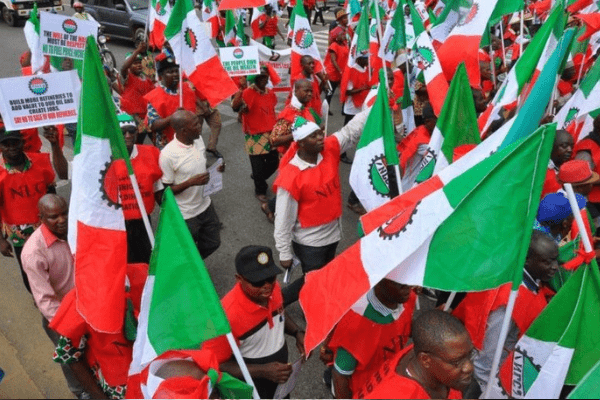
When Nigerian workers file out on Wednesday, May 1, to mark this year’s May Day (also known as Workers’ Day), they are not likely to wear mournful looks or agitate for an upward review of wage. They are also not likely to spew abusive words against government officials or pelt them with pebbles or sachet water. It will be a moment of celebration for a dream come through.
Agitation for wage increase had characterised all previous celebrations of the day in the last four years.
On Thursday, April 18, President Muhammadu Buhari granted organised labour’s long expectation when he signed into law the recently approved N30,000 national minimum wage. Since assenting the bill which had earlier been passed by the bi-cameral legislature (House of Representatives and Senate), there has been an air of excitement in the three major labour centres and their leadership.
They include Nigeria Labour Congress (NLC), Trade Union Congress of Nigeria (TUC) and United Labour Congress (ULC) led by their respective presidents- Ayuba Wabba, Bobboi Kaigama and Joe Ajaero.

Also, there has been no less joy among many other unions affiliated to the three labour centres, especially those in the public sector such as the Association of Senior Civil Servants of Nigeria (ASCSN) and their junior counterparts in Nigerian Union of Civil Servants (NUCS).
Perhaps, what labour unions would be eager to hear from the government on Wednesday, would be the effective date for the new wage. But whether or not the implementation date swings in favour of labour, many of whom believe it should take effect from April 2019, a major hurdle has, however, been crossed and Nigeria, no doubt, has moved a step closer to paying a ‘living wage’ to its millions of workers.
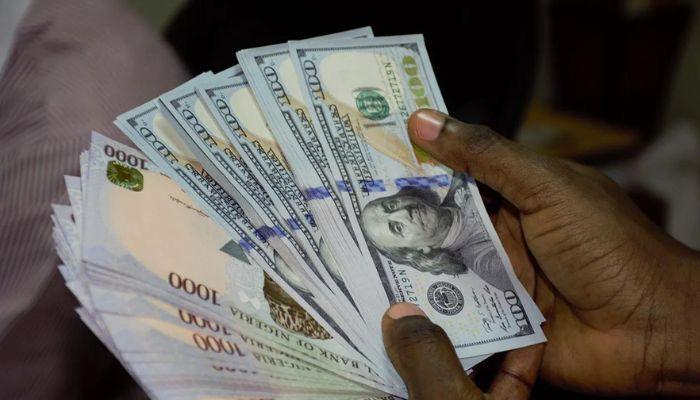
At the former N18,000, Africa’s biggest economy, paid one of the least national minimum wage in the world. According to available statistics, the country’s N18,000 (about $58 a month), which came into effect on January 1, 2011, ranked below that of Algeria- $2,145, which came into being on January 1, 2012. It also trailed far behind Angola’s $1,625 (2014); Benin- $812 (April 1, 2014; Botswana – $652 (2015); and Burkina Faso-$703 (April 1, 2012).
Also, compared with Cameroon’s $736 (effective July 1, 2014); Cape Verde at $1,353 (January 2014); Egypt-$732 (January 1, 2014); Ethiopia- $252 (2015); Ghana-$558 (August 1, 2015); Kenya-$665 ( May 1, 2015); Liberia- $435 (2014); Niger $610 (August 17, 2012 and Rwanda- $900 (2013), Nigeria’s $58 was far below peers in Africa. It is against this background that the excitement within labour could be understood when President Buhari signed the N30,000 (about $98) new national minimum wage, even though it is still a far cry from the initial figure demanded by labour.
Indeed, the journey to the new wage did not come easy. There have been strikes, agitations and protests by labour and its civil society allies that rattled the nation’s economy.

Recall that even before the 2015 presidential election, Labour had started to put the government on notice about the need to return to the negotiation table, as the N18,000 minimum wage with a lifespan of five years was due for a review in 2016. Unfortunately, the Nigerian economy slipped into recession shortly after Buhari assumed power; compounded by a fall in prices of crude oil in the international market, upon which the country’s economy is heavily dependent.
It became clear that an upward review of the N18,000 minimum wage would be an herculean task, especially viewed against the fact that many of the 36 states of the federation could not pay salaries and allowances of their workforce.
But amid labour’s growing agitation and national discourse on new minimum wage, the Federal Government, in 2017, constituted a 30-man National Minimum Wage Tripartite Committee headed by a former federal permanent secretary, Ama Pepple. The committee drew its membership from the Federal and State Governments, Organised Private Sector (OPS) and labour.
At the inauguration of the committee on November 27, 2019, President Buhari urged the committee to consider the issue of a national minimum wage and all matters ancillary to it with thoroughness and concern not only for the welfare of the workforce but the effect on the country’s economy. The President said since national minimum wage is within the Exclusive Legislative List, Nigeria should aim to go above the basic social protection floor for all workers based on the ability of each tier of government to pay.
“I say this because minimum wage is the minimum amount of compensation an employee must receive for putting in his or her labour and as such should be anchored on social justice and equity,” said the President.
Buhari had also expressed the hope that the committees’ full consultation with social partners and their direct participation would be utilised, “bearing in mind the core provisions of the International Labour Organisation (ILO) Minimum Wage Fixing Convention No. 131 and Minimum Wage Fixing Machinery Convention No.26 (ratified by Nigeria), which thrives on tripartism and collective bargaining agreements.
According to him, the committee is expected to complete its deliberations and submit its report and recommendations as soon as possible to enable other requisite machinery to be set in motion for implementation of a new national minimum wage.
But the work of the tripartite was made more arduous, as labour and government, especially the Nigerian Governors’ Forum (NGF) constantly disagreed regarding what should be the appropriate figure to be paid as new minimum wage.
Whereas the organised labour put N65,000 on the negotiating table and the Federal Government proposed N24,000, the governors variously argued for N22,000 and N21,000, leading to back and forth argument/negotiation which dragged on for about one year before the consensus figure of N30,000 which the committee submitted in its report to the Presidency in November 2018
While submitting the report, the chairman, Pepple said: “While we note the offer of N24,000 by government, the panel recommends N30,000 as the new national minimum wage of the country.”
But this did not go down well with the NGF who argued against the ability of many of the states to pay N30,000.
While reacting to a comment by Peter Ozo-Eson, the general secretary of the NLC that governors opposed to the N30,000 were diverting bailout funds received from the Federal Government to pay wages and that the union expected the ICPC to probe such governors, Abdulrazaque Bello-Barkindo, head, media and public affairs of the Nigeria Governors’ Forum (NGF) in December 2018, said the governors would have been happy to pay the amount but were constrained by limited funds amid other areas also requiring funding.
“The Nigeria Governors’ Forum (NGF) wishes to make it categorically clear that the insinuations by the NLC that governors are refusing to pay the N30,000 national minimum wage as demanded by NLC, is not only mischievous, but misleading and in bad faith,” the statement read.
“Governors have collectively made it abundantly clear that they would have been happy to pay workers the N30,000 but times are hard and because of financial constraints and other limitations, many states cannot afford it, for now.
“The N22,500 was arrived at, after extensive deliberations among all 36 governors, outlining their financial capacities and liquidity, considering the economic situation of the country and the states’ other obligations to the majority of the people of their various domains,” Bello-Barkindo said.
“Governors also emphasised that N22,500 is a ‘baseline threshold’, meaning that any governor who can pay more than N22.500 is therefore, free to go ahead and do so. To put the records straight, governors are not under any obligation, by law, to show their books to the NLC.
“But they have, in their pursuit of the understanding of the union, done so, not once, but several times over, with a view to letting labour know that what they are asking for is neither realistic nor sustainable,” he further said.
Interestingly, however, and unlike in the past when labour and the OPS have been seen to be at each other’s throat, employers in the private sector of the economy had been consistently supportive of the need to raise the earnings of workers over and above the hitherto N18,000 threshold just as they lauded President Buhari’s signing of the new wage.
Timothy Olawale, the Director-General of the Nigeria Employers’ Consultative Association (NECA), a key member of the OPS, while reacting to the signing of the law, commended Buhari and pledged support.
“The organised businesses wish to commend the President for attending to the national minimum wage bill as sent by the National Assembly. It shows that he cares for the welfare of the masses and working class in particular. We believe that the implementation date will be the date of assent,” says Olawale.
The DG explained that the national minimum wage was not a general salary increase but a wage below which no employer should pay.
According to him, employers who are already paying above N30,000 are not obligated to comply while urging other social partners to respect the position of the law so as not to jeopardise the peace in the private sector.
The NECA boss believed that organised businesses would be committed to the implementation of the new national minimum wage to ensure industrial harmony. He wants employers to take note of the date of implementation and seek further clarification, when in doubt.
Bashir Lawal, the General Secretary of ASCSN, said workers in the public sector were hopeful that with the signing of the law, implementation would commence immediately so as to put would-be beneficiaries in the position to better take care of themselves and their families.
Sounding satisfied over the minimum wage increase, Ayuba Wabba, president of the Nigeria Labour Congress (NLC), recently hinted in Lokoja, Kogi State that this year’s Workers’ Day would be celebratory.
“We have demonstrated tenacity in the pursuit of a new national minimum wage for workers. We have held several rallies, protest marches at both federal and state levels and even embarked on a few strikes to press home our demand for a new national minimum wage. A few weeks ago, the two chambers of the National Assembly passed the National Minimum Wage (2019) Amendment Bill. The bill was assented to by President Muhammadu Buhari on April 18, 2019. There cannot be a more perfect May Day gift for Nigerian Workers,” Wabba said.
Recall that on May 1, 2017 at the Eagle Square, Abuja, angry workers had booed Ngige and pelted him with sachet water. Last year, it was also not so a pleasant celebration as leaders of labour had tasked government on issues of workers’ welfare and protection.
JOSHUA BASSEY