|
Getting your Trinity Audio player ready...
|
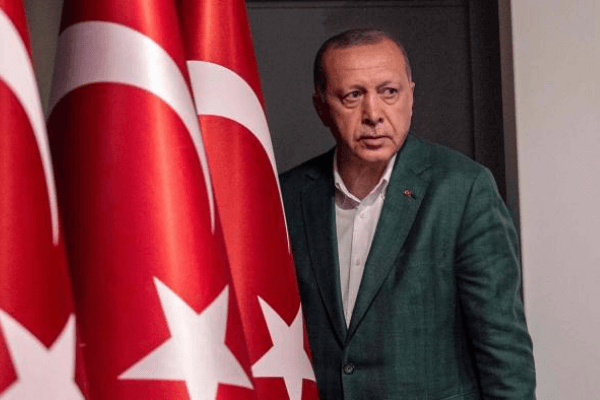
There is no let up in sight for the Turkish lira, after a rare election defeat for the ruling AK party dealt a heavy blow to President Recep Tayyip Erdogan’s authority.
The loss of the capital Ankara and the disputed outcome in Istanbul were in large part a rejection of Mr Erdogan’s approach to economic management. The president has pursued a populist agenda while thumbing his nose at investors, resulting in a deep recession, double-digit inflation and mounting unemployment.
Mr Erdogan quickly sought to regain the trust of voters and investors by promising “strong” reforms in line with free-market principles. But the fear is that he will once again fall back on stop-gap measures aimed at boosting growth, rather than tackling the difficult reforms needed to steer the economy towards a sustainable recovery.
“In the short run, you can put sticking plasters on. In the long run, unless you fix the fundamentals . . . there will be more and more episodes of nastiness,” said Gabriel Sterne, head of global macro research at Oxford Economics, the consultancy.

The lira recovered from losses in early trading on Monday but it remains fragile. Even with the benchmark interest rate set at a punitive 24 per cent, the authorities resorted to covert interventions in currency markets and a form of backdoor currency controls — with Turkish banks seemingly told to temporarily starve the London market of lira liquidity — to hold the currency steady in the run-up to Sunday’s vote.
The claim was denied by the Turkish Banking Association, but the government cannot afford to alienate investors further. With net foreign exchange reserves below $30bn, the country lacks the firepower to fight off any concerted run on its currency. Moreover, it is reliant on foreign capital to roll over the $177bn of external debt that is due to mature within the next year — most of it owed by banks.
Turkish policymakers have little room for manoeuvre. They have to keep interest rates high to prevent another steep fall in the lira, which has stabilised recently but lost almost 30 per cent of its value against the dollar in the past year. Many companies who have borrowed heavily in dollars are already struggling and a fresh depreciation could trigger a wave of bankruptcies, with risks to the stability of the banking sector.
“It is a confidence game,” said Christian Keller, economist at Barclays. “So long as the banks can roll over [foreign currency debts], they can muddle through.” But he said this would only be possible “if people feel the financial sector concerns are manageable. This depends on the lira and on growth. It is all interlinked.”
For market confidence to return, an essential first step would be greater transparency.

Investors complain that it is increasingly difficult to assess the true extent of Turkey’s problems. Although government debt is still low by emerging markets standards, no one knows the extent of off-balance-sheet liabilities — in particular, guarantees given to the grand infrastructure projects Mr Erdogan has championed.
Berat Albayrak, finance minister, has pledged to hit fiscal targets but his plans are premised on GDP growth of 2.3 per cent. The government claims the economy is growing again, after falling into recession halfway through last year, but the IMF and other forecasters expect a deeper contraction over the course of 2019.
Investors say they no longer trust official data on the level of non-performing loans. Moody’s, the rating agency, said on Monday that an unexplained drop in foreign exchange reserves in March — assumed to be the result of intervention to support the lira — called into question the central bank’s transparency and independence.
Larry Brainard, emerging markets economist at consultancy TS Lombard, drew a comparison with Argentina, which last year ran into similar financing difficulties, but has since managed to stabilise the peso after calling in the IMF.
“It was horrendous in Argentina, too, but they made all the numbers public. The IMF brings transparency,” he said. By contrast, Mr Brainard added, Turkey was currently “uninvestable”.
To make his economic plans credible, Mr Albayrak would therefore need to set more realistic fiscal targets, after admitting that growth was unlikely to bounce back quickly.
Investors worry that the government will instead prioritise growth, and induce banks to keep lending — even though credit-fuelled growth is the root of Turkey’s problems. Lending by state banks has soared this year even as private sector peers retrenched.
“Deleveraging when you have so much private-sector debt is going to be a very difficult process,” said Bulent Gultekin, a former governor of Turkey’s central bank. “How the current government is going to handle that is an open question.”
Another essential step to restore confidence would be to set out a clear process to clean up bank balance sheets, and recapitalise them if necessary. “Turkey has a private-sector debt problem. You need to say how you are dealing with it,” said Nafez Zouk, at Oxford Economics.
Despite its precarious position, Turkey’s problems are not necessarily intractable.
Monetary policy is for now tied to the lira, but there may be some scope for fiscal expansion. The Treasury has already raised $6.5bn of the $8bn it intends to borrow in 2019 by taking advantage of easier financial conditions at the start of the year.
The banking system also has enough capital to withstand a sharp rise in bad loans and a further fall in the currency, according to a report last week by Fitch, although the rating agency warned that some banks could run into trouble sooner.
However, Mr Erdogan’s disregard for conventional economics, and his appetite for geopolitical confrontation, remains a big risk.
“Turkey thinks it can do Turkish-style economics,” Mr Zouk said. “If you want global finance, you play by the rules of global finance. They have been taking those rules very lightly and it will take a long time to rebuild credibility.”