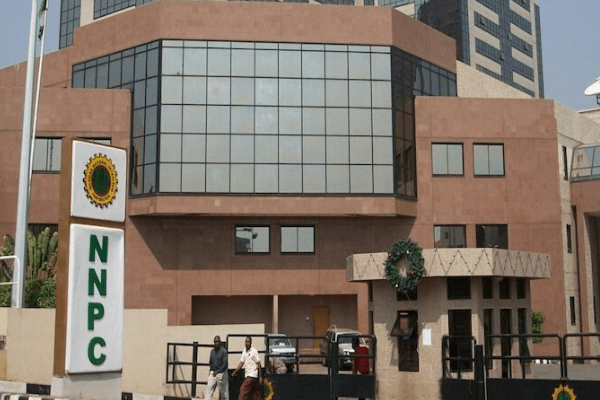
When Nasir El-Rufai said in 2015 that Nigeria must do away with its “corrupt” oil company or stand the risk of being destroyed by it, not many stakeholders took him seriously. However, a deeper look at latest financial result of Nigerian National Petroleum Corporation (NNPC) shows the Kaduna State governor could be right after all.
With international benchmark Brent crude averaging $71.19 per barrel in 2018, 31.5 percent gain from 2017 when it averaged $54.15 a barrel, state-owned NNPC performed poorly compared to its peers in China, Brazil, Russia and other countries.
BusinessDay analysis of NNPC’s full-year 2018 report shows between January and December 2018, Africa’s biggest oil producing country spent N730.9 billion on under-recovery, popularly called subsidy, while N140.6 billion was also spent on old, perennial problems such as pipeline repairs and management cost.
Figures from the corporation’s operations and financial report for 2018 actual show gains of N393.5 billion made by its upstream and gas-processing subsidiaries – Nigerian Petroleum Development Company (NPDC), Integrated Data Service Limited (IDSL), National Engineering and Technical Company Limited (NETCO), Nigerian Gas Company Limited (NGC), and Nigerian Gas Marketing Company (NGMC) – were wiped off largely by its downstream subsidiary operations which recorded deficits north of N351.7 billion.

“If we do not kill NNPC, NNPC will kill Nigeria,” El-Rufai said at the 2015 Wole Soyinka Media lecture series. “Any organisation that takes 50 percent of federation revenue for itself and gives you the change has no right to exist. It is evil, it must die; it is just the manner of the death that we must talk about.”
In full-year 2018, Nigeria recorded N24.9 billion on product losses, while cash call payment for the development of joint venture oil and gas assets ate into the Federal Government’s revenue last year as a total of N1.829 trillion was paid to oil companies.
The government generated N3.11 trillion from the sale of crude oil and gas in 2018, out of which N1.829 trillion was transferred into the joint venture cash call account while the balance of N1.28 trillion went into the Federation Account, the NNPC data revealed.
“There is a lot of secrecy with NNPC. Also, despite doing so much under-recovery, how come a loss-making organisation has not gone bankrupt?” said Luqmon Agboola, head of energy and infrastructure at Sofidam Capital. “Nobody is even asking questions surrounding the revenue for the 450,000 barrels they get daily.”
The combined value of output by the three refineries (at import parity price) for the month of December 2018 amounted to N10.86 billion while the associated crude plus freight costs and operational expenses were N8.89 billion and N19.29 billion, respectively, resulting in an operating deficit of N17.32 billion by the refineries.

“There are people working in these refineries that are being paid and promoted for not doing anything but yet receive hefty salaries, so the refineries are loss centres and not profit-oriented compared to other oil producing countries which is a shame. But we hope the Petroleum Industry Governance Bill (PIGB) will help address all of these lapses,” Adeola Adenikiju, a gas and policy analyst for the World Bank and professor of Economics at University of Ibadan, said.
Group operating revenue for the month of December 2018 stood at N731.88 billion, N439.59 billion higher than the previous month performance, while expenditure for the month surged by N429.52 billion.
“This month revenue is far more than the budgeted revenue which resulted in marked increase in trading surplus despite the drag in operating expenditure in the month,” NNPC said in its December report.
But while Nigeria’s state-owned oil company underperformed despite higher oil prices, Brazil’s state-owned Petrobras posted its first positive annual result in five years which is also the highest since 2011, with a 2018 net income of $6.84 billion.
“Petrobras’ performance in 2018 was undoubtedly the best in many years, which includes the achievement of some historical records, namely free cash flow and adjusted EBITDA, and breaking a four-year sequence of losses,” said Roberto Castello Branco, Petrobras’ CEO, in a letter.
With Brazilian oil and gas production reaching 2.53 million barrels of oil equivalent per day, Petrobras posted adjusted EBITDA of $30.44 billion and, for the fourth year in a row, a positive free cash flow of $14.17 billion in 2018. It generated $40.14 billion in municipal, state and federal taxes, in addition to government take.
Also, China’s state-owned Sinopec Group registered a 22.09 percent year-over-year growth to achieve $426 billion of operating revenue in 2018. The company’s refinery and distribution segment accounted for approximately 60 percent of 2018 revenue which increased by 2.31 percent to 244 million tonnes (Mt), while total domestic sales volume of refined oil products increased by 1.4 percent to 180.24Mt.
State-owned Rosneft, Russia’s biggest oil and gas company, boosted revenue by 31.4 percent to $133.7 billion in 2018. Fully owned by the Russian government, the company’s oil and liquids production increased by 2.1 percent to 4.7Mbpd while gas production averaged 1.12Mboed during the year.
Norwegian state-owned Equinor’s full-year 2018 net profit jumped 64 percent, hitting $7.5 billion, compared to $4.6 billion in 2017, while total oil production hit 2,170mboe per day as at Q4 2018.
“Strong operational performance and high production gave solid results and cash flow in a quarter with significant market volatility,” said Eldar Sætre, president and CEO of Equinor.
Cash flows provided by operating activities before tax amounted to $27.6 billion in 2018 compared to $21.0 billion in 2017. Equinor’s Reserve Replacement Ratio (RRR) reached an all-time high of 213 percent in 2018, mainly driven by sanctioning of new fields, positive revisions and acquisitions.
The Petroleum Industry Bill (PIB) that should solve the problem of Nigeria’s petroleum industry has been going back and forth from the National Assembly to the Presidency for close to two decades now. For some strange reasons, no Nigerian president has been courageous enough to sign it.
To remove all the stumbling blocks against the bill, the National Assembly decided to disaggregate it into four parts: the Petroleum Industry Governance Bill (PIGB), the Petroleum Industry Fiscal Bill, the Petroleum Industry Administrative Bill, and the Petroleum Industry Host and Impacted Community Development Bill.
A barrel of Brent oil, the benchmark for Nigerian crude, sold for $68.30 on Friday, March 29, according to data obtained from the Bloomberg terminal.
DIPO OLADEHINDE