The Federal Government is gradually making the Medium Term Expenditure Framework and Fiscal Strategy Paper (MTEF/FSP) less relevant by not allowing that very important document which sets out key assumptions for the expenditure planning to be passed before the budget is even sent to the National Assembly for appropriation.
Findings by BusinessDay show that since President Muhammadu Buhari assumed office in 2015, he has consistently presented the national budget to the National Assembly while the MTEF/FSP is still being considered by the lawmakers, indicating what analysts now see as a flagrant violation of the Fiscal Responsibility Act, 2007.
“This has been the case for the past three or four years. The relation between the MTEF and budget has broken because you are supposed to consider and pass the MTEF before considering the budget. We are beginning to see a pattern in which the MTEF is becoming irrelevant,” Ogho Okiti, chief executive officer of leading economics consulting firm, Time Economics, told BusinessDay.
The MTEF/FSP, an annual, rolling three year-expenditure planning sets out the medium-term expenditure priorities and provides the basis for the preparation of the annual national budget. Specifically, Section 11 (b) of the Fiscal Responsibility Act stipulates that the MTEF/FSP be submitted to the National Assembly “not later than four months before commencement of the next financial year”.

But findings show that since assumption of office in May 2015, President Buhari has not adhered to the law.
For instance, in 2015 and 2016, rather than submit the MTEF/FSP by September as provided in the FRA, President Buhari submitted the 2016-2018 and the 2017-2019 MTEF/FSP to the National Assembly on December 8, 2015 and October 4, 2016, respectively.
Also, the President submitted the 2018-2020 MTEF/FSP on October 17, 2017, while the 2019-2021 MFEF/FSP which is currently being considered at the NASS was received by both legislative chambers on November 6, 2018.
Experts who spoke to BusinessDay described the side-by-side consideration of the MTEF/FSP and the budget as an aberration. This, they said, has negated the essence of the fiscal documents, describing the submission of the budget while MTEF/FSP is still being considered as an anomaly.
Attributing the delay in approving the MTEF/FSP to the 2019 electioneering campaigns, Okiti said lawmakers devoted more time to their reelection bid.
“We are in a crisis,” he said. “The point I am trying to make is that whether it is the MTEF, budget or economic policy in general that you talk about, in the last three to four years, we have not had a semblance that the people in charge of economic policy understand the implication (of simultaneous consideration of MTEF and national budget).”

BusinessDay also finds that not only is the document consistently presented late, it also stays longer than necessary at the National Assembly before approval.
While the 2016-2018 MTEF/FSP spent eight days at the National Assembly (December 8 to December 16, 2015) before approval, that of 2017-2019 lasted for 107 days (October 4, 2016 to January 19, 2017). President Buhari submitted the 2018-2020 MTEF/FSP on October 17, 2017 and it was passed by both chambers on December 5, 2017, spending 49 days.
The current MTEF/FSP which was submitted by the President since November 6, 2018 had spent 142 days as at March 28, 2019.
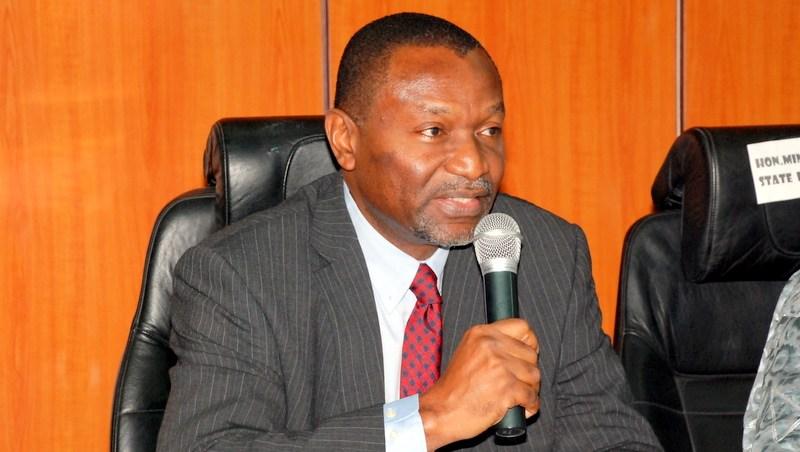
But speaking at an event organised by the National Assembly in Abuja, Udoma Udo Udoma, minister of Budget and National Planning, said the Federal Government will collaborate with the legislature to revert to January-December budget cycle beginning with the 2020 national budget.
Udoma said the government was ready to comply with the provisions of the Fiscal Responsibility Act 2007 by submitting the (MTEF/FSP) to the National Assembly in time.
He added that this would not only make planning easier for both the public and private sectors but would also ensure proper oversight by relevant committees of the National Assembly.
He attributed delay in submitting and passing the 2019 budget to the fact the both the executive and legislative arms of government relegated governance to the backseat as politics occupied centre stage during the 2019 elections.
“But I believe that going into 2020, this is a year that we should be able to achieve it. This is year that we should be able to sit down with the National Assembly and achieve it. The President is determined to achieve it,” Udoma said.
“We will be sitting down with the National Assembly so that we can achieve. And we don’t need to do it be legislation. I think it is better to do it by cooperation, working together,” he said.
Senate President Bukola Saraki had assured mid-March that the document would be presented and approved in a week’s time, but the Committee on Finance was unable to submit its report before the Senate adjourned sitting till April 2.
“The plan was to submit the report by Wednesday. In fact, that was why we did not join the House of Representatives in adjourning by Tuesday (March 19). But due to circumstances beyond our control, the report was not ready,” a member of the Senate Committee on Finance told our correspondent on condition of anonymity.
This situation, said Austine Aigbe of the Centre for Democracy and Development (CDD), is unhealthy for the economy. He said the best way to avoid simultaneous consideration of the MTEF/FSP and the national budget is for the executive to comply with the Fiscal Responsibility Act.
“The challenge with the Nigerian budget is priority. When a policy that is supposed to be used to guide the process of budget is taken side-by-side with the budget, then we lack the impetus to properly implement the budget,” Aigbe said.
“We need to prioritise on issues. And I think it is important that we start it now. That next year, heading towards 2020 national budget, we must, as a matter of urgency, submit the policy that guides the budget earlier before the budget proposal so that we don’t end up going back and start having side-by-side consideration of MTEF/FSP and the budget.
“The question is if it is legal that the MTEF guides the preparation of the budget, it means that the MTEF must be ready before the budget. And when it is not happening, then we have a challenge. It therefore means that the budget is an imaginative work that is not guided by the provisions of the Fiscal Responsibility Act, 2007,” he said.
Nuhu Yaqub, professor and dean, School of Post Graduate Studies, Nile University, Abuja, attributed the development to the face-off between the executive and the legislature. He urged the President to learn from his experiences with the 8th National Assembly and build a cordial relationship with the incoming lawmakers in order not to harm the economy.
“The relationship between the executive and the legislative arms of government has not been quite harmonious. And it is really a pity because as much as there are different political parties in the National Assembly, one will still expect that the overall general interest of the country should be uppermost,” Yaqub said.
“Hopefully, this will be the last time where the National Assembly will be considering a framework that is supposed to assist the government to carry out its own economic agenda by this time. Even though we are out of recession, my take is that the economy is still very fragile and there is the need for every stakeholder to be very mindful of their responsibilities,” he said.
OWEDE AGBAJILEKE, Abuja