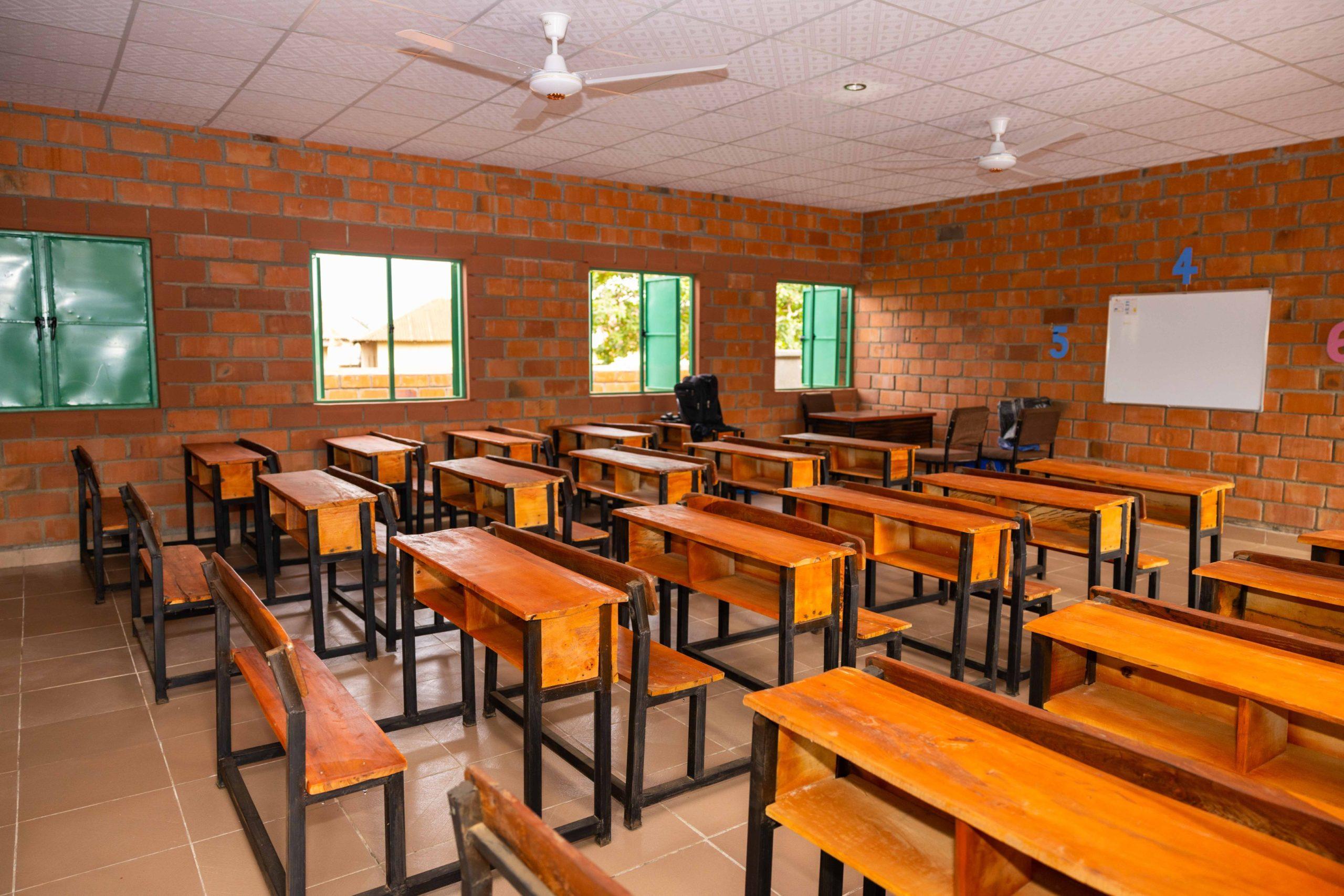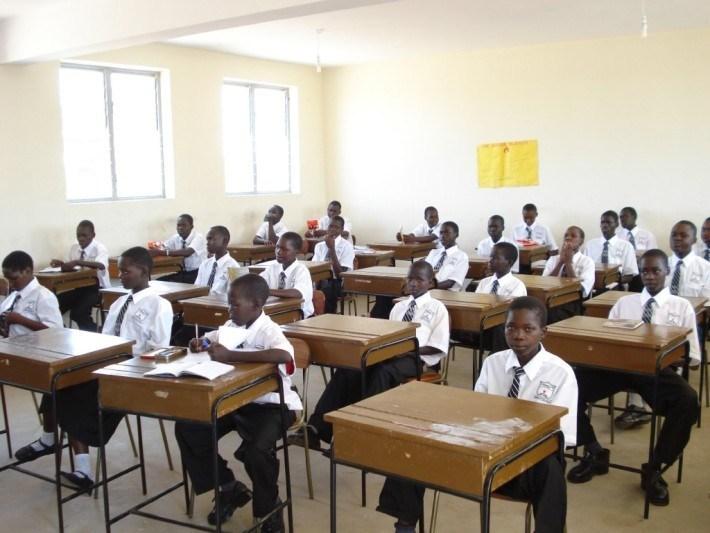
The educational system in Nigeria is a huge paradox. It tells the story of Nigeria, a country where numbers don’t translate into advantage and quantity runs on parallel lines with quality.
Nigeria boasts a large number of schools at all levels—primary, secondary and tertiary. Yet the knowledge base, especially of the products of this army of schools in particular, is very low.
The liberalization of the education sector by the federal government about two decades ago, allowing private sector operators to provide, own and run schools within the ambit of the enabling law has led to the proliferation of primary and secondary schools of all shades and sizes. And, to some extent, universities.
Though these schools which come in different sizes, giant and mushroom inclusive, are almost in every corner of Nigeria, they are more predominant in the southern part of the country where demand and craze for education is higher. The northern part of the country is only playing a catch up.

Within the southern part of the country, Lagos, which is many things rolled into one in terms of commerce, industrialization and agglomeration of other economic activities, is way ahead of other states and cities with the number of schools in its fold. Lagos is said to have an estimated 30,000 public and private schools put together.
Out of this number, about 18,000 are privately owned. It is estimated too that 76 percent of this number, representing 11,000 schools are not registered, meaning that this staggering number of schools are operating illegally, yet on yearly basis, they churn out people who will form the country’s skill base for offices, industries and other fields of economic activity tomorrow.
In other economies of the world, economic growth is driven largely by private enterprise even as the public sector plays its regulatory role and enabling the environment for the private sector to flourish.
In such societies, large numbers are always assets that could be exploited for growth. That also applies to their school system which explains why majority of Nigerians who leave the shores of the country for studies abroad, end up in well established, well organised and well run private schools.
“Our case is always different and that is why we are where we are even as a country richly blessed with all that we need to move far away from this sorry passé. Government’s liberalization of the education sector was a good idea. I want to believe that government had good intentions in doing what it did. But what we see is like throwing a piece of meat to the dogs and caring little about what they do with it”, Samuel Uroko Odoabuchi, an educationist, explained to BDSUNDAY in an interview.

The oligopolistic tendencies in a free market economy where everybody is selling basically the same product, in this case, knowledge, push operators develop competitive spirits that, most times, are taken out of the ordinary, sacrificing efficiency and commitment to quality on the altar of filthy lucre.
In the good old ways, public schools were more preferred destinations than private ones which were considered then as receiving centres for never-do-wells who have failed to secure places in public schools. Today, public schools are known as places where education has become a mere formality.
Students who pass through public schools, especially at primary and secondary levels, are half-baked and, in some cases, not baked at all because they can’t offer any value. “Government is the cause of what has become of public schools today and it is the same whether you are talking of primary or secondary schools”, Uroko explained further.
Continuing, he said, “funding is a big issue here. Government does not carter for the teachers and that is why they are not serious with their job. Many of the teachers do whatever pleases them. As a principal of a school, you don’t have anything in terms of imprest account to run your school. The necessary things you need to make teaching and learning a rewarding experience are lacking”.
The educationist, who ended his service to the education sector as a school principal, noted that both morality and discipline no longer exist in the school system because, according to him, “we now have a situation where a child misbehaves in school, a teacher disciplines the child by way of flogging him or her and the next thing you see is the parents coming to school to take revenge” .
Though the private schools are relatively better in terms of structure and administrative convenience, Evelyn Onoja, an educationist and head of a private school, says the products of the two sectors present a good case of the pot and the kettle.
“Yes, we have schools everywhere today, especially in cities like Lagos. But what we get in return from all the schools is nothing to write home about. The quality of the products of these schools leave nothing to be desired”, Onoja said, listing some of the causes as competition, quest for quick wealth by owners of these schools, pressure from parents and influence of technology on the school children.
In other jurisdictions, competition is good because it enhances efficiency and quality of the production process, but not in the education system where, Onoja says, competition has done more harm than good to the education and upbringing of the students.
Every school wants to be a reference point in terms of good performance in external examinations. According to Onoja, “this is the major driver of the competition we are talking about. School owners go to any length to ensure that their schools come tops in WEAC, NECO or JAMB examinations and so, engage in unwholesome acts ranging from buying exam questions, aiding students in examination halls with the connivance of examiners, to conniving with examination bodies to influence results, etc”.
Unconfirmed report has it that some school proprietors go diabolical in order to increase the population of their schools. In some cases, neighbouring schools are remotely-controlled and forced out of business. This is because schools are now regarded as business enterprises and not knowledge centres.
“The quest for quick wealth is as high as it is deep; some school owners are more interested in the money they get from their ‘business’ than the welfare of the teachers or the quality of the knowledge imparted on the students. They hardly plough back or make fresh investment in the school to raise standard”, Omobola Adewunmi, a schools inspector, confirmed to BDSUNDAY.
Many of these school owners, she added, employ incompetent teachers and pay them next to nothing as salaries, adding that why they don’t employ highly qualified and professional teachers is because they want the whole money for themselves and their families while the teachers work and die on the job.
Adewunmi has her blame for parents and the students for the situation in schools today. According to her, parents are not only over-indulging their children, but also pile too much pressure on the school to tolerate and make the best of an indolent and uninspiring child.
“The idea of special centres for external exams comes from parents of lazy students who are ready to offer anything to make their children pass exams they never prepared for. Sometimes, such parents hire and pay people, mostly university students, to write WAEC or JAMB examinations for their children. From there, they move on to buy university admissions for those children. The end products of these unwholesome activities can only be left to the imagination”, Adewunmi posited.
Aggregating these activities readily paints a picture of a country whose present and future are already compromised. Nations grow on the back of its human capital and the quality of any nation’s human capital is a corollary of the quality of its educational system.
Government in Nigeria seems to be a spectator in a system that shapes the country’s future. Any discourse on education in the country, especially on what has held the system down, must mention poor funding. Contrary to the United Nations Educational, Scientific, and Cultural Organization (UNESCO) recommendation that 26 percent of the nation’s budget should be allocated to the educational sector, education in Nigeria is poorly funded, with budgetary allocation ranking among the least.
Onoja noted that the quality of education in any country was one of the major keys to national development, pointing out that the decline in the quality and standard of education in Nigeria was a major cause for concern.
To get it right, Nigeria must rethink its education policy and funding should be a priority. Experts are of the opinion that if education is well funded to a point where teachers are well remunerated for the job they do, adequate infrastructure is provided to make quality teaching and learning possible, emphasis on private schools will be reduced and all the fraud and unethical practices around them will die.
Legit, an online news and entertainment platform, says the first step forward towards reviving the educational system in Nigeria lies in the hands of the government. “Necessary steps need to be taken in order to restructure and save the sector. The government at all levels needs to commit to the delivering of a competitive standard of education across the country and with other countries”, the platform says
All in all, adequate funding with good management will provide high-quality education in Nigeria. There used to be education inspectors in this country and these inspectors helped to check the excesses of school administrators and sanction lazy teachers. More than ever before, the system needs such inspectors, especially for private schools some of which have become business centres operated by shylock investors.
CHUKA UROKO