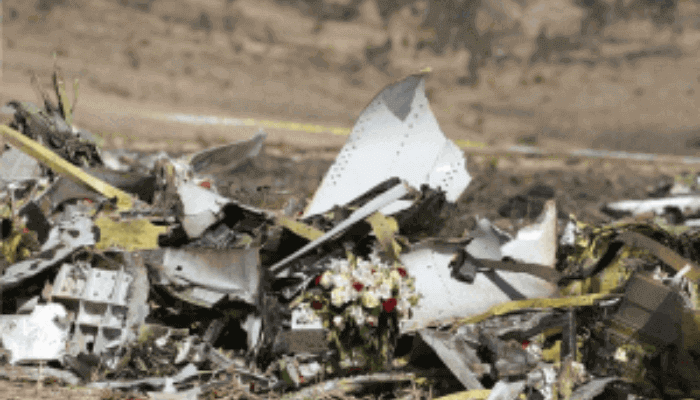
One of two sensors known as angle-of-attack vanes, located near the nose of the aircraft, would have to malfunction or be damaged to cause the scenario suspected in the crash. Searches of the wreckage as of Thursday night had failed to locate the part believed to have been involved, said one of the people.
Evidence from the flight-data recorder of the Ethiopian 737 Max 8 showed that the missing sensor was malfunctioning and that a device known as a “stick-shaker” — which makes a loud nose and rattles a pilot’s control column to warn of an impending aerodynamic stall — had been activated on the same side of the aircraft. It could be heard on the cockpit voice recorder, the person said.
The preliminary data showing that MCAS was active during the Ethiopia flight is the first hard link between the two crashes that resulted in the grounding March 13 of the 737 Max, the newest version of Boeing’s single-aisle workhorse. But the information also leaves unanswered many questions, they said.

Pilots can overcome MCAS in the short run by hitting switches on their control column that control a plane’s trim to raise its nose. Activating those switches temporarily disables MCAS, though only for a few seconds at a time.
A separate procedure to shut off power to the plane’s trim motors, which pilots on all 737 models are taught, is how Boeing advises pilots to handle an MCAS malfunction. There is a separate manual trim system that can be used to control a plane after such an emergency.
The reason why the angle-of-attack sensor would have malfunctioned in the Ethiopia crash isn’t yet clear either, said the people. Finding the device in the wreckage may provide evidence as to whether it was damaged — which could occur while the plane was on the ground or from a bird during takeoff or flight — or suffered some other fault.
A spokesman for Ethiopian Air, Transport Minister Dagmawit Moges and Ethiopian Civil Aviation Authority Director General Wosenyeleh Hunegnaw didn’t respond to messages seeking comment on the angle of attack sensor. Representatives of Boeing and the FAA declined to comment and the U.S. National Transportation Safety Board said it couldn’t comment on a foreign-led investigation.