|
Getting your Trinity Audio player ready...
|
Opposition figures have rejected a move by Algeria’s military to have the country’s ailing president declared unfit for office, saying it had come too late and did not meet the demands of angry demonstrators hungry for change.
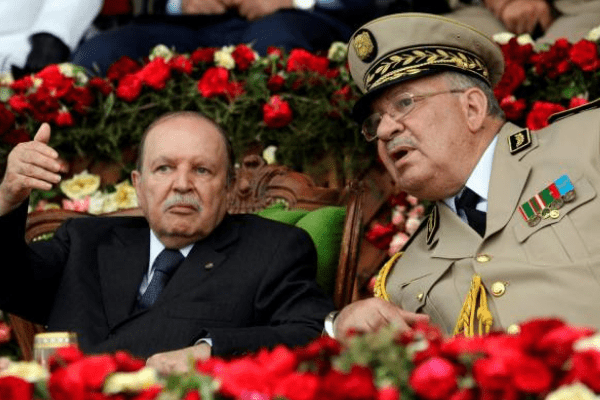
Under huge pressure after five weeks of demonstrations, Ahmed Gaid Salah, the army chief of staff and a pillar of President Abdelaziz Bouteflika’s regime, on Tuesday called on the country’s constitutional council to begin a process to declare the post of the president vacant so that new elections could be held within three months.
But opposition politicians argued that the move to jettison the incapacitated figurehead was part of a bid by the regime to ensure its own survival as it struggled to respond to the biggest street protests in decades.
Soufiane Djilali, who last year set up a movement to campaign against a fifth term for Mr Bouteflika, said in a video posted on Twitter that the military’s plan would bring “new dangers” because the process would be prepared by regime officials and institutions.

The transition period would be led by the Speaker of the upper chamber of parliament, Abdelkader Bensalah, a longstanding regime figure, while the prime minister appointed this month by Mr Bouteflika and the insiders who until recently backed him would be likely to oversee the election arrangements.
“Neither the opposition nor the people will accept it,” Mr Djilali said of the military’s move. “There has to be a final end to this regime, and every official who was complicit with it should go so we can enter the new era we all demand.” He called for a short transition of “six months or a year led by faces trusted by Algerians”.
Moustapha Bouchachi, a human rights lawyer who has been put forward by some in the protest movement as a possible future president, also doubted whether the army’s move would be enough.
“This is a way of manoeuvring round the demands of the protest movement,” he said. “I think we will see on Friday [the traditional day of protest] that the young people come out to demonstrate in great numbers to send a message voicing their rejection of this process.
“I hope the military . . . listen and realise that they [Algerians] do not want to build their future with officials from a corrupt regime.”

He also called for the appointment of a new unity government made up of respected non-partisan figures that would prepare the ground for fresh elections.
Mr Bouteflika, 82, was paralysed by a stroke six years ago which impaired his ability to speak. He has not spoken in public in that time and is rarely seen at official events.
His decision to seek a fifth term in office sparked huge demonstrations across the North African country, a leading supplier of gas to Europe. A subsequent attempt to appease the protesters by postponing the April 18 presidential poll and a pledge that he would lead a transition period to introduce reforms also failed to calm public anger.
With further mass protests expected on Friday, analysts said that continued pressure by protesters could bring more concessions from a weakened regime.
“There is no military or political official who can now confront the street,” said Nacer Djabi, a professor of sociology in Algiers who described himself as “optimistic” of meaningful reform. “It is normal that the regime tries to skirt the demands of the people, but the balance of power has changed.”
He said the army was not the same as in the 1990s when it cancelled elections to prevent Islamists from winning, and that the current military leadership did not want to be involved in politics.
A new government, independent electoral commission, and free access to the media for all presidential candidates could still be wrested from the regime, he argued.
Hundreds of thousands of people from all walks of Algerian life have joined the leaderless protest movement mobilised largely via social media. The demonstrations have remained peaceful, with both the protesters and the security services careful not to spark violence.
Professor Hugh Roberts of Tufts University in the US, said there remained a “danger of things going off the rails,” but that “this should not be exaggerated”.
He believes that General Salah and the army are aware that “cosmetic change will not do” and that they know they must find a “historic compromise between the demands for immediate root-and-branch change and the necessity of keeping the state functioning and stable”.