|
Getting your Trinity Audio player ready...
|
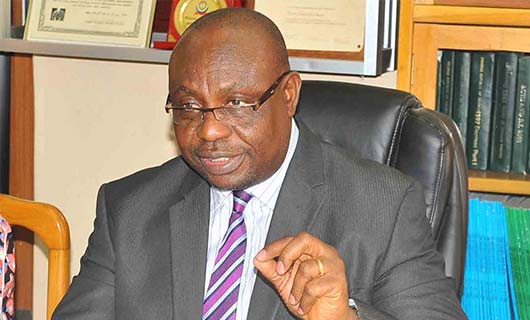
Festus Okoye, national commissioner and chairman, information and voter education, Independent National Electoral Commission (INEC), at an interactive session with senior journalists in Lagos, spoke on the readiness of the Commission to conduct credible general election. He also addressed some concerns ahead of the polls, including vote buying, security, method of result transmission, and INEC’s impartiality. ZEBULON AGOMUO, Editor, was there. Excerpts:
The rate at which political parties spring up in Nigeria has become very alarming and worrisome. People have continued to wonder what the attractions are. Does INEC still give grants to political parties?

We no longer give grants to political parties. We have been very, very meticulous in applying the rules of the registration of political parties.
The challenge is that if you look at the constitution, the only thing that is tough in terms of registering a political party is that the political party must have an office in the Federal Capital Territory (FCT), Abuja. It does not matter whether the office is in Maitama; it does not matter whether it is in Kuje, Nyanya; whether it is a storey building or a room and parlour.
What is important is that a political party must have an office in the Federal Capital Territory. Every other thing is paper work, just paper work. So, it is possible for anybody to just put together a political party and if you deny the polity registration today, the party can re-apply the next day. So, it’s a very, very huge challenge. Those who designed the constitution of the Federal Republic of Nigeria made the registration of political parties very liberal.
So, if we are not comfortable with the number of political parties we have and we want to do something about them, we have to approach the National Assembly. You are aware that there’s a fourth amendment to the constitution of the Federal Republic of Nigeria that gives the INEC the power and authority to deregister some political parties that did not meet a certain threshold after the general election.
So, with that there’s a possibility that, that may act as a check on the number of political parties we have, but the designers of the constitution believes that Nigeria should be a multi-party democracy and they designed the constitution as such.

How is INEC going to pick the collation officers and how is the Commission going to ensure that they are not compromised?
We have 8,809 registration areas; in each registration area we have a collation officer and from what I have just said, the INEC has said that for us to speed up collation, we are going to have two collation officers per registration area. So, if you multiply 8,809 by 2 (two) you will get the total number of collation officers that we are going to have in the various wards. We are also going to have collation officers at the local government level and we have 774 local government areas throughout the federation.
We are also going to have collation officers at the state level and these are going to be drawn from vice chancellors of various institutions of higher learning. The INEC decided to centralise the recruitment of collation officers because we want a situation where we will know who our collation officer is. The various universities are sending the names of some of their lecturers – professors and other academic staff- to the INEC under very strict cover. When we get the names of these people from various universities, we will also subject those names to some security checks, and none of them will know where he or she is going to be a collation officer. So, if you are from, say, the University of Jos, we will train you as a collation officer but you will never know where you are going to serve as a collation officer until a day to the election. That is when we are going to release the list and the collation officer will know the local governments they are posted to.
So, we want to centralise this. We don’t want a situation where some people will be making approaches to the collation officers, just because they were recruited locally. That is why we are centralising it. So, it is only the chairman of the INEC and his personal staff that know who the collation officers are because the list of the collation officers that will be generated by the various Vice Chancellors will go to the chairman directly and not even to the national commissioners.
Is election going to hold in the trouble states in the North East, particularly Borno? What special arrangements do you have in that regard?
Now in the relations to the North East, we decided to set up a committee to look at the issue of IDPs’ voting in various parts of Nigeria. Places like North East are very serious challenge. We also have some other places like Benue and others. We have mapped out where these IDPs are; and we captured them doing the continuous voters’ registration (CVR) exercise, but you see, the nature of the IDPs’ challenge in Nigeria is very, very fluid. Some of the IDPs we captured before, peace returned to their communities, they went back. Some of them after going back, there was another problem, then they returned to the IDPs’ camp. So, that has posed a challenge. But the various Resident Electoral Commissioners are mapping out some of these IDPs’ camps, wherever it is possible to conduct elections in Nigeria, the INEC will conduct elections. Where the security challenge is such that it is impossible to conduct election, we will make sure that the residents of those areas that have moved to IDPs’ camps or other safe places, will have an opportunity of voting, in which case, the Smart Card Readers will be configured to capture their registration areas; and then they will be given an opportunity of voting.
How is INEC going to ensure that every journalist who wishes to cover the 2019 elections is accredited and given the reflective jacket, unlike what happened in 2015?
In terms of reflective jackets, this time around, we are going to provide right quantity of reflective jackets to all media organisations that go through our accreditation process. Some of this accreditation process will take place at the state level for organisations that are state-based; while major organisations that have a national spread, their accreditation will take place at the Federal Capital Territory (FCT), Abuja. We are going to provide the requisite number of reflective jackets for all the journalists that are accredited.
What is the plan of the Commission concerning the security of journalists and other observers?
Presently, the security agencies that will be involved in the election are being trained and we have given them the regulations and guidelines for the conduct of these elections, and those regulations and guidelines contain where the journalists can go to and what the journalists can do on Election Day.
And we have pleaded with them to be very, very professional and accord due respect to the media personnel that will be covering the elections. So, we are taking all these things on board. But you know on the Election Day, there’s a sense of nervousness and sometimes you give guidelines and those guidelines are not followed. But we are making sure that these guidelines will be followed and that no journalist will be molested on Election Day.
There seems to be confusion over issue of transmission of results. A REC said it would be done electronically and we also hear it would not be so. What is the true position?
Are we going to transmit results electronically? The answer is No. The commission will not transmit the result of 2019 election electronically. The law as at today mandates the commission to fill forms for the purposes of transmitting election results. So, the result of the elections will be at the polling unit level; it will be entered into Form EC8A and transmitted to the collation centres and at the collation centres, the result will be collated manually. So, my answer is that the INEC will not transmit the results of the 2019 elections electronically; it will be transmitted manually.
One governor said recently that INEC and FG planned to shut down the Internet. Can you comment on this?
I want to state that INEC has not discussed with anybody or any organisation in relations to shutting down Internet services on Election Day. All the Smart Card Readers that INEC uses or will use in the conduct of the 2019 election are propelled through the Internet. The three service providers (Glo, Airtel and MTN) that assist the INEC in configuring the SIMs that will be used for this election, if the Internet is shut down, there won’t be any elections, because the Smart Card Readers cannot function without the Internet. If the Net is shut down, there is no way presiding officers would communicate with the supervisory presiding officers and electoral officers if there is any problem in relations to a polling unit. For each registration area, we have what we call RATECH– Registration Areas Technical assistants. These are the people who can intervene speedily if there is a problem with a smart card reader. And a presiding officer can only communicate with them if there is a challenge, using the telephone. So, if we shut down the Internet or if we conspire in shutting down the Internet, how are we going to carry out all these processes? The INEC is setting up a Situation Room and we also have a central operations centre. We also have a call centre people can call in and make one complaint or the other. If we shut down the Internet, these things cannot happen.
So, there’s no way the INEC will conspire with anybody to shut down the Net. If we do that conspiracy, the implication is that there won’t be any election in Nigeria. But the ballot boxes are already at the local governments. The ballot papers are with the Central Bank. All the Smart Card Readers that will be used in the conduct of this election are in all the states of the federation. So, it is not true that INEC is involved in terms of trying to shut down the Internet services. I have read a statement issued from the Office of the National Security Adviser, the Internet is part of Nigeria’s national security infrastructure and Nigerians are too sophisticated in relations to some of these things. These elections will be very, very transparent and INEC will be open to Nigerians in terms of everything we are doing.
We have not entered into any communication; we have not entered any agreement with anybody and we have no intentions whatsoever in harming some of the processes and procedures we are going to use for the conduct of the 2019 election.
INEC is being accused by the two major parties – APC and PDP- of pandering to the whims of the other. PDP says that INEC is working for APC and vice versa. How innocent is INEC in all of this?
The INEC is a creation of the constitution. Our power and mandates are clearly set out both in the constitution and in the Electoral Act 2010 (as amended). We remain committed to the provision of the constitution and the law.
Whatever the law requires us to do; we will do. Whatever the constitution requires us to do, we will do. If there is a court order relating to any particular matter, we will obey that order; whether we like the court order or we don’t like it. In terms of organising elections; we will organise the elections to the best of our ability and that’s what the law requires us to do. Allegations will continue to fly up and down. A few days ago the APC issues a statement insisting that we are pandering towards the PDP, and that, that was why we excluded their candidates in Zamfara and Rivers. When we take any action that the PDP finds negative, they will say we are pandering to the APC.
We are not pandering to anybody; we are doing our work to the best of our knowledge and in the interest of our people and our country, Nigeria. The only thing we are interested in doing is to conduct free, fair and transparent elections. But we will insist that political parties that are registered in Nigeria must obey the constitution and also the law. If you fall outside the radar, we will apply the law the way we understand it. Section 83 of the Electoral Act says that before a political party will submit a list of candidates, it must conduct party primary election and if it does not conduct party primary election we will apply the law. So, we are not pandering to anybody, we will do our work the way we understand it, and at the end of the day, the judgment will be reserved for the Nigerian people on how well we have performed and history will be there to judge us.
INEC is being accused of listing an APC chieftain in Ebonyi State under a wrong party – PDM- for senatorial position, and they are threatening to sue the Commission. Why the mistake?
On the issue of somebody’s name not listed properly; I have been in Anambra, Enugu and Lagos, when I return to Abuja tomorrow (at the time this interview was conducted) I will crosscheck that particular information. If we have made a mistake, we will rectify it and apologise.
You must also know that we removed the names of some candidates who were engaged in some multiple nomination. This is because the law says that if you intentionally engage in multiple nomination, that your candidature is void.
Every election day we hear that the Nigeria Police have deployed so and so number of personnel to this and that state. But when you go out on the road, you hardly see these policemen. Is there anyway INEC can crosscheck the authenticity of this number being claimed?
We have what we call the Inter-Agency Consultative Committee on Election Security; and this committee has been meeting at all levels– federal, state and local government.
The number of police personnel that will be deployed for this election has been handed over to the chairman of the Independent National Election Commission. The police do not have the requisite number to deploy; so, the police which is the lead agency for election security will be complemented by officers from the Customs; from Immigration, from Civil Defence; from Federal Road Safety Corps (FRSC) and other security agencies. So, you will see a rainbow coalition of security officers on the election day; but we are going to make sure that any police officer that is at a polling station, that the INEC has the name and telephone number of that officer; so that if anything is going on in a particular polling unit; we will be in a position to put a face and name to that particular police officer and domicile the phone number of that particular police officer. So, we are working towards making sure that we have all our processes in place; but we also need your cooperation in sensitising our people and making them to understand that what the Commission has engaged in is a huge logistical operation and not targeted at any individual.
For many years, foreign election monitors and observers have come to Nigeria for that purpose. They would write their reports and condemn electoral frauds observed and nothing happens thereafter. This has continued to happen. Is their presence at every election in Nigeria just a fulfillment of righteousness and not intended to benefit us by insisting that the widespread electoral fraud they usually notice and condemn is permanently stamped out or reduced?
I have observed elections in Cameroun and I have also observed elections under the platform of other international election observers in other countries; I want to assure you that, one, the presence of domestic and international observers at polling units deters election riggers; two, the reports that are written by domestic and international observers help in the reform of the electoral process and also assist the Commission to know where we need to retouch in terms of our logistics; in terms of the law, etc. For instance, this whole controversy over simultaneous accreditation of voters; after the 2015 election; almost all the International observers were unanimous in saying that separate accreditation and voting was not good for our democracy; and that it does not conform to the international best practice, and that based on our own forensic audit, after 2015 election; we found that over two million Nigerians carried out accreditation process but did not vote.
We have also carried out some level of survey why that should be the case; and we found out that, one, some people found the two procedures too cumbersome and decided to go away. Some people who had disability could not withstand the rigour of those processes.
Pregnant women simply walked away. Farmers said we were wasting their time; that they thought they could just come and vote and go to their farms and that the separate accreditation and voting procedure was not in their own interest. And some people who love football on Saturdays felt that they should complete the process of voting by 3pm; so, that they could go and watch their favourite matches or go and play. So, they too left. So, based on their reports and based on the insistence of political parties, we now decided that we are not going to use separate accreditation and voting; that we are going to do both accreditation and voting at the same time. Once you are accredited, you go ahead and vote immediately. Since 2016, from the Bayelsa State election, the INEC has conducted 195 off-season elections using simultaneous accreditation and voting. So, political parties and international observers said we should abolish, we abolished and the Nigerian people are happy that we abolished it. We have gone round, had meetings with traditional rulers, religious leaders, civil society people and organisations and also interacted with a cross section of voters and they said they are happy with this particular process and we are going to remain with it.
The issue of vote buying has become a serious one with major parties hurling allegations at one another. What is INEC saying and doing about this?
In relation to this issue of vote buying, I believe that it is the responsibility of the media to name and shame both the sellers and the buyers. The INEC does not buy and does not sell votes. I believe that it is because the processes of the Commission keep on improving and that is why the vote buyers are bringing their money to the polling units. There are willing buyers and willing sellers, and we must name and shame these people. But on our own part, we have insisted that no voter will be allowed to go into the polling compartment with his or her phone. We are also training the presiding officers and the other ad-hoc staff on how to position the voting cubicle to guarantee some level of secrecy for the voters. And we are also discussing with various security agencies so that we can have some plain-cloth security officers around the polling units to make sure that vote buyers will not come near and vote sellers will not have the opportunity of selling.
What are some of the challenges you envisage in reporting the election, and how can they be tackled?
There is the challenge of reporting elections. As editors, you are going to be receiving field reports relating to the elections. And it is also very important for some of your reporters and correspondents to have, at least, some elementary knowledge of constitutional issues with a bearing on elections, and also some knowledge on issues in the Electoral Act, and also some knowledge on the regulations and guidelines guiding this particular election. Without that knowledge, some of them may not know the extent to which they can go and where to draw the line in terms of reporting issues around the election. The media will not be restricted in any way by the INEC in terms of doing their work. But the Commission insists that the editors who want to deploy correspondents and reporters to go and cover this election must get accreditation for them to prevent a situation where they will be molested on the road or where they will be prevented from doing their work. We have also made it clear to some of the presiding officers that we are presently training that the media will be entitled to certain information relating to the election; information around the number of persons on the voter register; number of political parties on the ballot and other information that will be relevant for them to report and report accurately. But I also want to use this opportunity to appeal that we have73 parties contesting the presidential election, and that it will also be very difficult for presiding officers to answer all the questions which the media will ask on that particular day. This is because the media will be there asking questions; domestic observers will be there asking questions; international observers will be there asking questions and sometimes the voters may get agitated if they are not being attended to. Our resolve is to make sure that we announce the result of the presidential election as speedily as possible so that the Nigerian people will not be kept in suspense and that is the reason why we have decided that we are going to have two collation officers at the registration areas, to speed up the collation of the presidential election result and other strands of elections. I want to assure you that the INEC is committed to this election. I also want to assure you that the members of the Commission have the courage and the presence of mind to do what is right. Our commitment is to conduct an election that the Nigerian people will be proud of. I believe that with the support of the media, and with the support and collaboration of the security agencies and the Nigerian people, we can achieve this particular feat. The election is already here; the time for grammar is over. This is the time for action, and we are already doing that action.