General Electric disclosed that it agreed a $1.5bn settlement with the US government over the sale of subprime mortgages in the lead up to the financial crisis, drawing a line under an issue hanging over the industrial conglomerate as a result of its ill-fated ventures into financial services.
The company said on Thursday it had “reached agreement in principle” with the US Department of Justice to pay the civil penalty related to the operations of its now-defunct subprime mortgage business in 2006-07. The settlement with the DoJ is in line with the $1.5bn provision that GE made last year.
Shares advanced more than 15 per cent to $10.50 after trading began in New York as investors welcomed the end of the US government case and fourth-quarter earnings that included revenues of at $33.3bn, ahead of analyst expectations and up 5 per cent from the equivalent period of 2017.
But GE’s earnings were hit by mounting losses in its division making equipment for the power industry, which has dogged the company through three separate chief executives over the past two years.

Adjusted earnings per share, excluding items the company sees as one-offs, were 17 cents for the quarter, down 60 per cent from the equivalent period of 2017. The average of analysts’ forecasts compiled by Bloomberg was 22 cents.
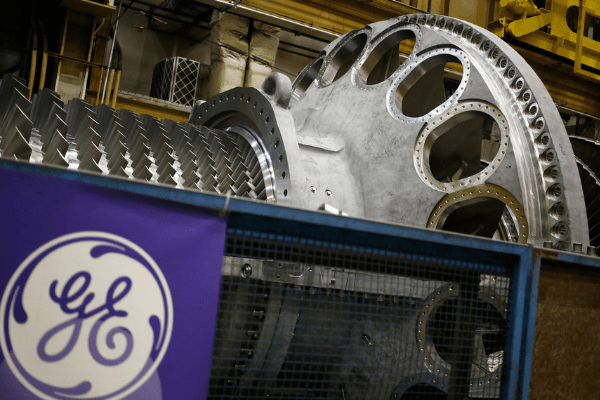
The weakest segment was the division making equipment for the power industry, which has been hit by a downturn in the market for gas-fired power plants as well as what the company described as “continued execution and operational issues on equipment projects and transactional services”. The division fell into an $872m loss for the quarter, compared to a $51m profit for the equivalent period of 2017.
That was offset by strong performances from the aviation division, where profits rose 24 per cent to $1.72bn, and from Baker Hughes, the oilfield services group 50.4 per cent owned by GE, where profits were up 60 per cent at $396m.
At the healthcare division, which GE plans to spin off, profits were up 2 per cent at $1.18bn.
Larry Culp, the new chief executive who took over last October, said in a statement:

“Our strategy is clear: de-leverage our balance sheet and strengthen our businesses, starting with power. To do this, we are improving execution, customer focus, and how we set priorities across GE. I’m confident in our team, technology, and the global reach of GE’s brand and relationships. We have more work to do, but I’m encouraged by the changes we’re making to strengthen GE and create value for our shareholders, customers, and employees.”
The release did not include any guidance for projected earnings in 2019, which had been expected by some analysts. The average forecast for adjusted earnings before the results was 81 cents, compared to the 65 cents reported for 2018.
However John Inch, an analyst at Gordon Haskett Research Advisors, said the more important issue for investors would be the outcome of the disposal programme that the company has set out, including a partial spin-off of its healthcare division and the sale of its remaining stake in Baker Hughes.
“The guidance for 2019 is not as important as what the company is going to look like in 2020,” Mr Inch said.