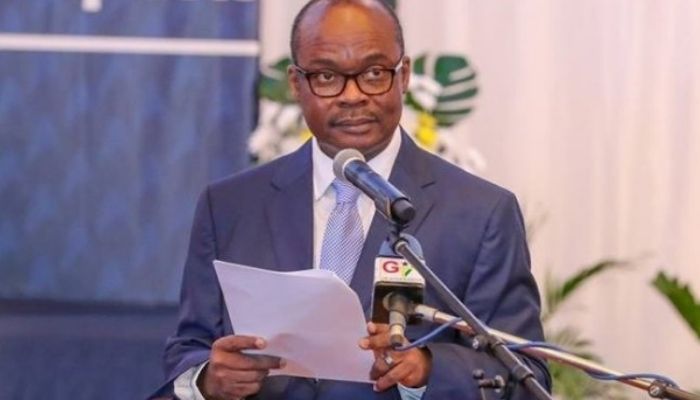
Ghana’s central bank unexpectedly cut its benchmark interest rate to a six-year low as the country moves towards an economic growth inducing regime while abandoning the trend towards tightening that only seeks to protect the local currency, the Cedi.
Nigeria’s Central Bank on the other hand continues to tighten with its main focus being to protect the local currency the Naira but some economists argue that this policy impairs growth.
The Bank of Ghana reduced the rate by 100 basis points to 16 percent, Governor Ernest Addison told reporters Monday in the capital, Accra. All eight economists surveyed by Bloomberg said the rate would be held.
READ ALSO: MTN drops case against regulator in Ghana

“The bank’s latest forecast shows that inflation will remain within the target band barring any unanticipated shocks,” Addison said.
“Immediate risks to the disinflation path are well contained and the current conditions provide scope to translate some of the gains to macro-economic stability to the economy.”
While the inflation rate in the world’s second-biggest cocoa producer rose for the first time in four months in December, it remained inside the central bank’s target band of 6 percent to 10 percent for the ninth consecutive month.
The cedi weakened 0.2 percent to 5.0075 per dollar at 11:58 a.m. in Accra. A close at this level would be the weakest on record.
“The cut was earlier than expected given the risks to the cedi from the sustained twin fiscal and current-account deficits. We also expected the delayed release of the rebased consumer-price index to give greater clarity about the trajectory of inflation.

Lower transport prices should push down inflation further in the first quarter, and this is likely to have been a contributing factor for the decision to cut.