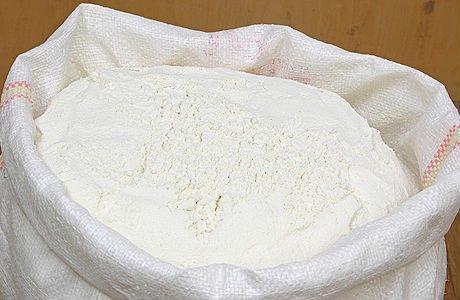
It is estimated that 30 percent of harvested tubers yam are lost to waste due to poor processing and preservation mechanisms in Nigeria. One of the more acceptable means of preserving yam is to convert it to yam flour. The traditional processing method is out-modelled and laborious and grossly inefficient for mass production to satisfy the teeming population and local demand and make room for the export market to earn foreign exchange.
Yam flour is a cherished delicacy among Africans and other parts of the world.
Its processing increases its shelf life, adds value to the tuber (from where it is processed) before being exported to enhance its economic value, reduce waste and cut down the cost of transporting the product to longer distances compared with the heavy wet tubers that are unprocessed.
The fact that this can be preserved helps to stabilise prices during off harvest season. The setting up of this project is seen to be feasible, considering the following:

Technical Considerations
The plant here will be able produce and package quality finished products for export. Its rated capacity is 5,000 metric tons of well packaged yam flour per year (8hours per day of 250 days in a year after allowing about 2.5 percent waste). This implies capacity of about 20 tons per day. The conversion ratio of raw yam tubers to yam flour is 3:1. This means that about 1,500MT of raw yam tubers will be needed per day, working at full capacity.
The machinery and equipment needed to process yam flour are
(a) Yam Peeler (could be done manually)
(b) Boiler

(c) Dryer
(d) International Standard Scale
(e) Automatic Sealing Machine
(g) Packaging Machine
All the above machines and processing technology can be obtained locally. The machines can as well be imported. The addresses of where to obtain both locally made machines and imported ones will be given to prospective investors on reaching to the writer.
Raw Materials
The raw materials needed are yam tubers. These are obtainable from farms cultivated by plantations, small holders and co-operative farmers. There is abundant yam grown in this country. Nigeria is the world’s largest producer of yams with over six million metric tons per annum of this output. Only about five percent is put into industrial use by way of chips and flour. Almost all states of federation grows yam.
Location
The best place to locate this project is the area where yam tubers are obtained in abundance. Yam tubers are heavy and so transport expenses would be reduced if the project is located in areas where the tubers are grown in abundance. Hence it can be sited in any part of the country. Other factors to consider include
(a) Availability of labour and raw materials in commercial quantity.
(b) Availability of infrastructural facilities (water, power, access road ). Export processing zones will be most ideal for setting up this project, if it is basically for export.
(c) Ease or otherwise of the accessibility of the plant site to urban areas/ markets both for local consumption and export.
To accommodate the plant, one needs a large building with an area of about 1,500M2.
Market for yam flour
The market is both local and international. The later should be targeted where there is preponderance of inhabitants of Africans in Europe, America and Asian countries. Based on research, some marketing points internationally have been established and would be given to prospective investors.
The factors that have positively affected the demand for this product include: prevalence of foreign exchange crunch, habit/culture, and increase in population of the country. The fact is that its consumption cuts across demographic classes, income levels and religious boundaries.
Production Process
Briefly, the processes involved in yam flour production are:
(1) Procurement of good quality tubers, weighing and washing of them.
(2) Peeling the washed tubers
(3) Grinding of the peeled tubers into pulp.
(4) Drying of the ground yam pulp
(5) Milling of the dried pulp
(6) Sieving to avoid having lumps when being prepared for eating
(7) Bagging and Packaging (2kg, 5kg, 10kg, 25kg and 50kg).
Details of the standard required in the international market will be given to prospective investors.
Cost and funding
The project can be set up with minimum of N18 million, using locally made machines. It will be more if imported machines are to be applied for higher capacities.
Funding
The Federal Government just released some investment funds for injection into small and medium scale industries development in Nigeria. Anybody with good business plan will benefit from the funds. There are also financial institutions and special project funding organisations that would be recommended to prospective investors on contacting the writer.
Details will be given to prospective investors
Investment analysis
The project is very profitable. With aggressive marketing strategies, good management and export orientation, the payback period would be less than two years.
The return on investment is very encouraging at over 58 percent. Details will be given to prospective investors. For detailed information on export market, comprehensive and bankable feasibility studies/ report, sourcing of the required funds, please contact the writer
Uba Godwin
Global Trust Consulting,
56, Ishaga Road, (1st floor), Surulere, Lagos
Tel: 08023664368, 08034494437
Email: ubagodwin@yahoo.com