|
Getting your Trinity Audio player ready...
|
Experts on economic growth rates in different countries across the globe have identified the interwoven complimentary role that both the government and entrepreneurs, especially those who operate Small and Medium Enterprises (SMEs) could play for their businesses to grow. The bitter truth however, is that not a few banks impose stringent conditions to give out loans, particularly to start- up business owners. But that is just one of the several challenges they face.
Others include decrepit infrastructure, such as epileptic electric power and water supplies, pot hole-riddled roads, lack of access to the requisite modern technological knowhow to fast track their processing and preservation processes and of course, standardization of their products.
A chance encounter with a small scale plantain flour processor beamed a brighter light on the challenges she and her counterparts battle with and their efforts to overcome them with to become more productive. I became instantly interested and saw it as an inspiration. Why must we media practitioners focus mainly on the big-times business companies and successful multi-millionaires without a critical look at the smaller ones and how they are pulling themselves up by the bootstraps? So, I got talking with the subject of this piece.
She is Mrs. Ire Akintunde-Johnson, a graduate of English and Literary Studies from the University of Ife (now OAU). In addition, she is a writer, a foodpreneur and health enthusiast who worked at The Punch after her NYSC programme which she served in Benin City in 1987/88 before moving to Ruyi Communications Ltd., as a media executive. She was a Director of Marketing at Encomium Magazine between 1997 and 2001.

She was motivated to venture into food business by her husband, Akintunde who kept complimenting her exemplary skills at cooking delicious dishes. He would always say: “This your culinary expertise should not be wasted o. I am not the only one that should be enjoying this type of food”. Back then she was making variety of stews and soups that drew the attention of several busy business executives, including some busy housewives who wanted to eat good food without going through the hassles of cooking. Before you know it, they started ordering all sorts of soups from her. They went further to call her “Agbeke Alatadindin”(Agbeke fried pepper).
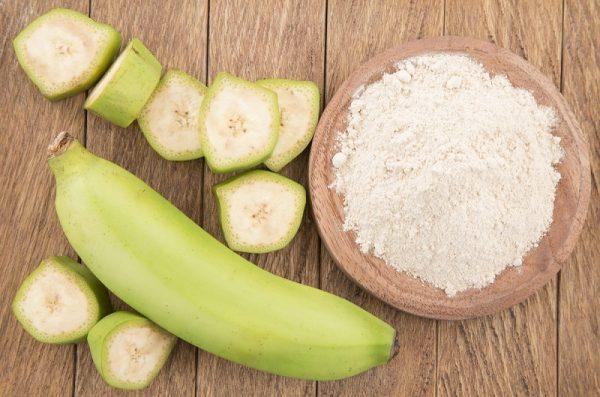
With the aim to expand the scope of food business and also driven by her preference for healthy foods she delved into the plantain flour business. That was in the year 2018. In fact, she is fully aware of the nutritional attributes of plantain flour. She revealed that: “Unripe plantain flour is quite nutritious. It contains potassium which helps to reduce blood pressure, heart rate and other cardiovascular issues. The calcium in it makes it good for the health of bones and teeth. Plantain flour also contains dietary fibres which help in weight control, and lowering cholesterol. Because of the aforementioned and more, it helps in blood circulation which, it is believed, leads to improved libido in men and enhances their sexuality. It is also said to be good for ulcer”.
But trying to promote the health benefits through processing has not been a stroll in the park for Agbeke. Her initial challenge was sourcing for unripe plantain at a desired price. In her words: “It is quite a bother; because at some periods of the year the product is very scarce. Somehow, we are working around it by sourcing from remote plantain plantations. Our customers know now that we don’t add preservatives and additives so they can trust us that when the plantain is scarce our standard doesn’t change and our quality is not compromised. What may change is the cost price”.
In spite of the fact that it is not long ago that she began the business, she has started building a strong bond with her customers. “We started with our friends and extended families, but we are expanding fast. Our customers trust our product and the news is spreading. The feedback is quite encouraging. There are customers waiting for a brand they can trust”.
Her vision is “to produce and popularise a quality healthy option for those who have purposed to live a healthy life”. One can decide to eat healthy and be frustrated by the quality of what is available at the market. She has this to say: “For example, I went to market to buy the unground yam flour (Yorubas call it Gbodo) and it was ground in my presence. When I poured it in hot water to make “Amala”, the smell of cassava flour overwhelmed me. It was a mixture! Even the raw one can be mixed. That is not fair. If I didn’t know the difference, I would just take it like that. That’s why we are in the market – to produce undiluted plantain flour “.

That is precisely where government intervention should come in. For instance, back in 1990, the Central Bank of Nigeria (CBN) issued licences enabling micro finance banks to provide loans to entrepreneurs at reduced interest rates. Micro finance banks’ clients are typically self-employed, low income entrepreneurs in both urban and rural areas. But how effective are they today?
Similarly, it sounded like some piece of sweet music to the ear when the Federal Government of Nigeria through the CBN made available N220 billion (122 million United States Dollars) SME Fund that small business owners through which they could source for funds. Also, the bankers’ committee intervened in 1999 with a scheme themed ‘Small and Medium Industries Equity Investment Scheme’ (SMIEIS). But it did not commence till June 19th 2001.
The truth of the matter is that plans are made without credible data to work with. How many of the Agbekes are captured in these schemes? How many of them have had access to such funds and the enabling environment for their businesses to thrive? The answer is obvious.
This was her response to the question on what precisely she wants the government to do for her and her peers. “Plantain flour is an exportable product. Government should encourage those of us who are interested in the business. If I have a farm and machines for fast-tracking the process of making the flour, I will be churning it out big time.
“Look at what our normal flour, made from wheat. Plantain flour can do more, and it is even healthier. Plantain flour is what you can eat and not feel guilty! You can eat it as ‘swallow’ food with correct soup or use it to bake or make pancakes”.
On her plans for the future, she said: “We want Agbeke plantain flour to be everywhere. We want people to see it as food for everybody, and not only diabetics, as erroneously believed. Plantain flour is made from a fruit rich in vegetable fibers. It should be a national staple food that is truly wholesome and enriching.”
All said, the likes of Agbeke-and there are millions of them spread all over the country- need sustained government intervention to succeed.
Ayo Oyoze Baje