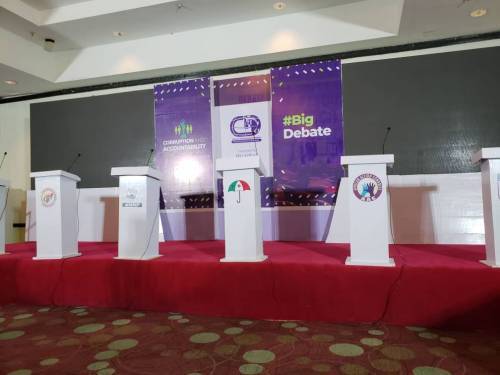
The refusal of presidential candidates of especially the APC and PDP, President Muhammadu Buhari and Atiku Abubakar respectively to attend the Presidential debate last weekend to articulate their socio-economic road map for the challenging Nigerian economy has continued to generate concerns.
The non-participation of the major contenders for the president position in the forthcoming elections at the presidential interactive debate has really denied Nigerians the opportunity to know how the candidates want to approach the economic management and which projects are priorities.
Media executives who assessed the development described the absence as really sad. In his view, Bolaji Okusaga, managing consultant of Precise, a reputation management firm said the most crucial part of campaign cycle is debate. “Without debate, how will the electorate be able to tell which programmes are germane and which ones are not. The absence of the leading contenders shows disrespect for the Nigerian electorate.”
Tola Badesmosi, the CEO of BD Consult said “it is so disappointing and disheartening that Atiku could not show up for the debate to tell Nigerians the jobs he intends to create and Buhari should also have honoured the invitation to share his ideas.”

According to Charles Igbinidu CEO of CFO & Associates, the non-participation of Buhari and Atiku really shows the low importance of debates in elections in Nigeria.
The absence of the major contenders is a “reflection of the fact that the debate doesn’t make any real impact on the voting decisions of Nigerians. If the contenders felt that not attending would have a negative effect on their chances at the polls, they would dare not stay away.
“Unfortunately, most Nigerians still do not base their choice of candidates on what contestants stand for but on primordial sentiments and pecuniary interests. It is very unfortunate”, Igbinidu said.
Similarly, Lanre Arogundade, Director, International Press Center said although debates may not swing voters whose minds are already made up on those they would vote for, the two candidates who have been labelled major contenders and wear such toga should have shown respect to the electorate by turning up.
“If they had respect for the organisers they would have shown that by writing the organisers long before now, either to state that they would not be participating.
“To give the impression of participation and refusing to do so in the last minute smacks of contempt for the people they want to lead and disrespect for the organisers”, Arogundade said.
Also commenting, Kayode Ebatamehi of Bluebird Communication described the absence of the APC and PDP candidates as clearly a missed opportunity. “They failed to take advantage of a veritable platform to sell themselves to the voters.”

Another Nigerian top media executive, Mike Nzeagwu said the absence of the APC and PDP candidates at the debate underlines the culture of impunity what the elite, especially those in power have held as part of their mantle of leadership for years. He called for the change of this mind-set.
“The Nigerian electorate should be wise enough and use their votes to change the old order for a more progressive order. The future belongs to the youth and until we make a clean break from the corrupt, uneducated, uninformed yester-years leaders, Nigeria will not move forward”, Nzeagwu said.
According to reports, Atiku said he declined to participate because Buhari did not show up. On the other hand, Buhari had claimed his NTA interview earlier was an interaction with Nigerians similar to the debate. However, Atiku was said to have challenged Buhari to another presidential debate before the elections.
The absence of the two major contenders for the position of the president in the next election at the Broadcasting Organisation of Nigeria, BON organised presidential debate has continued to put Nigerians in the dark on how their leaders intend to tackle myriad of economic challenges facing the country. These include continued rising of unemployment and inflation rates, insecurity and other issues including critical sectors, especially manufacturing sector reeling under heavy infrastructural challenges and high interest rate.
Daniel Obi